
Hidden Images Revealed in Jean-Michel Basquiat’s Paintings
Discovery of Secret Arrows
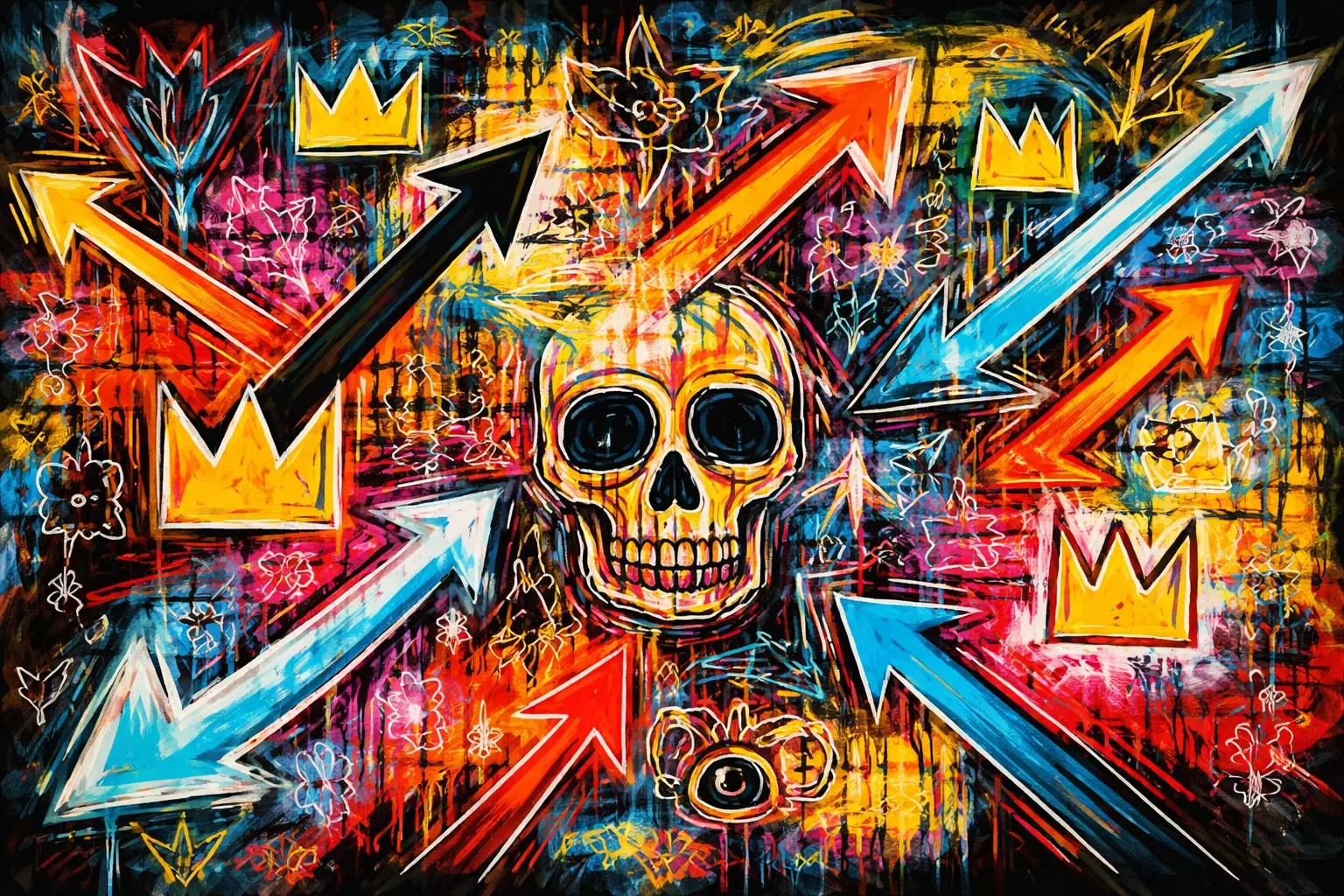
Art conservator Emily MacDonald-Korth made a groundbreaking discovery while examining an untitled 1981 painting by renowned artist Jean-Michel Basquiat. Using a black light, she uncovered previously unseen arrows hidden within the artwork. These arrows, likely drawn with a black-light crayon, are similar to visible red and black arrows in the painting.
MacDonald-Korth believes these hidden arrows may have been intentionally included by Basquiat, as they share similarities with his known graffiti style and use of symbolism. This discovery raises questions about Basquiat’s creative process and the potential for hidden imagery in his other works.
Black Light in Basquiat’s Art
Basquiat’s use of black light in his art is not new. In 2012, experts at Sotheby’s discovered a hidden signature and date on his “Orange Sports Figure” painting under ultraviolet light. Basquiat rarely signed his works, making these invisible signatures valuable clues in authenticating his paintings.
MacDonald-Korth suspects that Basquiat may have employed black light techniques in other works, given his habit of working on multiple images simultaneously. She believes that the 1981 painting “Poison Oasis” may also contain hidden black-light imagery, as it was created around the same time and features visible arrows.
Symbolism and Meaning
The hidden arrows in Basquiat’s paintings could hold symbolic or personal meaning. Arrows often represent direction, movement, or conflict. Their presence in his work may provide insight into his thoughts and experiences during the time of their creation.
Additionally, Basquiat was known for incorporating paint over images and scratched-out words into his paintings, creating visual puzzles for viewers to decipher. The hidden black-light arrows may be another layer to these puzzles, adding depth and complexity to his artwork.
Conservation and Authenticity
MacDonald-Korth’s discovery highlights the importance of conservation efforts in preserving and uncovering hidden details in Basquiat’s paintings. The use of black light technology enables conservators to authenticate works, identify repairs or alterations, and reveal previously unknown imagery, providing valuable insights into the artist’s techniques and intentions.
Significance for Art History
This discovery has significant implications for the understanding of Basquiat’s artistic process and the broader field of art history. It demonstrates the innovative and unconventional methods employed by Basquiat, expanding our knowledge of his creativity and challenging traditional notions of authenticity and artistic expression.
The revelation of hidden images in Basquiat’s work also encourages further research into the use of black light and other technologies in art conservation and authentication, opening up new avenues for studying and appreciating the works of renowned artists.
