
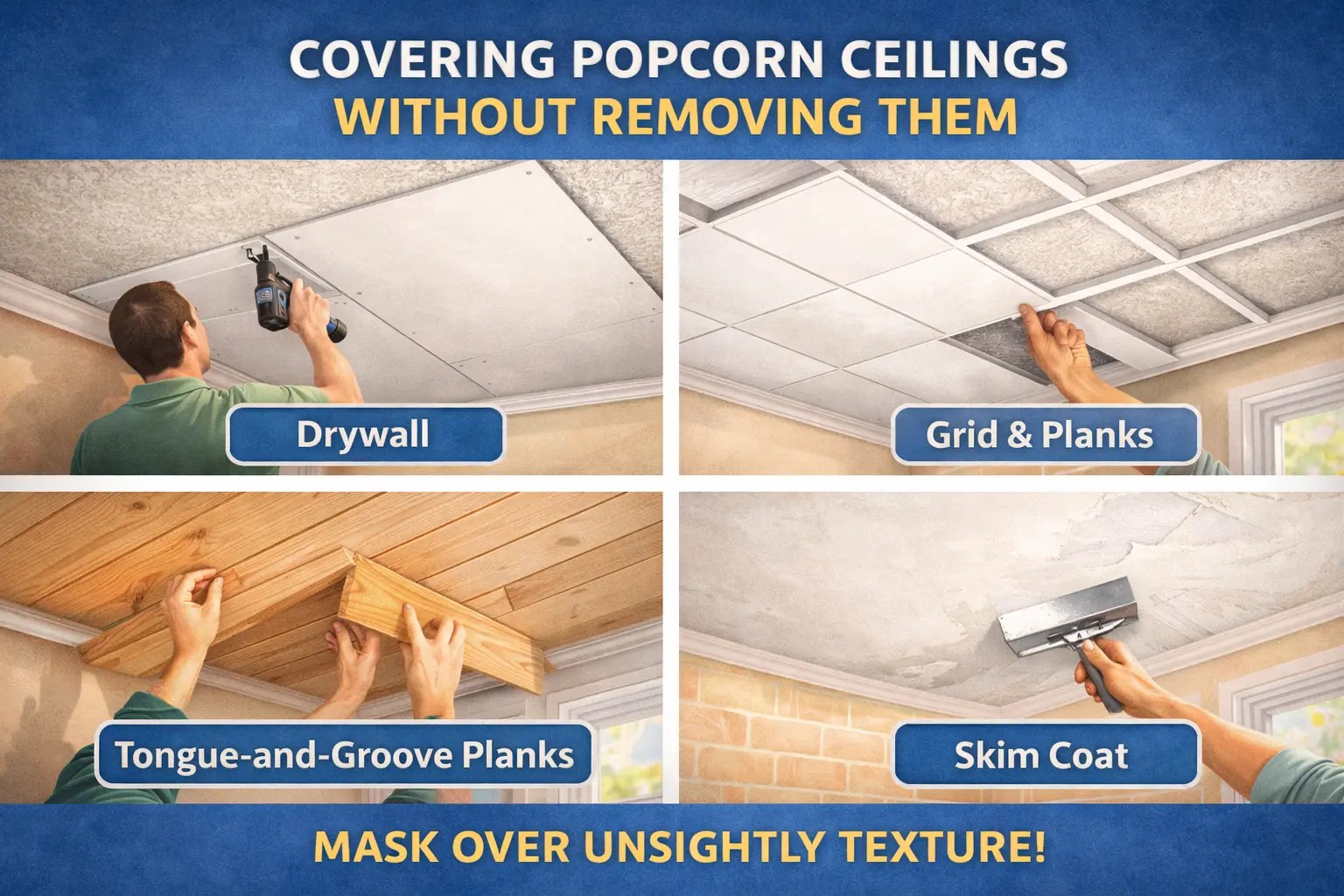
Covering a Popcorn Ceiling Without Removing It: A Comprehensive Guide
What is Popcorn Ceiling?
Popcorn ceiling, also known as acoustic or stipple ceiling, is a textured surface treatment created by fine, medium, and coarse particles of vermiculite or polystyrene. It was popular in the 1950s to 1980s for its sound-dampening properties and ability to hide imperfections in the ceiling.
Is It Safe to Remove Popcorn Ceiling?
Asbestos, a potentially hazardous material, was commonly used in popcorn ceiling texture between 1945 and 1980. If your ceiling was installed during this period, it’s important to test for asbestos before removing it. If asbestos is present, it’s best to cover the ceiling rather than remove it to avoid releasing harmful particles into the air.
Methods for Covering Popcorn Ceiling
There are several methods for covering a popcorn ceiling without removing it:
1. Drywall
Advantages:
- Inexpensive
- Durable
- Provides a smooth surface
Disadvantages:
- Labor-intensive to install
- May require additional finishing skills
- Can telegraph ceiling imperfections
2. Grid-Plank System
Advantages:
- Easy to install
- Customizable with various colors and styles
- Can adjust to uneven ceilings
Disadvantages:
- Expensive
- May not be as durable as drywall
3. Tongue-and-Groove Planks
Advantages:
- Creates a classic wood-paneled look
- Relatively easy to install
- Can be used with furring strips to adjust for uneven ceilings
Disadvantages:
- More labor-intensive than grid-plank systems
- Requires finishing touches like trim molding
4. Skim Coating
Advantages:
- Cheapest method
- Can be done by DIYers
- Creates a smooth, even surface
Disadvantages:
- Requires multiple coats and drying time
- Can be messy and time-consuming
Choosing the Right Method
The best method for covering a popcorn ceiling depends on your budget, skill level, and desired finish.
Step-by-Step Instructions
Detailed instructions for each method can be found in the following sections:
How to Cover a Popcorn Ceiling with Drywall
- Mark ceiling joists and plan the panel layout.
- Adapt light fixture boxes for added thickness.
- Install insulation panels (optional).
- Snap chalk lines to mark joist centers.
- Hoist and attach drywall panels.
- Tape and finish the drywall.
How to Cover a Popcorn Ceiling with a Grid-Plank System
- Locate and mark ceiling joists.
- Install insulation panels (optional).
- Mark track locations.
- Attach metal tracks to the joists.
- Install the first row of planks.
- Continue installing planks, staggering end joints.
- Install the final row.
- Add molding to cover expansion gaps.
How to Cover a Popcorn Ceiling with Tongue-and-Groove Planks
- Mark ceiling joists.
- Install insulation panels (optional).
- Snap chalk lines to mark furring strip locations.
- Cut and install furring strips.
- Attach tongue-and-groove planks or beadboard panels.
- Add trim molding to cover gaps.
How to Cover a Popcorn Ceiling with Skim Coating
- Prepare the work area with drop cloths and masking.
- Clean the ceiling.
- Prime the ceiling (especially if it contains asbestos).
- Apply the first coat of drywall mud compound.
- Allow the coat to dry for 24 hours.
- Sand between coats (optional).
- Apply the second and third coats.
- Prime and paint the ceiling.
Conclusion
By following these instructions, you can successfully cover a popcorn ceiling without removing it, improving the aesthetics and functionality of your space.
