
0
Japanese Zelkova: A Versatile Tree for Landscapes
Care and Maintenance
Japanese zelkova trees are relatively low-maintenance, but they do require some attention to thrive.
- Pruning: Pruning is essential to develop the tree’s structure and prevent breakage. Remove branches that grow inward towards the leader, creating deep V-shaped crotches.
- Light: Japanese zelkovas prefer full sun to partial shade. The sunnier the location, the better the fall colors will be.
- Soil: These trees are tolerant of various soil types, including clay, loam, and sand, as long as the soil is well-draining. Soil pH is not a primary concern.
- Water: Japanese zelkovas are drought-tolerant and do not require frequent watering.
- Fertilizer: Supplemental fertilizer is generally not necessary. However, if the tree is not performing well, soil amendments can provide a boost.
Types of Japanese Zelkova
There are several popular cultivars of Japanese zelkova available, each with unique characteristics and growth habits:
- ‘Halka’: Fast-growing and large, suitable for commercial settings.
- ‘Village Green’: Wide-spreading, ideal for open spaces.
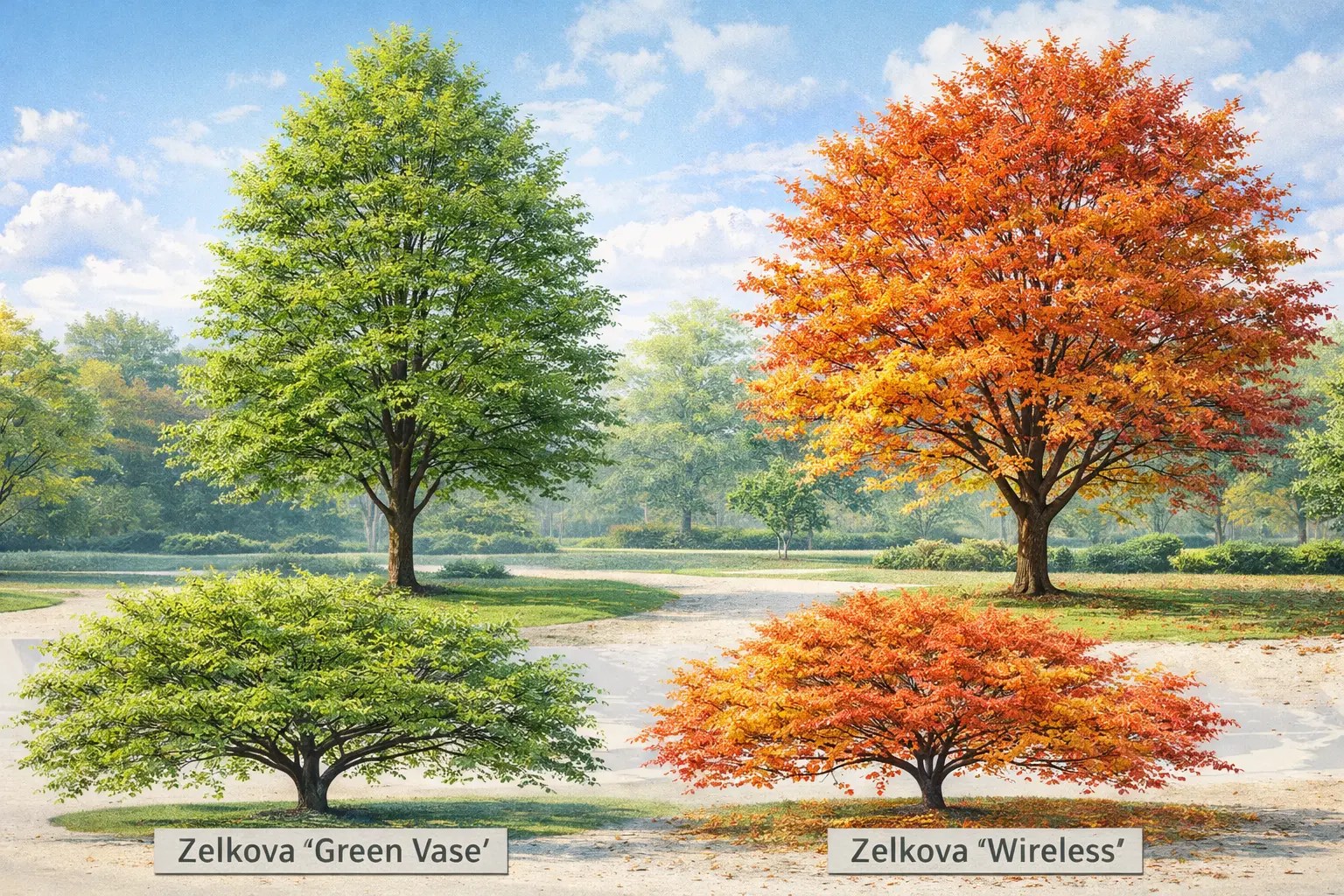
- ‘Wireless’: Very wide spread, lower growth, good for shade trees.
- ‘Green Vase’: Narrower vase-shape, suitable for driveways and streets.
- ‘Musashino’: Narrowest crown among the cultivars.
Propagation
Japanese zelkovas can be propagated by seeds or plant cuttings:
- Seeds: Growing from seed requires patience and cold stratification for 6-8 weeks.
- Cuttings: Take new branch cuttings in spring or early summer, dip them in rooting hormone, and place them in moist potting soil.
Growing from Seed
- Harvest seeds in fall when pods dry.
- Refrigerate seeds for 6-8 weeks to break dormancy.
- Sow seeds in garden soil about 1/4 inch deep and keep moist.
- Seeds should germinate within a few months.
Common Pests and Diseases
- Aphids: These insects attack the tree in spring, causing leaf damage.
- Scale insects: They suck the juices from leaves and twigs, leaving behind “honeydew.”
- Phytophthora stem and collar rot: This soil-borne fungus causes cankers on twigs.
Common Issues
The primary concern with Japanese zelkova trees is their tendency to break due to multiple leaders and fragile wood. Choose a tree with a single trunk or select cultivars with improved strength.
FAQs
- Is zelkova a good tree? Yes, Japanese zelkova is a good choice for shade trees, specimen trees, and street trees due to its disease resistance and elm-like appearance.
- Is a zelkova tree messy? While zelkova trees are deciduous, they are not considered particularly messy. Different types shed varying amounts of leaves and bark.
- Are Japanese zelkova trees invasive? No, Japanese zelkova trees are not invasive.
Additional Tips for Care
- Plant young zelkova trees in the spring to avoid frost damage.
- The tree will have a medium growth rate of 1 to 2 feet annually.
- Keep the tree free from damage, especially in areas where icing is possible.
- Prune the tree in late fall through late winter.
- Consider soil amendments if the tree is not performing well.
- Monitor the tree for pests and diseases and treat them promptly.
