
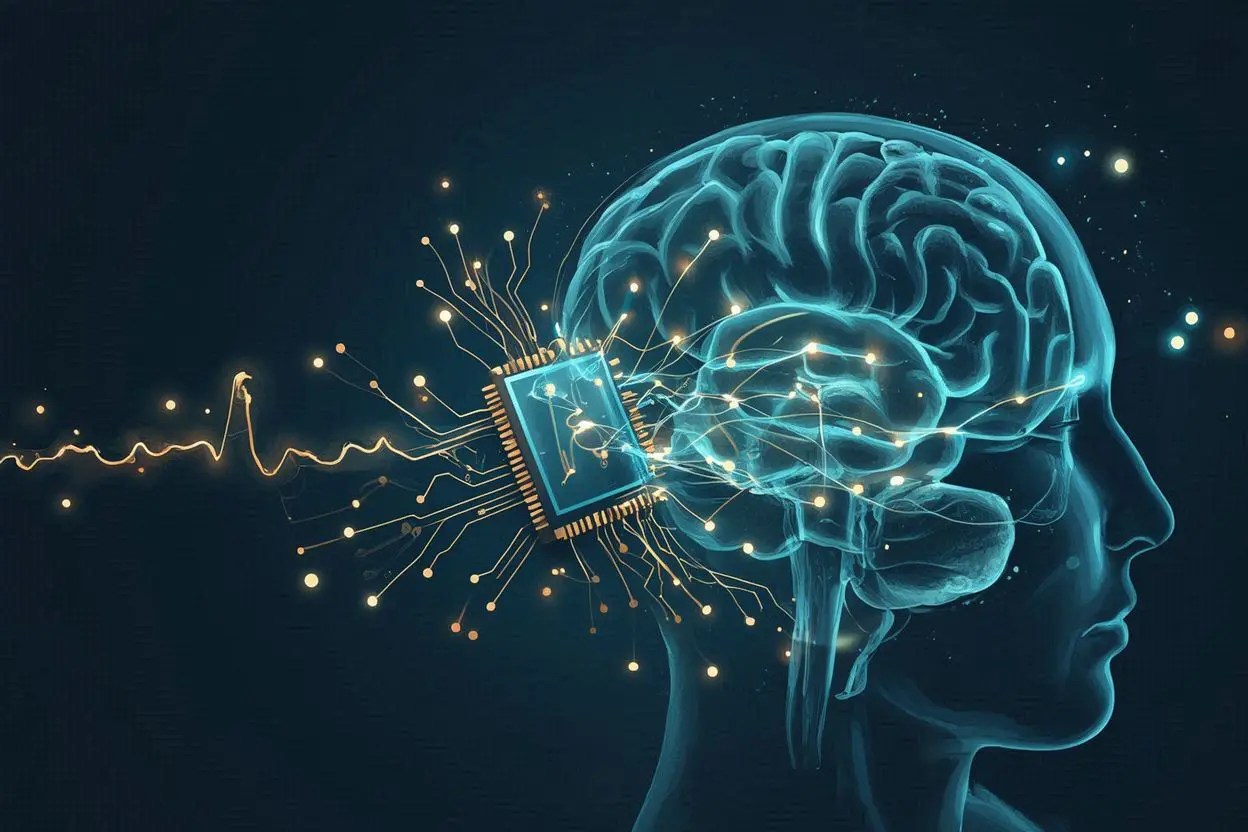
A More Human Artificial Brain: Spaun and the Future of Brain Research
Spaun: Mimicking the Human Brain
Canadian researchers have made a groundbreaking advancement in artificial intelligence by creating Spaun, a computer model that mimics the behavior of the human brain. Spaun is the latest iteration of a “techno brain” developed by a team at the University of Waterloo.
Unlike other AI systems that focus on information retrieval, Spaun attempts to replicate the human brain’s ability to perform a wide range of tasks. It can recognize numbers, remember them, and even manipulate a robotic arm to write them down.
Spaun’s Architecture and Function
Spaun’s “brain” is divided into two parts, similar to the cerebral cortex and basal ganglia in the human brain. Its 2.5 million simulated neurons interact in a way that mimics the communication between these brain regions.
When Spaun’s “eye” sees a series of numbers, the artificial neurons process the visual data and route it to the cortex. There, Spaun performs various tasks, such as counting, copying, and solving number puzzles.
Spaun’s Human-Like Behavior
Interestingly, Spaun has exhibited human-like behavior. It pauses slightly before answering questions, just like a person would. It also has difficulty recalling numbers in the middle of a long list, similar to human memory.
“The model captures some subtle details of human behavior,” said Chris Eliasmith, Spaun’s chief inventor. “It’s not on the same scale, but it gives a glimpse into the diverse capabilities of the brain.”
Implications for Brain Research
Spaun’s ability to perform multiple tasks sheds light on how our brains seamlessly transition between different activities. This understanding could lead to more flexible robotic systems and assist scientists in studying brain functions that cannot be ethically tested on humans.
Health Research and Aging
Researchers have used Spaun to simulate the loss of neurons in a brain model at the same rate as in aging humans. This has provided insights into the impact of neuron loss on cognitive performance.
Recent Developments in Brain Research and AI
In addition to Spaun, other recent advancements in brain research and artificial intelligence include:
- Synchronized Brain Activity in Musicians: When guitarists play in close coordination, their brain activity becomes synchronized.
- Monitoring Brain Cell Coordination: MIT researchers have developed a method to monitor brain cell coordination in controlling specific behaviors, opening doors to understanding brain circuits and psychiatric disorders.
- Deep Learning for Drug Discovery: A team from the University of Toronto used deep learning to identify potential drug molecules.
- Robots Learning Social Behavior: Scientists are using head-mounted cameras to track eye movements in social interactions, enabling robots to learn social cues.
- Deception in Robots: Inspired by birds and squirrels, researchers have developed robots that can trick each other using deceptive behavior.
Conclusion
Spaun represents a significant step forward in our understanding of the human brain and the development of artificial intelligence. By mimicking brain behavior and exhibiting human-like characteristics, Spaun opens up new avenues for research and innovation in brain science and robotics.
