
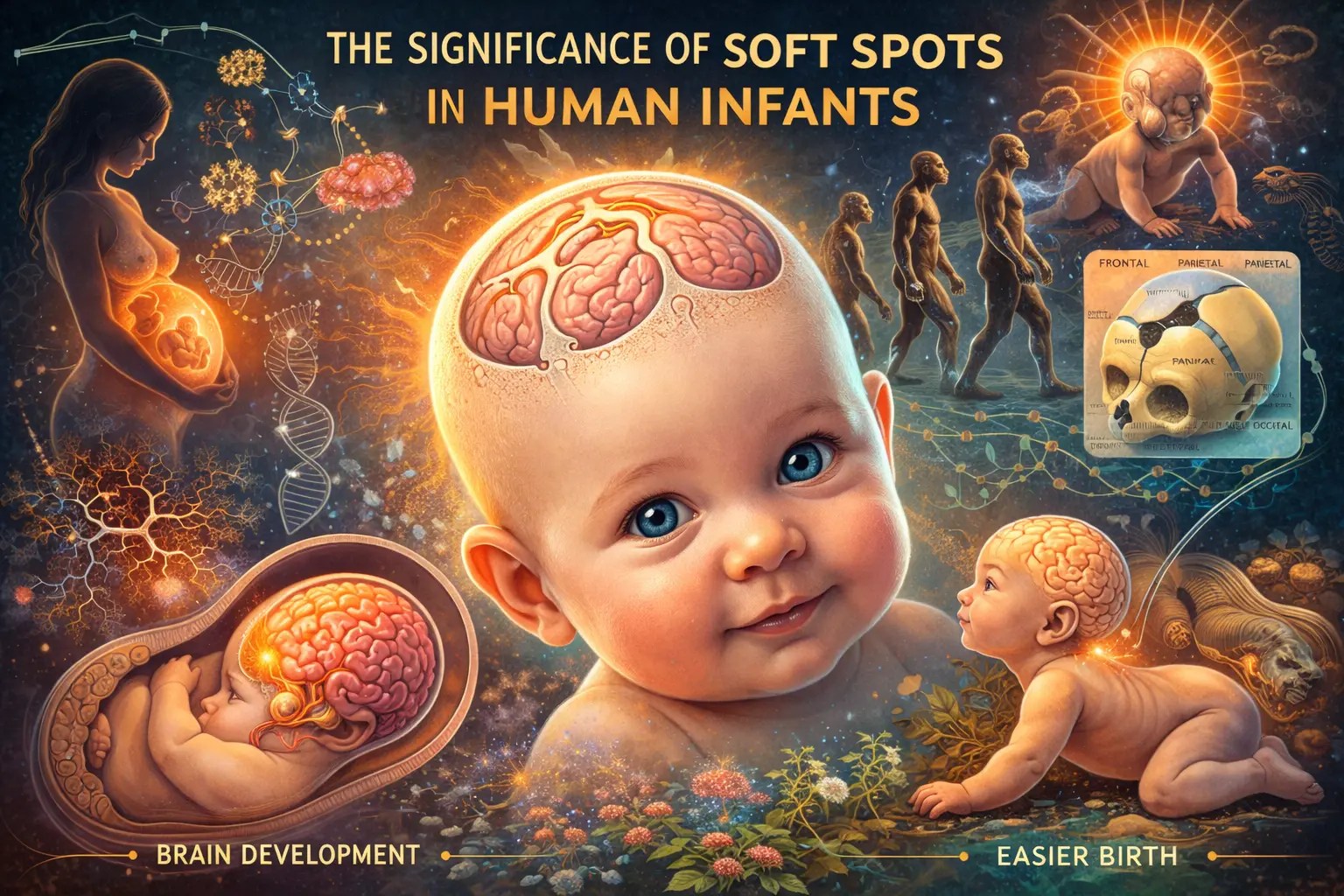
Why Do Babies Have Soft Spots?
The Mysterious Soft Spot
The soft spot on a baby’s head is a fascinating feature that has puzzled scientists for centuries. This soft, elastic patch of skull is where bone has yet to fully form, providing a glimpse into the unique developmental journey of human infants.
Evolutionary Origins
A recent study has shed light on the evolutionary origins of soft spots. Researchers have discovered that hominid babies, including our ancestors, have had soft spots for at least three million years. This discovery suggests that soft spots evolved in response to our unique brains and unusual style of walking.
The Obstetric Dilemma
As hominids evolved larger brains, it became increasingly difficult for mothers to give birth. The soft spot and metopic suture, a line that marks where the two sections of the frontal bone come together, played a crucial role in alleviating this problem. During delivery, the contractions of the birth canal caused the edges of the baby’s skull to overlap, compressing the head and facilitating its passage through the narrow birth canal.
Rapid Brain Growth
Another factor contributing to the development of soft spots is the rapid brain growth that human babies experience during the first year of life. This growth continues after birth, and having a soft spot and unfused forehead allows the skull to expand and accommodate the growing brain.
The Frontal Cortex
The frontal cortex, located behind the forehead, is responsible for some of our advanced cognitive abilities. In humans, the frontal cortex has undergone significant changes in size and shape during evolution. These changes may have influenced the delayed development of this part of the skull in young humans, allowing for continued brain growth and cognitive development.
Evidence from Fossils
The Taung Child, a famous Australopithecus africanus fossil, provides evidence of soft spots. Researchers have found the outline of a soft spot on the Taung Child’s skull, indicating that soft spots were present in early hominids. Similar evidence has been found in the skulls of Homo habilis and Homo erectus.
Future Research
While the discovery of soft spots in early hominids has shed light on their evolutionary history, there is still much that we don’t know. Future research will focus on identifying soft spots in even earlier hominid species to determine when this feature first evolved. This research will help us better understand the factors that have shaped human evolution and the unique characteristics that set us apart from other primates.
Soft Spots in Modern Humans
Today, soft spots are a normal and essential part of human infant development. They typically close within the first two years of life, but in some cases, they may remain partially present in adulthood. While a soft spot does not necessarily indicate any underlying medical conditions, it is important to consult with a healthcare professional if you have any concerns.
