Why Aren’t My Tomatoes Turning Red? 7 Possible Reasons
Understanding Tomato Ripening
When tomatoes reach their full green size, they undergo a ripening process that involves the production of lycopene, the pigment that gives them their red color. This process is triggered by a natural hormone called ethylene.
Temperature
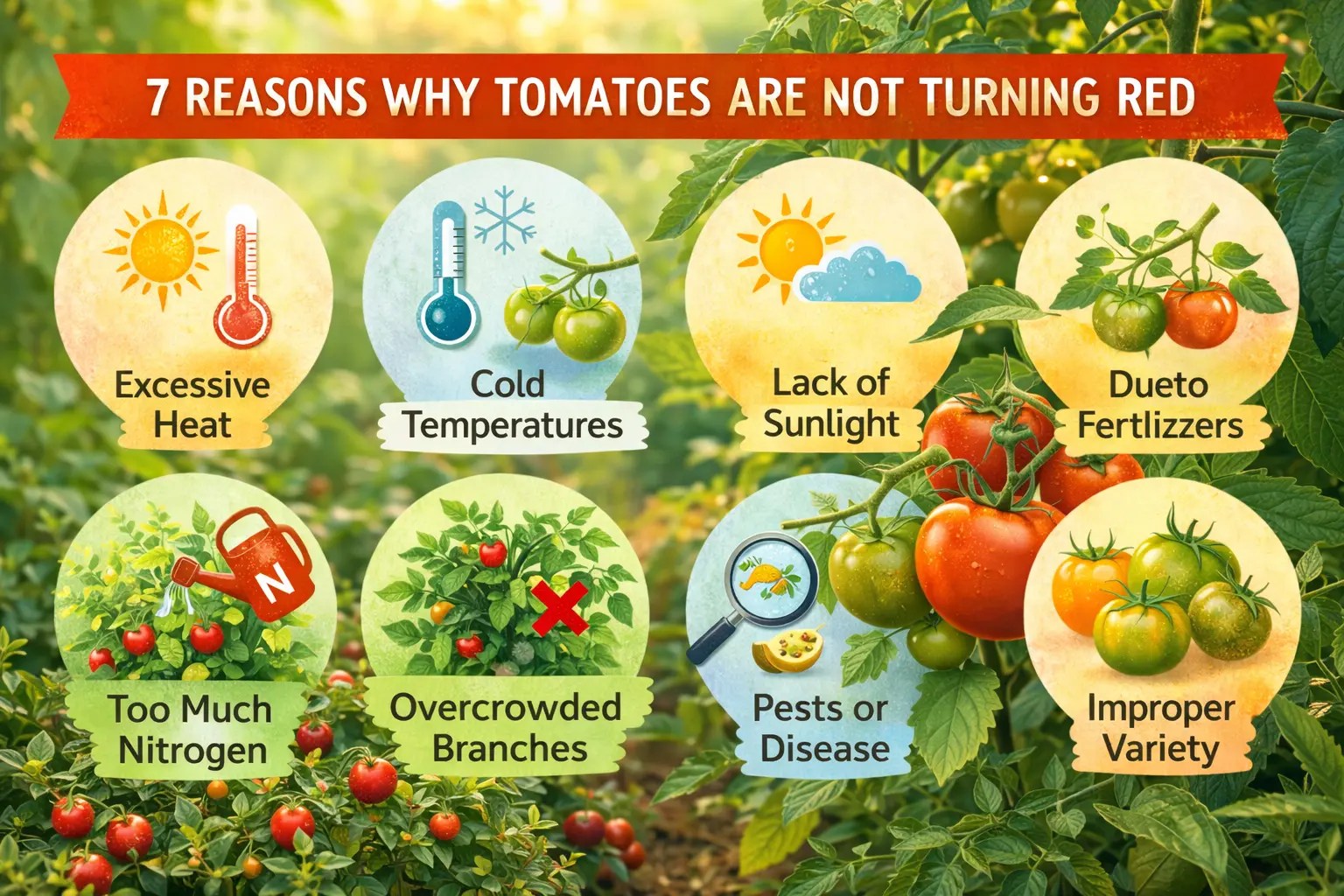
Temperature plays a crucial role in tomato ripening. Ideal temperatures range from 68 to 77 degrees Fahrenheit. Temperatures above 85 degrees inhibit lycopene production, slowing or even halting ripening. Conversely, temperatures below 60 degrees can also delay ripening.
Sunlight
While tomatoes need sunlight for growth, too much direct sunlight can hinder ripening. The heat generated by intense sunlight can raise temperatures to levels that inhibit lycopene production. Pruning leaves away from mature tomatoes to increase sun exposure can also cause sunscald and cracking.
Water
Tomato plants require regular watering, but excessive watering can slow down ripening. Once fruits reach their mature size, reducing or stopping irrigation can stress the plant and trigger survival mode, redirecting energy towards ripening to produce viable seeds.
Nutrients
Tomatoes need a balanced supply of nutrients, including phosphorus and potassium, which are essential for lycopene production. Insufficient phosphorus and potassium can result in slow or uneven ripening. Fertilize plants with a fertilizer higher in phosphorus, such as NPK 5-10-5, when the first small fruits appear.
Nitrogen
While nitrogen is important for tomato growth, excessive nitrogen can hinder ripening. Fertilizing with a product that contains too much nitrogen can divert energy towards foliage growth, slowing down fruit ripening. Once mature fruits are on the vine, withhold fertilizer and allow natural ripening processes to occur.
Pruning
Pruning tomato plants by removing early suckers redirects energy towards fruit production and ripening. Overloaded vines or vines with unproductive suckers can struggle to produce ripe tomatoes. Early pruning promotes higher quality fruit that ripens more easily and quickly.
Variety
It’s important to note that different tomato varieties ripen to different colors, including shades of red, orange, pink, purple, and even striped. If you’re waiting for your tomatoes to turn red, check the seed package for the expected color of the ripe fruit.
Additional Tips
- Check your seed package for the estimated harvest time for your tomato variety, as different varieties have varying ripening periods.
- If green tomatoes have reached their full size, they can be ripened off the vine in a warm indoor location.
- Small, hard, underdeveloped green fruits are unlikely to turn red and should be composted.
- Avoid over-fertilizing, as excessive nutrients can harm the plants.
- Regularly monitor plants for pests and diseases that can affect ripening.
- Harvest tomatoes when they are fully ripe and slightly soft to the touch.
