
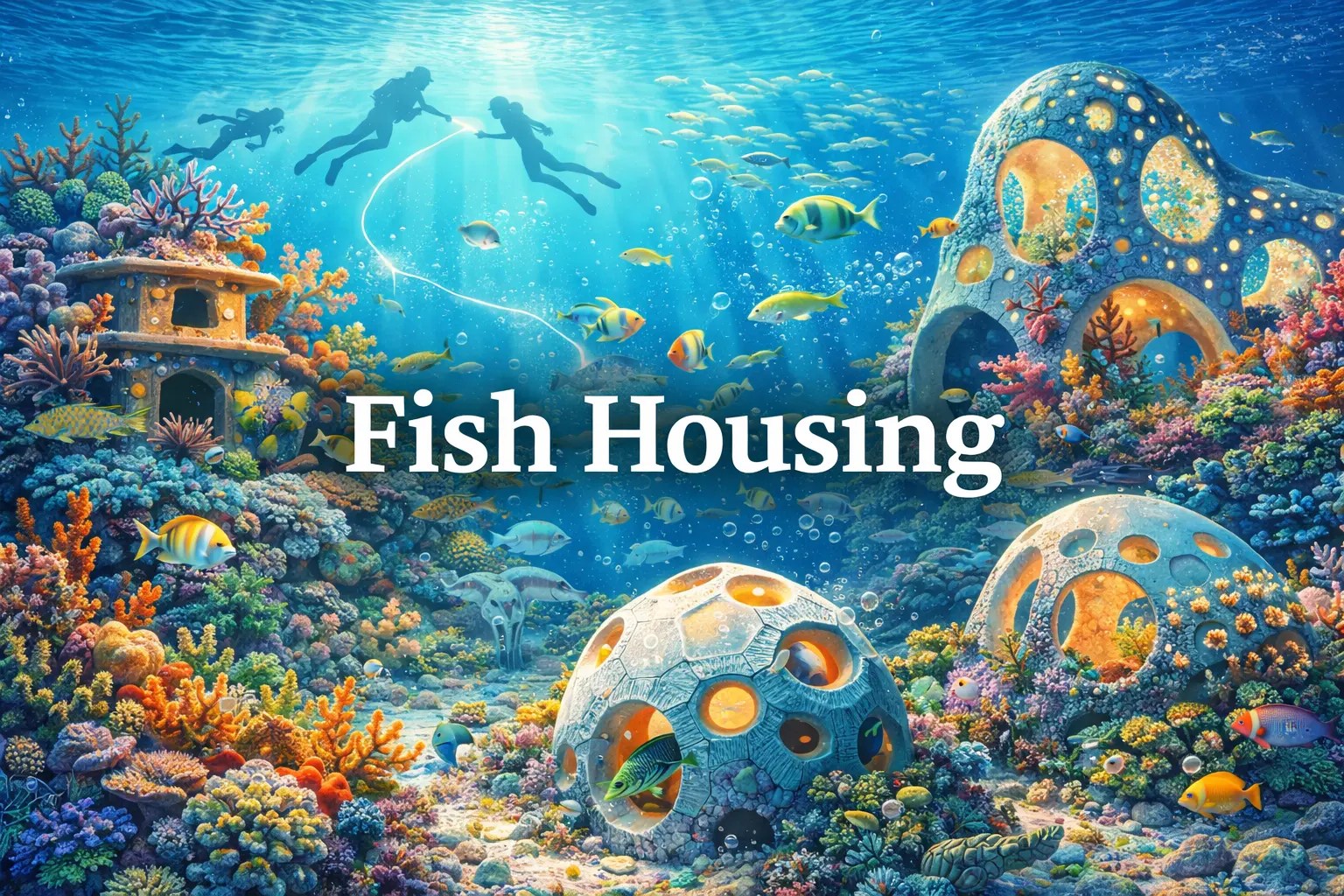
Fish Housing: Beyond Coral Reefs
Fish as Architects: Designing Their Ideal Homes
Imagine if fish could build their own homes. What would they look like? Scientists are exploring this question, hoping to gain insights into the housing preferences of fish and potentially improve the design of artificial reefs and other underwater structures.
Replicating Nature: The Search for the Perfect Coral Reef
One approach to fish housing has been to replicate natural coral reefs using 3D printing technology. However, scientists have discovered that simply copying existing habitats may not be the best solution. Coral reefs with too many branches can prevent fish from fitting inside, while wide gaps allow predators to enter and wreak havoc.
Beyond Replication: Exploring Alternative Designs
Researchers are now pushing the boundaries by designing artificial fish homes that deviate from natural structures. They are experimenting with a variety of shapes, materials, and features to determine what fish find most desirable.
The Fish as Architect: Unveiling Design Preferences
In one study, scientists presented damselfish, a crucial species for coral reef health, with a range of artificial structures and observed their behavior. They found that damselfish bevorzugten large shells, even though such shells are not found in nature. This suggests that fish may have specific preferences that are not met by their natural habitats.
Scientific Art: Collaboration Between Art and Science
The design of these artificial fish homes involves a unique collaboration between science and art. Artists have created structures that are both aesthetically pleasing and tailored to the needs of fish. These structures include a ceramic brick resembling a Rice Krispies Treat, a metal sponge with gaping holes, and a Barbie-pink block engineered for maximum surface area.
Building Fish Legos: Testing Structures in the Wild
Once the pandemic subsides, researchers plan to test these “fish Legos” in the wild by installing them on reefs in the Red Sea. They will observe which structures damselfish prefer, allowing the fish to become their own architects.
Understanding Animal Consciousness: Beyond Housing Preferences
This research on fish housing preferences goes beyond practical applications. It also aims to shed light on animal consciousness by demonstrating that fish have preferences about their habitat. This understanding could have implications for how we design spaces for other animals, including humans.
The Future of Underwater Architecture: Human and Fish Cohabitation
With sea level rise threatening coastal buildings, architects are looking to the future and considering designs that incorporate elements for both humans and marine creatures. By understanding the design preferences of fish, we can create coastal structures that are not only functional but also sustainable and inclusive.
Implications for Human Architecture
The research on fish housing preferences has potential applications for human architecture as well. By understanding the elements that make a space desirable for fish, we can gain insights into what makes a space comfortable and appealing for humans. This knowledge can inform the design of buildings that are both aesthetically pleasing and attuned to our needs.
Conclusion
The exploration of fish housing preferences is an exciting and innovative field of research that has the potential to improve the lives of both fish and humans. By understanding the design choices that fish make, we can create artificial homes that meet their needs and enhance their well-being. This research also has broader implications for animal consciousness and the future of underwater architecture, where humans and marine creatures can coexist in harmony.
