
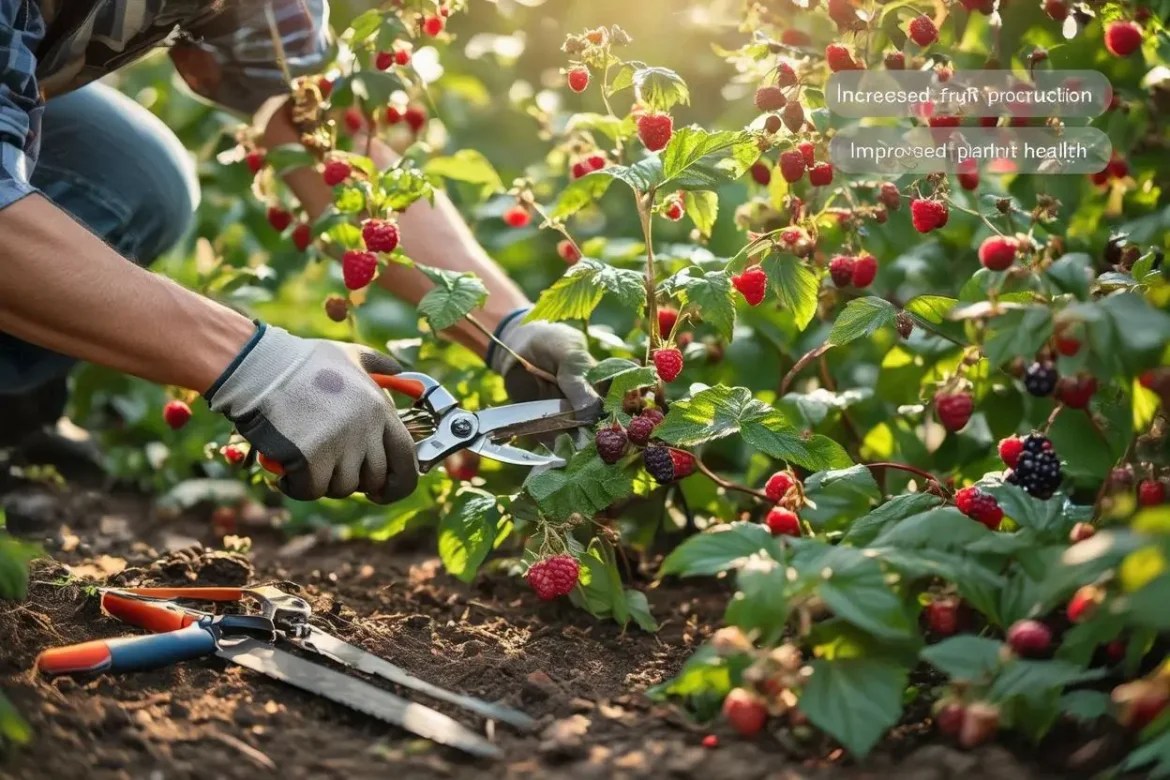
Pruning Raspberry and Blackberry Plants: A Comprehensive Guide
Understanding Raspberry and Blackberry Pruning
Raspberries and blackberries, two beloved fruit-bearing shrubs, require regular pruning to maintain their health and productivity. Pruning involves selectively removing certain canes to promote new growth, increase fruit production, and prevent disease.
Pruning Techniques for Summer-Bearing Raspberries
Summer-bearing raspberries produce fruit on two-year-old canes. To prune these varieties:
- In late winter or early spring, remove all canes that bore fruit the previous year.
- Thin the remaining canes to about four to five per foot along the row, selecting the healthiest and sturdiest ones.
- Tie the canes to support stakes or fencing for stability.
- Throughout the summer, prune any dead, diseased, or broken canes, as well as suckers outside the designated row area.
Pruning Techniques for Everbearing Raspberries
Everbearing raspberries produce fruit on current-season canes. For optimal production:
- In early spring, prune the entire bush to ground level.
- As new canes grow, thin them to about six inches apart, keeping the strongest ones.
- Throughout the summer, prune any dead, diseased, or broken canes, as well as suckers outside the row area.
Pruning Techniques for Blackberries
Blackberry pruning is similar to raspberry pruning:
- In the fall, after harvesting, remove all canes that bore fruit.
- In early spring, thin the remaining canes to about five to seven per plant.
- Prune back side branches on the remaining canes to about a foot long, containing roughly 12 buds. This technique, known as tip-pruning, encourages branching and fruit production.
- Tie the pruned canes to support fencing or stakes.
- Throughout the summer, inspect the plants and remove any dead, diseased, or broken canes.
Essential Pruning Tools
Proper pruning requires sharp, clean tools:
- Heavy gloves and eye protection
- Pruners (handheld shears)
- Loppers (larger shears)
- Stepladder (optional)
Pruning Practices to Avoid
- Overpruning: Avoid removing too many canes, as this can weaken the plant.
- Underpruning: Neglecting to prune can result in overcrowding, reduced fruit production, and increased disease susceptibility.
- Pruning at the wrong time: Pruning during the wrong season can damage the plant or interfere with fruit production.
Disease Prevention through Pruning
Pruning helps prevent disease by removing infected or damaged canes. Proper pruning techniques allow light and air to circulate within the plant, reducing the risk of fungal and bacterial infections.
Keeping Birds Away from Berries
Birds can be a nuisance in raspberry and blackberry patches. To protect your harvest:
- Net the bushes or use bird scare tactics (e.g., reflective tape, bird deterrents).
- Plant berry bushes near trees or shrubs to provide shelter for beneficial birds that prey on berry-eating birds.
By following these pruning guidelines and best practices, you can maintain healthy and productive raspberry and blackberry plants, ensuring a bountiful harvest of delicious berries for years to come.