
Unexploded WWII Bombs: A Persistent Threat in Germany
Discovery of Unexploded Bomb Leads to Massive Evacuation in Frankfurt
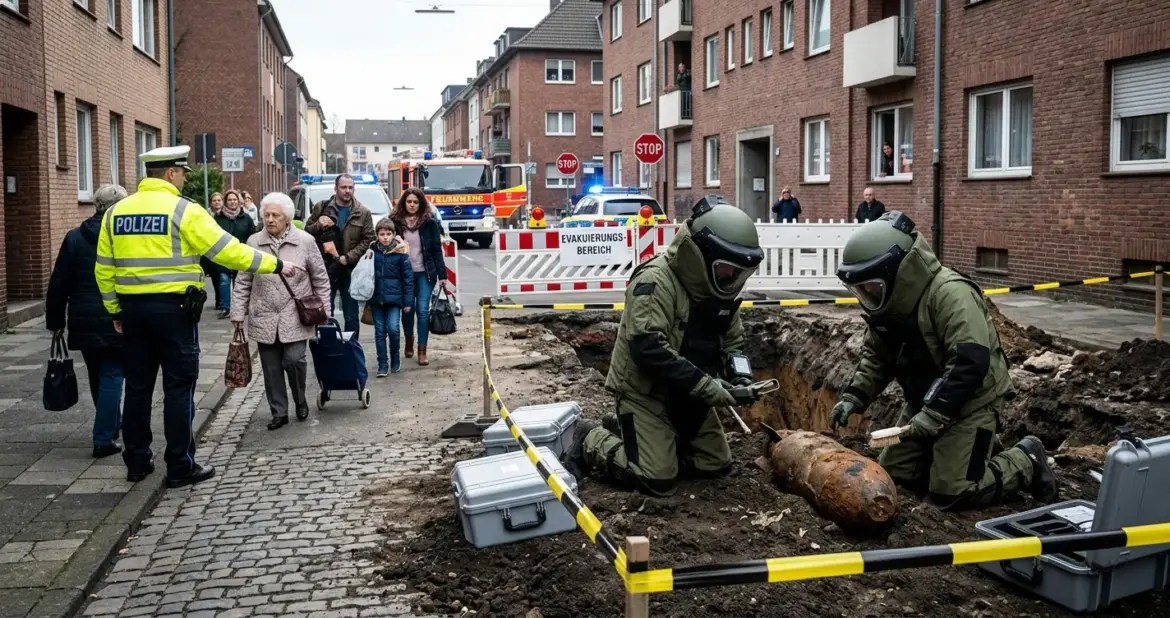
On a Sunday morning in Frankfurt, Germany, 60,000 people were forced to evacuate their homes after the discovery of a 4,000-pound unexploded World War II bomb at a building site near Goethe University. The bomb, known as an “HC 4000” or “Blockbuster,” was believed to have been dropped by the Royal Air Force over 70 years ago.
Evacuation and Defusal
Authorities identified the bomb on Tuesday and scheduled the evacuation for Sunday morning to minimize disruption to businesses and schools. Residents living within a one-mile radius of the bomb were ordered to leave their homes.
The bomb disposal squad used aerial photos and digital maps to locate the bomb and safely defuse it. The evacuation was orderly, and the city’s convention center was set up to receive evacuees, offering free admission to museums and public areas.
Unexploded Bombs: A Major Headache
The discovery of unexploded WWII bombs is not uncommon in Germany. Each year, approximately 2,000 tons of unexploded ammunition are found across the country. This is due to the fact that during World War II, the U.S. and British air forces dropped millions of bombs on Europe, many of which failed to explode.
In the haste to rebuild after the war, many of these bombs were not removed or defused, and they often ended up buried under buildings and infrastructure. This has created a persistent threat, as these bombs can still detonate if disturbed.
Ongoing Challenge
Bomb disposal experts are using advanced technology to find and defuse unexploded WWII bombs, but the process is labor-intensive and slow. It is estimated that there will still be unexploded bombs in Germany centuries from now.
Recent Evacuations
In recent years, there have been several large-scale evacuations in Germany due to the discovery of unexploded WWII bombs. In 2023, 21,000 people were evacuated in Koblenz, and 50,000 people were evacuated in Hanover.
Growing Danger
Experts warn that unexploded WWII bombs are becoming increasingly dangerous over time as their components break down. This makes it even more important to locate and defuse these bombs to protect public safety.
Conclusion
The discovery of unexploded WWII bombs remains a significant challenge in Germany. While bomb disposal experts are working diligently to locate and defuse these bombs, it is likely that they will continue to be a threat for many years to come.