Antarctica’s Surprising Past: Fossils Reveal Frogs and Forests
Discovery of Antarctic Frog Fossil
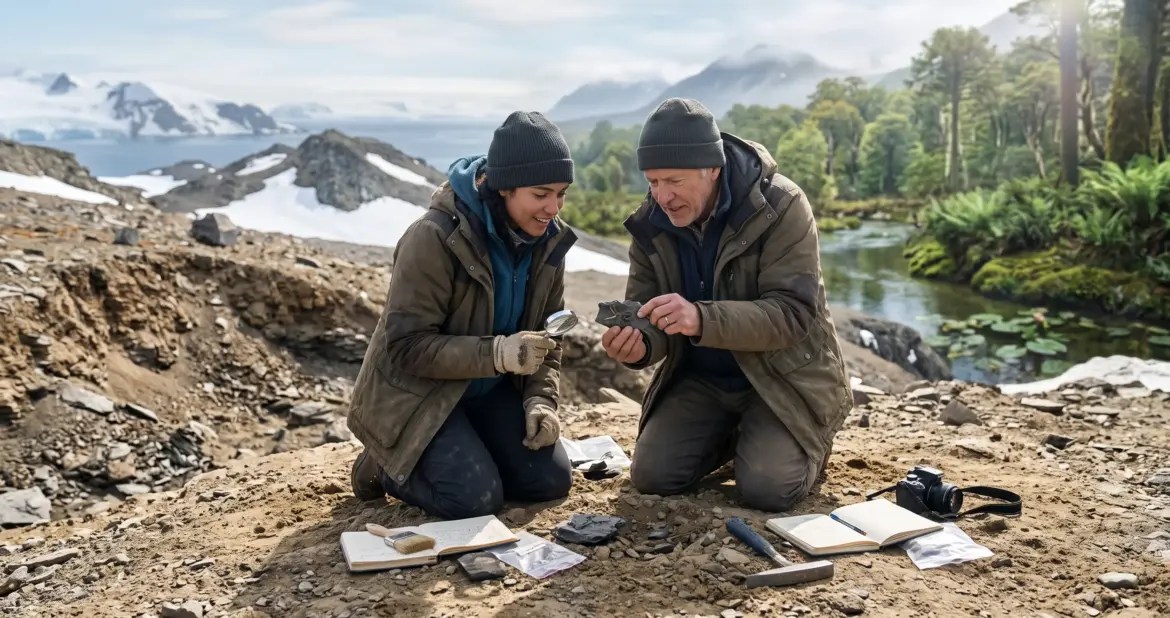
Paleontologists have made a groundbreaking discovery in Antarctica: the first-ever fossilized frog. This remarkable find sheds light on the continent’s once-balmy past.
The fossil, dating back approximately 40 million years, bears a striking resemblance to modern helmeted frogs found in Chile. This discovery suggests that Antarctica’s climate was once much warmer and more hospitable to life.
Ancient Rainforest Thrived in Antarctica
Further evidence of Antarctica’s lush past comes from a sediment core analysis that revealed ancient pollen, roots, and other telltale signs of a rainforest that flourished there some 90 million years ago. This rainforest ecosystem supported a diverse array of life, including mammals, leeches, and water lilies.
Antarctica’s Climate Transformation
The presence of a frog fossil and the remnants of a rainforest indicate that Antarctica’s climate has undergone a significant transformation over millions of years. Scientists believe that the continent’s icy sheets began to form around 40 million years ago.
The fossil frog’s ilium, a diagnostic bone in frog skeletons, provides valuable insights into the ancient Antarctic climate. By comparing the ilium to modern helmeted frogs, researchers estimate that monthly average temperatures at the time of the frog’s life were approximately 56 degrees Fahrenheit. This suggests that the climate was still suitable for cold-blooded animals like reptiles and amphibians.
Implications for Climate Change
The discovery of the frog fossil and the evidence of past forests in Antarctica have important implications for understanding climate change. Scientists believe that the continent’s climate transformation occurred as part of the breakup of the supercontinent Gondwana. However, the precise timing and mechanisms of this transformation are still being studied.
Moreover, the study of ancient Antarctic ecosystems can provide insights into the potential impacts of modern climate change. The melting of ice sheets due to human activities could potentially create conditions similar to those that existed in Antarctica millions of years ago, allowing forests and other life forms to colonize the continent once again.
A Glimpse into Antarctica’s Ancient World
The discovery of the frog fossil and the evidence of past forests paint a vivid picture of Antarctica’s once-diverse and vibrant ecosystem. These findings offer valuable clues about the continent’s climate history and provide a glimpse into the resilience of life in the face of environmental change.
As paleontologists continue to explore Antarctica’s fossil record, we can expect to uncover even more secrets about this enigmatic continent’s past and its potential future under the influence of climate change.