Women in Astronomy: Maria Mitchell and the Changing Landscape
Astronomy in the Early 19th Century
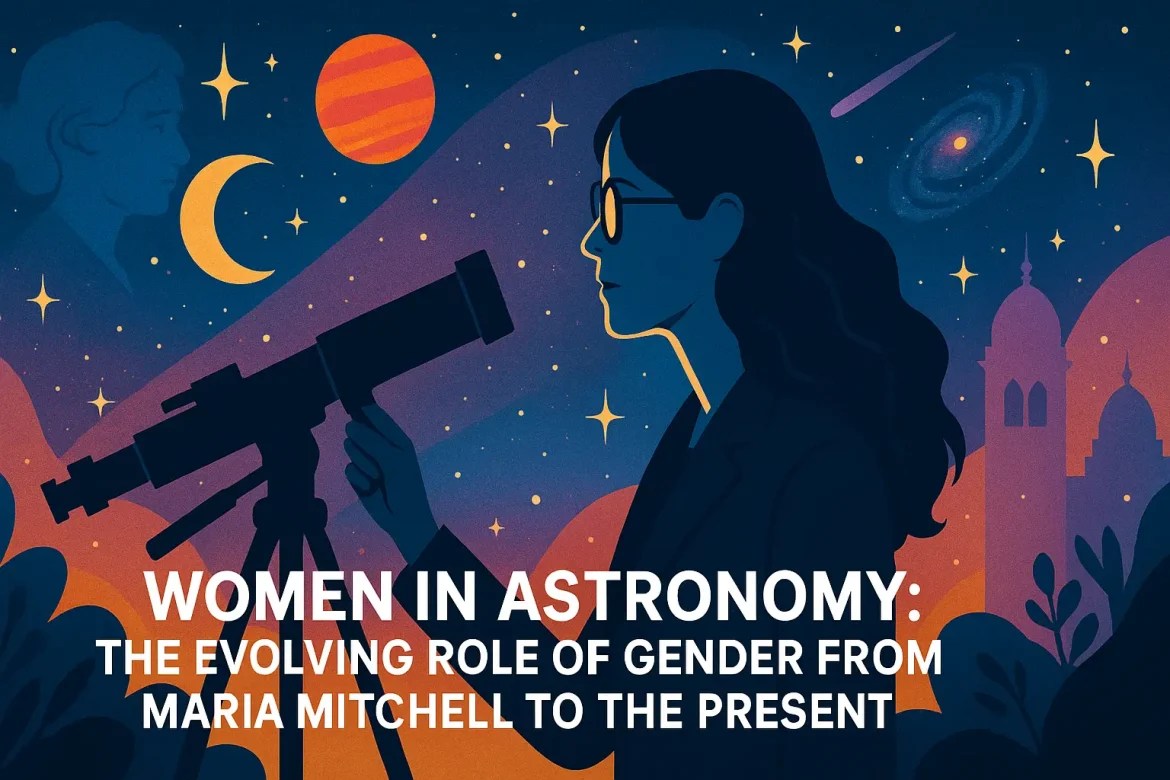
In the early 19th century, astronomy was not strictly considered a male-dominated field. Many educated girls were encouraged to observe the stars and planets, a practice known as “sweeping the sky.” Maria Mitchell, one of the first professional women astronomers, was nurtured in this environment. Her father, a teacher and astronomer, taught her the skills of astronomy from a young age.
Maria Mitchell’s Accomplishments
Maria Mitchell’s contributions to astronomy were significant. In 1847, she discovered a comet that became known as “Miss Mitchell’s Comet,” earning her international recognition. She was also the first woman elected into the American Academy of Arts and Sciences and the American Association for the Advancement of Science.
Mitchell’s work extended beyond her own research. She became a role model for aspiring women scientists, advocating for their inclusion in the field. She believed that women’s delicate touch and keen eyesight made them well-suited for the precise work of astronomy.
Vassar College and the Rise of Professional Science
In 1865, Maria Mitchell became the first astronomy professor and director of the observatory at the newly founded Vassar College. Her students, inspired by her passion for the subject, went on to make their own contributions to astronomy.
However, as science became increasingly professionalized, opportunities for women astronomers began to decline. In the 1870s, paid positions in astronomy became more common, and women faced increasing barriers to entry.
Mitchell’s Advocacy and Legacy
Despite the challenges, Maria Mitchell remained a vocal advocate for women in science. She co-founded the American Association for the Advancement of Women and served as its president for two years. She also used her platform to argue for the inclusion of women in astronomy, highlighting their unique skills and potential.
Mitchell’s legacy remains complex. While she made significant strides for women in astronomy, her story also reflects the challenges and setbacks that women have faced in the field. Today, women are still underrepresented in astronomy, with only 26% of astronomy PhDs and 25% of astronomy professors in the U.S. being women.
The Evolving Role of Gender in Astronomy
The history of Maria Mitchell and other women astronomers challenges the assumption that science has always been a male-dominated field. It highlights the influence of social and cultural factors on the opportunities available to women in STEM.
Mitchell’s story serves as a reminder that progress for women in science has not been linear. While there have been periods of advancement, there have also been setbacks. Recognizing these complexities is essential for understanding the ongoing challenges faced by women in astronomy and other scientific fields.