
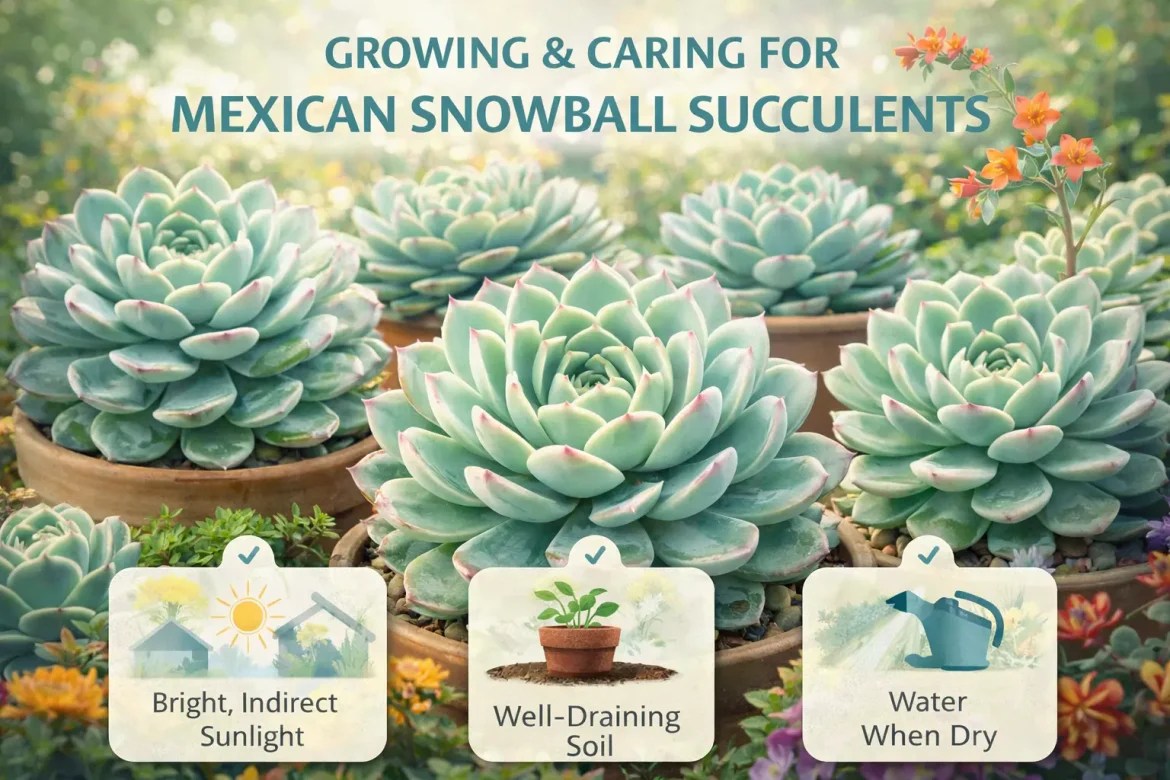
How to Grow and Care for Mexican Snowballs
Introduction
Mexican snowballs (Echeveria elegans) are a popular succulent known for their attractive rosette-shaped leaves and ease of care. This guide will provide comprehensive instructions on how to grow and care for these beautiful succulents, covering topics such as lighting, soil, watering, and more.
Lighting
Mexican snowballs thrive in bright, direct sunlight for several hours each day. Insufficient light can cause the plant to become leggy and lose its compact shape. When grown indoors, place them near a west or south-facing window. If necessary, supplement with grow lights. Outdoors, choose a location that receives a combination of direct and partial light throughout the day.
Soil
Mexican snowballs prefer well-draining, sandy soil. Avoid humus-rich soil, as it retains moisture for too long. A standard cactus or succulent potting mix is ideal.
Watering
These succulents are drought-tolerant and should be watered sparingly. Allow the soil to dry out completely between waterings. Overwatering can lead to root rot. During the winter months, reduce watering while the plant is dormant.
Temperature and Humidity
As desert plants, Mexican snowballs prefer hot, dry conditions. They do not tolerate cold weather or high humidity. Typical household temperature and humidity levels are suitable for these succulents when grown indoors.
Fertilizer
Mexican snowballs are not heavy feeders and do not require frequent fertilization. An annual application of a fertilizer designed for cacti and succulents in the early-mid spring is beneficial.
Pruning
Pruning is not necessary for Mexican snowballs; however, if they become leggy, you can cut back the top part of the stem that is still compact and replant it. Remove the bottom few leaves from the new rosette to expose the bare stem, which will develop new roots.
Propagation
Mexican snowballs can be easily propagated through leaf cuttings or division. Mature plants may produce offsets that can be separated and planted in their own pots. Alternatively, new plants can be grown by carefully twisting a healthy leaf from the succulent and placing it on top of dry soil. Within a few weeks, roots will sprout from the end of the leaf, and a new succulent will eventually develop.
Repotting
Mexican snowballs do not require frequent repotting and can tolerate being rootbound. Repot only when they have outgrown their container, as indicated by roots growing out of the drainage holes. Use a pot that is 2-3 inches larger than the previous one.
Overwintering
Mexican snowballs are not frost-tolerant and must be overwintered indoors if grown outdoors in USDA zones below 9. The easiest way to do this is to grow them in containers that can be moved indoors during the colder months.
Common Pests and Diseases
Generally, Mexican snowballs are not prone to pests or diseases; however, they may occasionally be affected by mealybugs or aphids. Regularly inspect your plants for pests and apply preventative treatments to mitigate potential infestations.
Additional Tips
- When watering, avoid getting water on the leaves, as this can promote rot.
- Mexican snowballs can benefit from occasional misting, especially during hot, dry weather.
- If your Mexican snowball develops brown or yellow leaves, it may be a sign of too much sun or underwatering.
- Protect Mexican snowballs from frost and cold temperatures, as they can cause damage to the plant.