
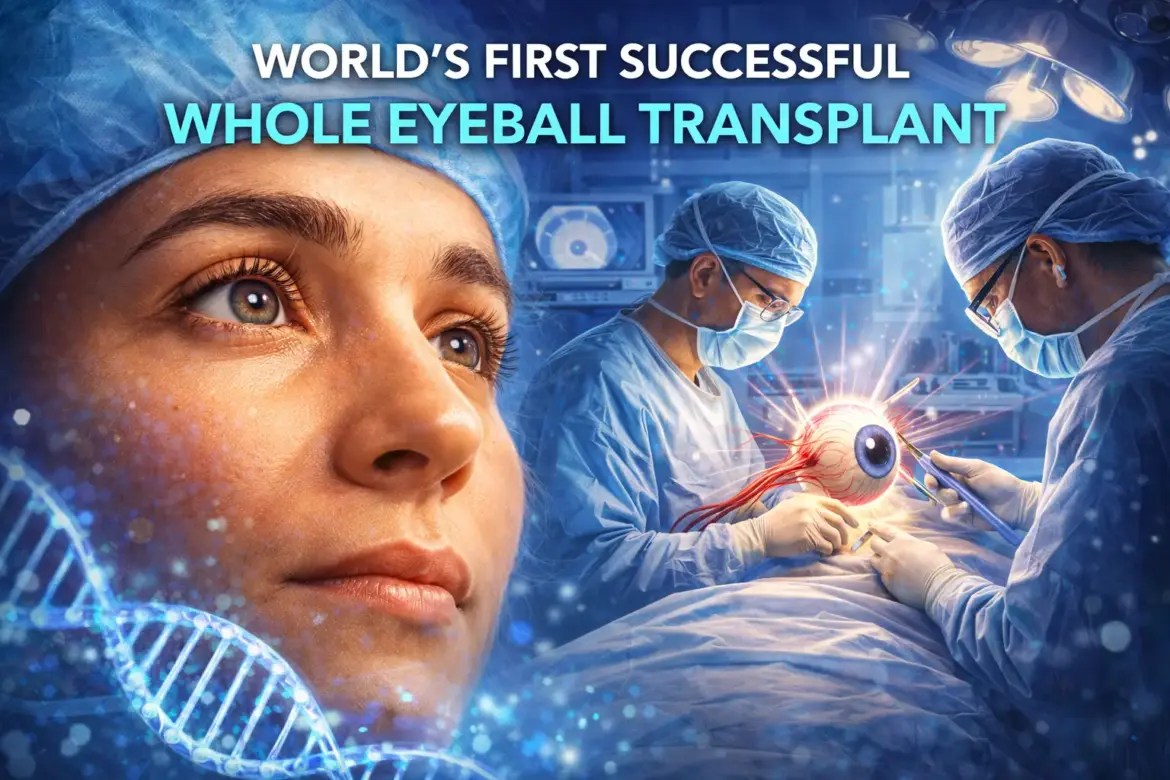
World’s First Whole Eyeball Transplant Gives Hope to Severely Injured Veterans
Surgeons Perform Groundbreaking Procedure
In a medical milestone, surgeons at NYU Langone Health have performed the world’s first successful whole eyeball transplant. The recipient, Aaron James, a 46-year-old military veteran, suffered severe facial injuries in an electrical accident in 2021. Despite multiple reconstructive surgeries, James lost his left eye, which caused him constant pain.
Unique Challenges of Eyeball Transplant
Transplanting an entire eyeball is an extremely complex procedure due to the delicate nature of the optic nerve, which connects the eye to the brain. Damage to the optic nerve can lead to blindness or even death. Additionally, the eye must be transplanted within a short window of time after donation to ensure its viability.
James’ Journey to Transplantation
After James’ accident, face transplant specialists at NYU Langone Health proposed the idea of not only a partial face transplant but also a whole-eye transplant. James understood the risks but believed the potential benefits outweighed the dangers.
In February 2023, James was listed as a potential transplant recipient. Three months later, a donor was identified at another New York City hospital. The donor, a young man in his 30s, had expressed a strong desire to donate his organs.
The Complex Surgery
On the day of the groundbreaking surgery, over 140 medical professionals gathered at NYU Langone Health. They worked simultaneously in two operating rooms, removing the damaged portions of James’ face and preparing the donor’s face and eyeball for transplantation.
The surgery took 21 hours, during which time surgeons transplanted the donor’s nose, upper and lower lips, tissues below the right eye, and the left orbital bones, eye socket, eyelids, eyebrow, and surrounding tissues. They also injected adult stem cells from the donor’s bone marrow into James’ optic nerve in an attempt to repair any damage.
Recovery and Outlook
James spent 17 days in the intensive care unit before moving to a nearby apartment for continued rehabilitation. Today, he is back home with his family in Arkansas and is slowly regaining his quality of life.
While James cannot yet see out of the transplanted eyeball, the organ appears to be healthy. Early tests indicate that the light-detecting cells in the retina are perceiving light and sending signals to the visual cortex in his brain. Doctors are hopeful that with time and further research, James may eventually regain some vision.
Significance of the Transplant
The successful whole eyeball transplant is a major advancement in medical science. It opens up new possibilities for treating patients who have lost their eyesight due to severe injuries or diseases. Researchers are now working to refine the procedure and improve the chances of successful vision restoration.
Ethical Considerations
Whole eyeball transplantation raises important ethical considerations, particularly regarding the consent of both the donor and the recipient. It is essential to ensure that potential donors fully understand the risks and benefits of donation and that recipients are well-informed about the potential outcomes of the surgery.
Future Directions
The field of whole eyeball transplantation is still in its early stages, but the potential for this procedure to transform the lives of severely injured patients is enormous. Researchers are actively working to improve surgical techniques, develop new therapies to promote optic nerve regeneration, and explore the use of artificial intelligence to enhance the accuracy and precision of the surgery.
With continued advancements in medical science, the hope is that whole eyeball transplantation will become a standard treatment option for patients who have lost their sight due to trauma or disease.