
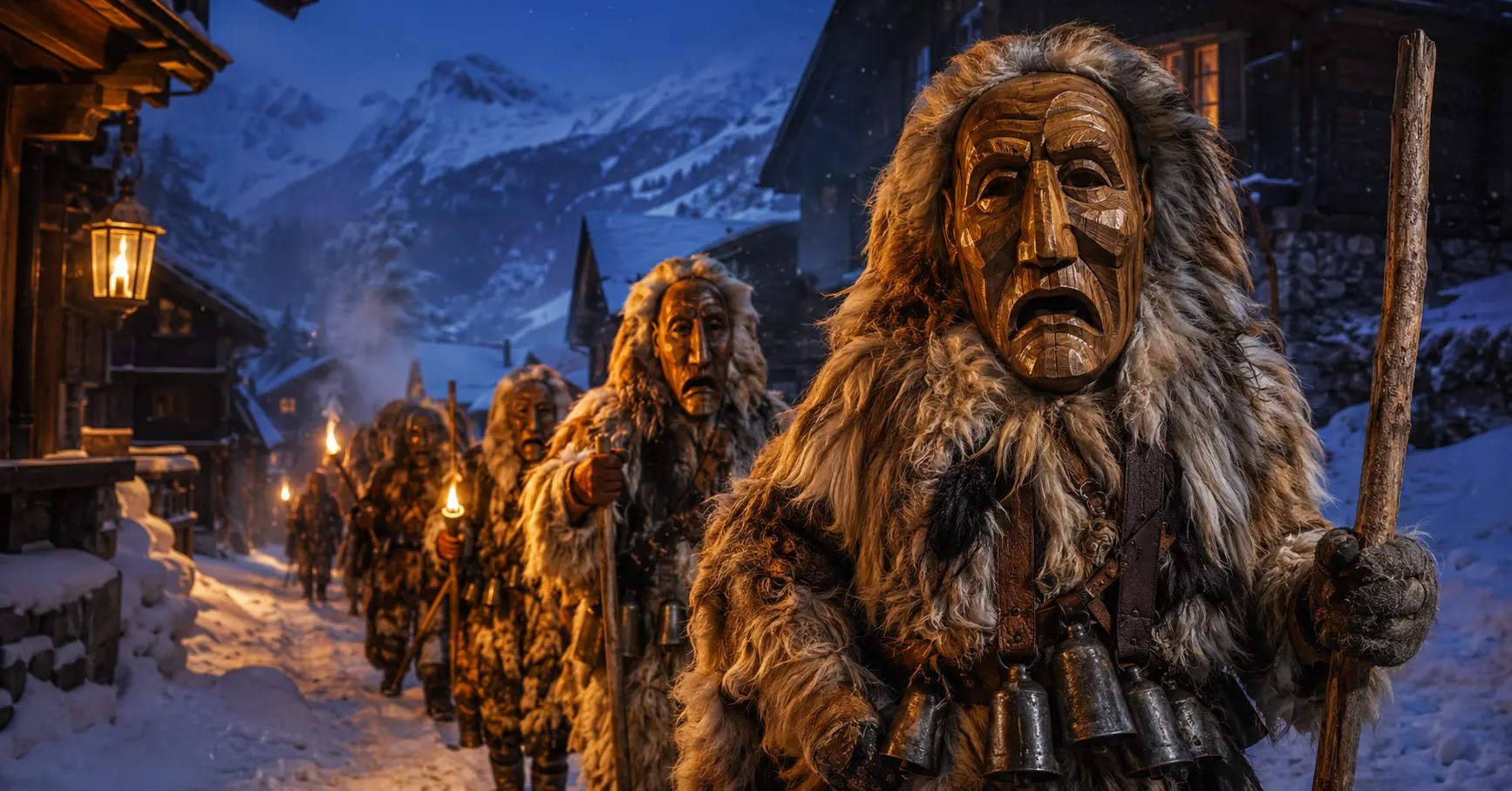
Tschäggättä: Unveiling the Enigmatic Carnival Tradition of Switzerland’s Lötchental Valley
Historical Origins and Folklore
The Tschäggättä, a unique and enigmatic tradition that takes place in the Lötchental Valley of Switzerland, has captured the imagination of locals and visitors alike for centuries. The origins of this fascinating custom remain shrouded in mystery, with various theories attempting to explain its genesis.
One popular legend traces the Tschäggättä back to the “Schurten Diebe,” a group of young men who donned animal skins and wooden masks to steal from villagers across the valley. Another theory suggests that the Tschäggättä emerged as a means for unmarried men to interact with women more freely amidst the strictures of Catholic society.
The Ecclesiastical Influence
Some scholars believe that the Tschäggättä may have evolved from the devil figure in baroque theater, which flourished in the 17th and 18th centuries. This theory aligns with the Tschäggättä’s fearsome appearance and the use of masks to conceal their identities.
The Role of Masks
Central to the Tschäggättä tradition are the elaborate hand-carved masks, which have become iconic symbols of the festival. Initially made from bare wood, masks evolved over time with the introduction of painting and the incorporation of artistic elements. Today, mask-making is a respected craft, with skilled artisans showcasing their talent and creativity.
Modern Manifestations
While the Tschäggättä tradition has remained largely faithful to its roots, modern influences have crept in. Some masks now feature pop-culture references, such as Marvel’s Venom or Edvard Munch’s The Scream. The Tschäggättä also participate in a grand procession with floats and marching bands during the Carnival festivities.
Experiencing the Tschäggättä
For visitors, the best opportunities to witness the Tschäggättä in action are on Thursday night and Saturday afternoon before Ash Wednesday. On Thursday night, the “citizen-beasts” run through the streets of Blatten and Ferden, while on Saturday, a costume contest showcases the most impressive masks and furs.
Cultural Impact and Significance
The Tschäggättä tradition is deeply intertwined with the cultural identity of the Lötchental Valley. It provides a unique lens through which to explore Swiss folklore, artistry, and the interplay between tradition and modernity. The festival has also attracted international attention, with visitors flocking to witness this extraordinary spectacle.
