
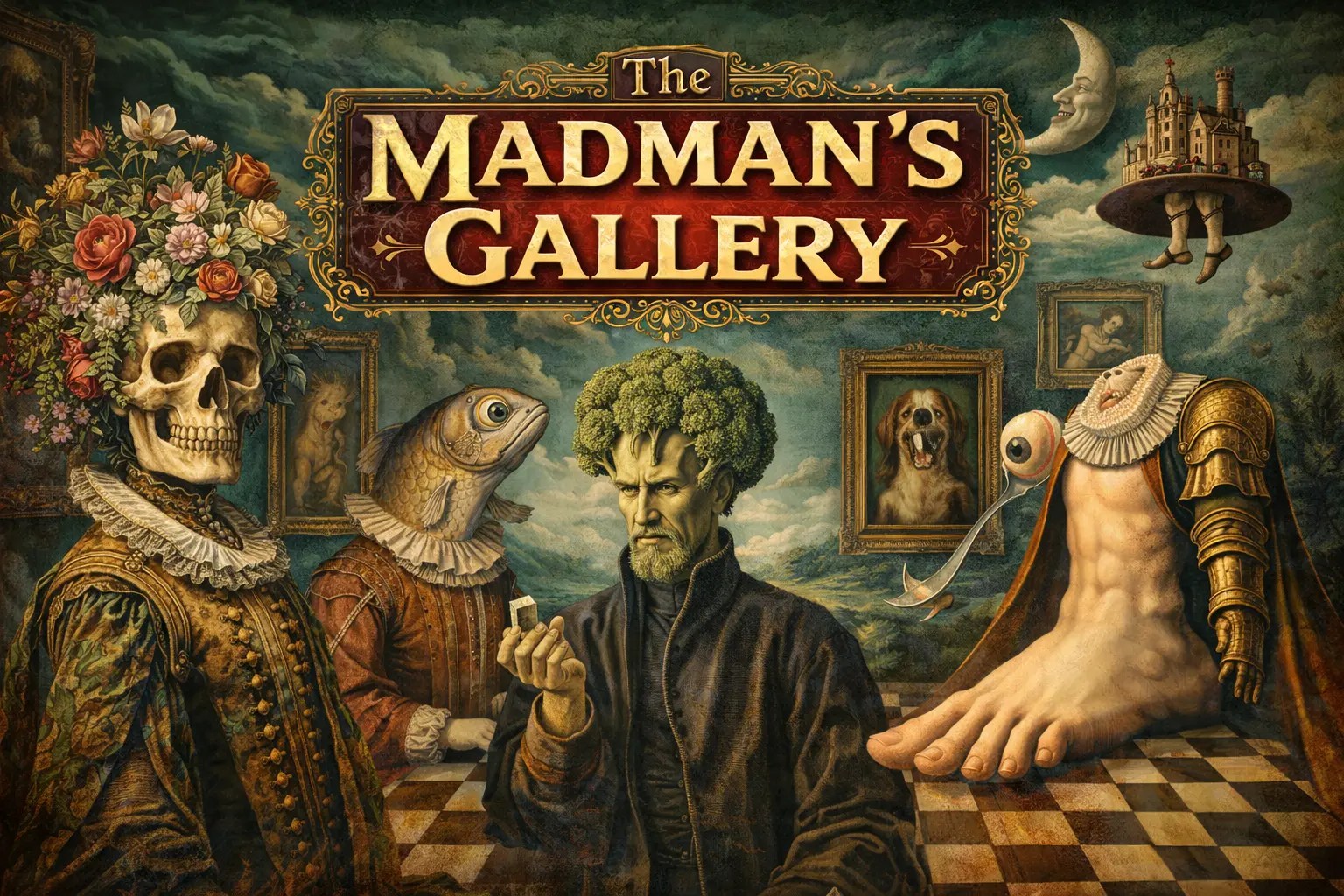
Edward Brooke-Hitching’s Exploration of Strange and Unusual Art
Edward Brooke-Hitching, a writer and rare book collector, has a knack for uncovering the strange and unusual in the world of art. His book, “The Madman’s Gallery: The Strangest Paintings, Sculptures, and Other Curiosities From the History of Art,” takes readers on a journey through some of the most bizarre and fascinating artworks ever created.
Franz Xaver Messerschmidt’s Character Heads
One of the most striking examples of strange art featured in Brooke-Hitching’s book is the series of Character Heads sculptures by Franz Xaver Messerschmidt. These life-size busts depict a wide range of emotions, from petulance to amusement to shame. Their exaggerated expressions and intriguing titles have made them a subject of fascination for art historians and enthusiasts alike.
Edward Brooke-Hitching’s “The Madman’s Gallery”
In “The Madman’s Gallery,” Brooke-Hitching presents an “alternative guided tour of art history,” focusing on the oddities, the forgotten, and the freakish. The book is richly illustrated, offering readers a glimpse into the lives of the artists and the eras that produced these strange and wonderful works.
The Mysterious Glycon Carving
One of the most curious artworks featured in “The Madman’s Gallery” is the Glycon carving, discovered beneath a railway station in Romania in 1962. This “curious and confusing” sculpture depicts the serpent form of the healing god Asclepius, and its story involves a con artist, a snake deity, and a hand puppet.
Kusozu: Japanese Watercolors of Decomposition
In Japan, Brooke-Hitching introduces readers to kusozu, watercolors depicting the nine stages of human decomposition. These works were used to highlight the impermanence and foul nature of the mortal body, and to discourage lust among Buddhist monks and devotees.
Dog-Headed Icons of Saint Christopher
In Russia, Brooke-Hitching explores the widely held medieval belief in a foreign race of dog-headed men living at the edge of the world. This belief is reflected in the dog-headed icons of Saint Christopher, which combine local legends with the imperial magnificence of Christianity.
The Enigmatic Mona Lisa
No compendium of enigmatic art would be complete without a mention of the Mona Lisa. Brooke-Hitching delves into the mystery of the Prado Museum’s version of the famous painting, which is thought to have been painted simultaneously with the original by one of Leonardo’s students. He also discusses the speculation surrounding a possible nude version of the Mona Lisa, now thought to be lost.
Outsider Art and Stolen Art
Brooke-Hitching’s exploration of strange art extends beyond historical masterpieces to include outsider art and stolen art. He examines works created by people outside the traditional art world, as well as art that has been illegally acquired or taken from its rightful owners.
Art Made to Be Destroyed
Some of the most fascinating works of art are those that were created to be destroyed. Brooke-Hitching highlights examples of art made from perishable materials, such as ice or sand, as well as art that was intended to be burned or otherwise destroyed after its creation.
The Art of the Heart and the Art of Men in Flames
Brooke-Hitching concludes his journey through strange art by exploring works that express the depths of human emotion, from love and joy to pain and despair. He also examines art that depicts the destructive power of war and human conflict.
Ultimately, Edward Brooke-Hitching’s “The Madman’s Gallery” is a testament to the boundless creativity and imagination of human beings. It is a celebration of the strange, the unusual, and the downright bizarre, and it invites readers to see the world of art in a whole new light.
