
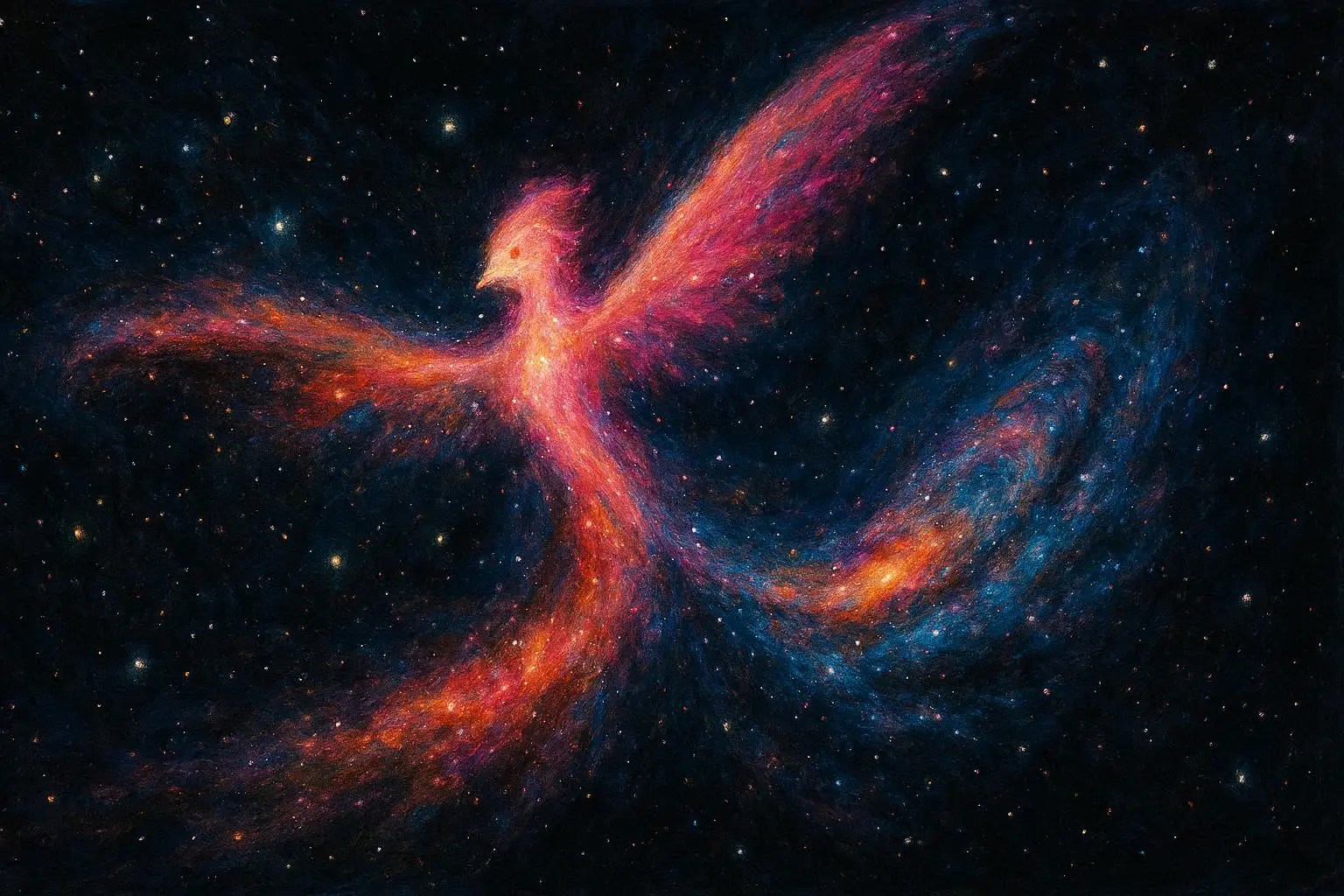
Tinkerbell in the Southern Skies: A Galactic Collision
Discovery of the Cosmic Bird
Astronomers made an extraordinary discovery in the southern hemisphere skies: a three-way collision of galaxies, aptly nicknamed the “Cosmic Bird.” This celestial spectacle, located approximately 650 million light-years away, bears a striking resemblance to the beloved fairy from J.M. Barrie’s classic tale.
A Fleeting Appearance
Like the ephemeral nature of fairies, the Tinkerbell galaxy is making a brief appearance as the colliding galaxies whiz past each other at astonishing speeds of 870,000 miles per hour. However, this fleeting moment is marked by intense gravitational interactions that are fueling a remarkable phenomenon.
Star Formation in Tinkerbell’s Head
Within the “head” of the Tinkerbell galaxy, gravitational forces are creating a stellar nursery where new stars are being born at an astounding rate of approximately 200 solar masses per year. This process leaves behind a trail of glowing gas and dust, akin to the fairy dust associated with Tinkerbell.
The Very Large Telescope Array
The discovery of the Cosmic Bird was made possible thanks to the European Southern Observatory’s Very Large Telescope array, a quartet of telescopes situated amidst the majestic Andes Mountains of northern Chile. This advanced observatory provides astronomers with exceptional capabilities for studying the distant universe.
A Glimpse into Cosmic Evolution
The Tinkerbell galaxy collision offers scientists a rare opportunity to witness the dynamic processes that shape the evolution of galaxies. The intense gravitational interactions between the colliding galaxies are thought to trigger star formation and merge the galaxies into a single, more massive entity.
A Symphony of Celestial Interactions
The Tinkerbell galaxy collision is a mesmerizing example of the complex and interconnected nature of the cosmos. It showcases the interplay of gravity, star formation, and galactic evolution, providing astronomers with invaluable insights into the origins and destiny of our universe.
Future Observations and Research
The discovery of the Tinkerbell galaxy collision has ignited excitement within the scientific community. Researchers are eagerly awaiting further observations to unravel the mysteries surrounding this celestial phenomenon. Future studies will aim to determine the precise nature of the colliding galaxies, measure the star formation rate more accurately, and explore the long-term impact of the collision on galactic evolution.
A Celestial Beacon of Wonder
The Tinkerbell galaxy collision serves as a reminder of the boundless wonders that exist beyond our planet. It sparks our curiosity and invites us to contemplate the vastness and complexity of the cosmos. As we continue to explore the celestial tapestry, discoveries like the Cosmic Bird will continue to inspire and captivate us.
