
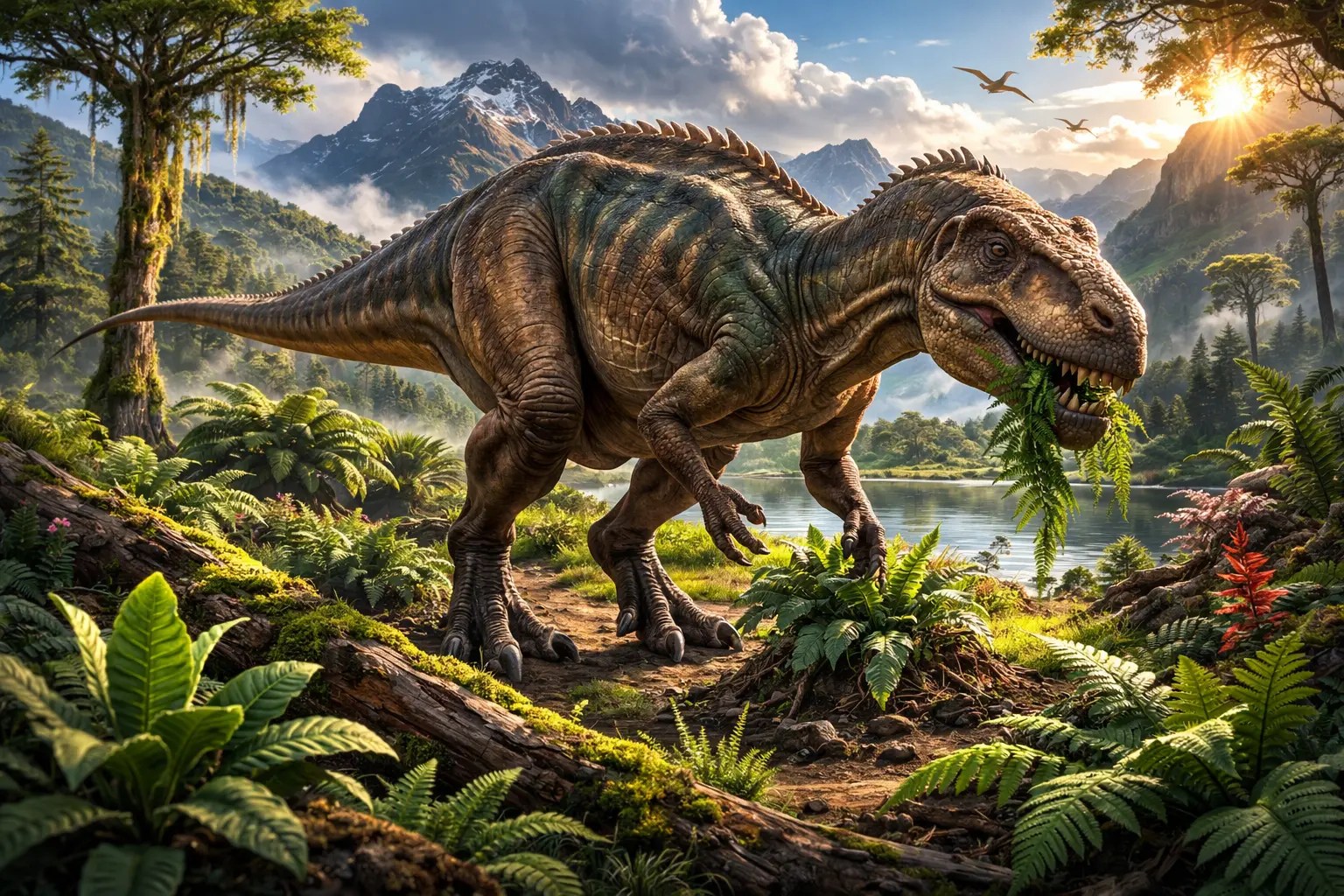
New Discovery: Chilesaurus, the Plant-Eating Dinosaur
Discovery and Description
In 2004, a young boy named Diego Suarez made an extraordinary discovery while hiking in southern Chile. Among the bones he collected were those of a previously unknown dinosaur. Over a decade later, paleontologists have named the dinosaur Chilesaurus diegosuarezi in honor of Diego and the region where it was found.
Chilesaurus is a theropod, a group of dinosaurs that was traditionally thought to be exclusively carnivorous. However, with its blunt, rounded skull and short, leaf-shaped teeth, Chilesaurus stands out as a strict plant-eater. This discovery challenges our previous understanding of theropod evolution and suggests that herbivory evolved multiple times within this group.
Early Herbivorous Theropods
Chilesaurus is not the first known plant-eating theropod. In 2009, paleontologists described Limusaurus, a 150-million-year-old turkey-sized theropod with a beak adapted for pecking at fern fronds. Together with Chilesaurus, these discoveries indicate that herbivory among theropods may have emerged earlier than previously believed.
Ecological Importance
In the ecosystem where Chilesaurus was found, its bones are more abundant than those of any other creature. This suggests that Chilesaurus played a significant ecological role. Unlike most environments of the same age, where beaky ornithischian herbivores were dominant, Chilesaurus thrived as a theropod in a plant-eating niche.
Evolutionary Implications
The discovery of Chilesaurus has implications for our understanding of theropod evolution. If Chilesaurus’s proposed placement in the theropod family tree is correct, it suggests that at least three and possibly seven lineages of theropods independently adapted to a plant-based diet. One of these lineages may even be linked to the origin of birds, the only surviving group of theropod dinosaurs.
Factors Driving Herbivory
The reasons why some theropods evolved to become herbivores are not fully understood. However, one possibility is that changes in the environment created new opportunities for plant-eating dinosaurs to thrive. As competition for meat increased, some theropods may have shifted to a vegetarian diet to avoid competition and exploit untapped resources.
Conclusion
Chilesaurus is a unique and enigmatic dinosaur that challenges our preconceptions about theropods and sheds light on the evolutionary pathways of herbivory in this group of dinosaurs. Its discovery is a reminder of the remarkable diversity and adaptability of life on Earth and the ongoing process of scientific discovery that continues to deepen our understanding of the natural world.
