
HI-SEAS: Simulating the Psychological Challenges of Mars Exploration
Background
The Hawaii Space Exploration Analogue and Simulation (HI-SEAS) project is a yearlong experiment designed to study the psychological effects of long-duration isolation on humans in a simulated Mars environment. Six crew members lived together in a self-sufficient habitat on the side of a Hawaiian volcano, limiting their contact with family and friends and experiencing conditions similar to those they might encounter on the Red Planet.
Challenges of Isolation
One of the primary challenges of space travel is the psychological impact of isolation. HI-SEAS participants faced a 20-minute communication delay, simulating the delays that would exist on Mars. They also experienced extreme temperatures, freeze-dried foods, and the grueling reality of being cut off from loved ones.
Psychological Effects
The HI-SEAS mission revealed several psychological effects of isolation. Crew members experienced mood swings, anxiety, and difficulty sleeping. They also reported feeling homesick and missing their families. At least two crew members experienced family deaths during their isolation, adding to the emotional toll.
Coping Mechanisms
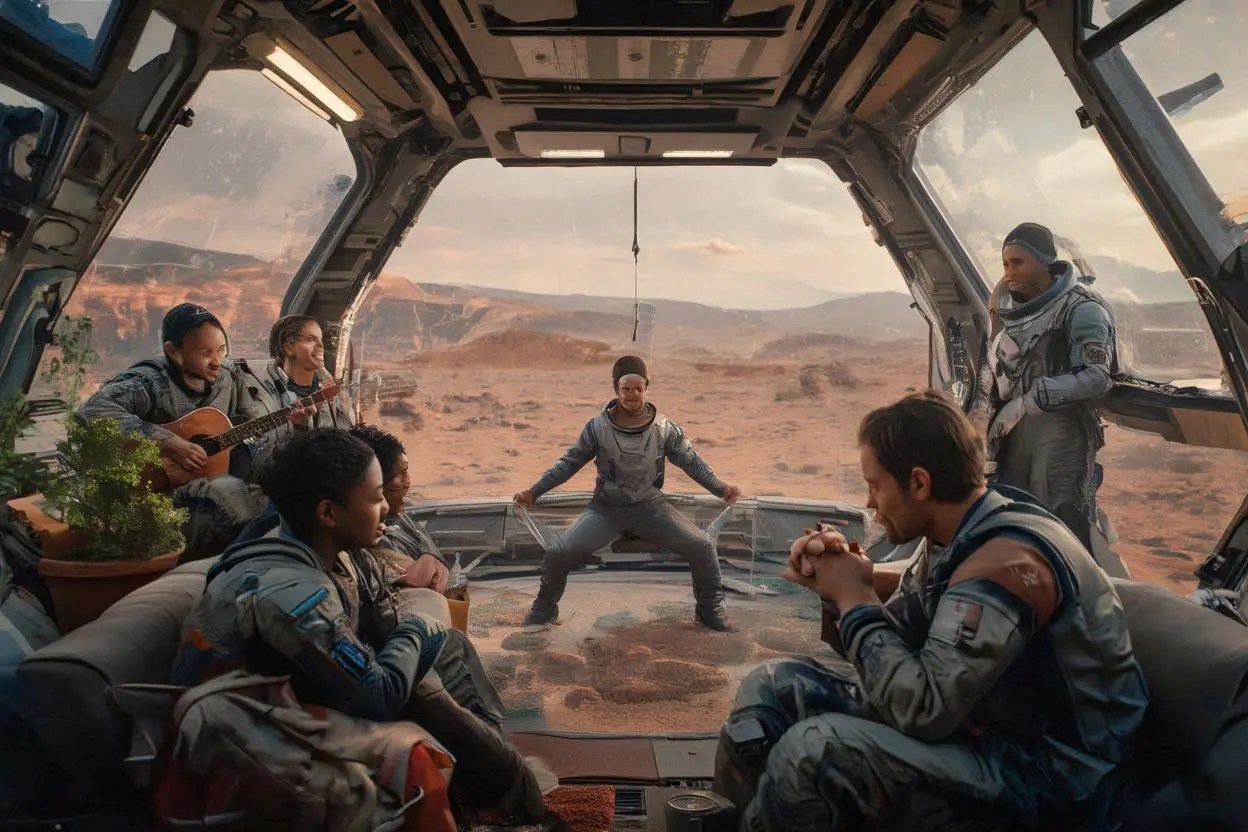
To cope with the challenges of isolation, the crew members developed various strategies. They played games, organized dance-offs, and engaged in other activities to maintain their morale. They also relied on each other for support and companionship.
Mini-Emergencies
HI-SEAS researchers introduced several mini-emergencies into the mission, such as a broken water system. These events provided valuable insights into how crew members would react to unexpected challenges and work together to resolve them.
Terrestrial Analogues
HI-SEAS is one of several terrestrial analogues used to study the challenges of space travel. Unlike simulations that focus on physical training, HI-SEAS specifically examines the psychological aspects of living and working in isolated environments.
NASA’s Role
HI-SEAS is funded by NASA’s Behavioral Health and Performance initiative and administered by the University of Hawai’i and Cornell University. NASA uses the findings from HI-SEAS to develop strategies for supporting astronaut mental health during long-duration space missions.
Lessons for Mars Exploration
The HI-SEAS mission has provided valuable lessons for future Mars exploration missions. Crew members learned the importance of resilience, teamwork, and adaptability in isolated environments. They also developed strategies for coping with the psychological challenges of long-duration isolation.
Future Missions
HI-SEAS is currently recruiting for future missions. The project continues to play a vital role in preparing astronauts for the psychological rigors of space travel and informing NASA’s strategies for supporting astronaut mental health on Mars and beyond.
