
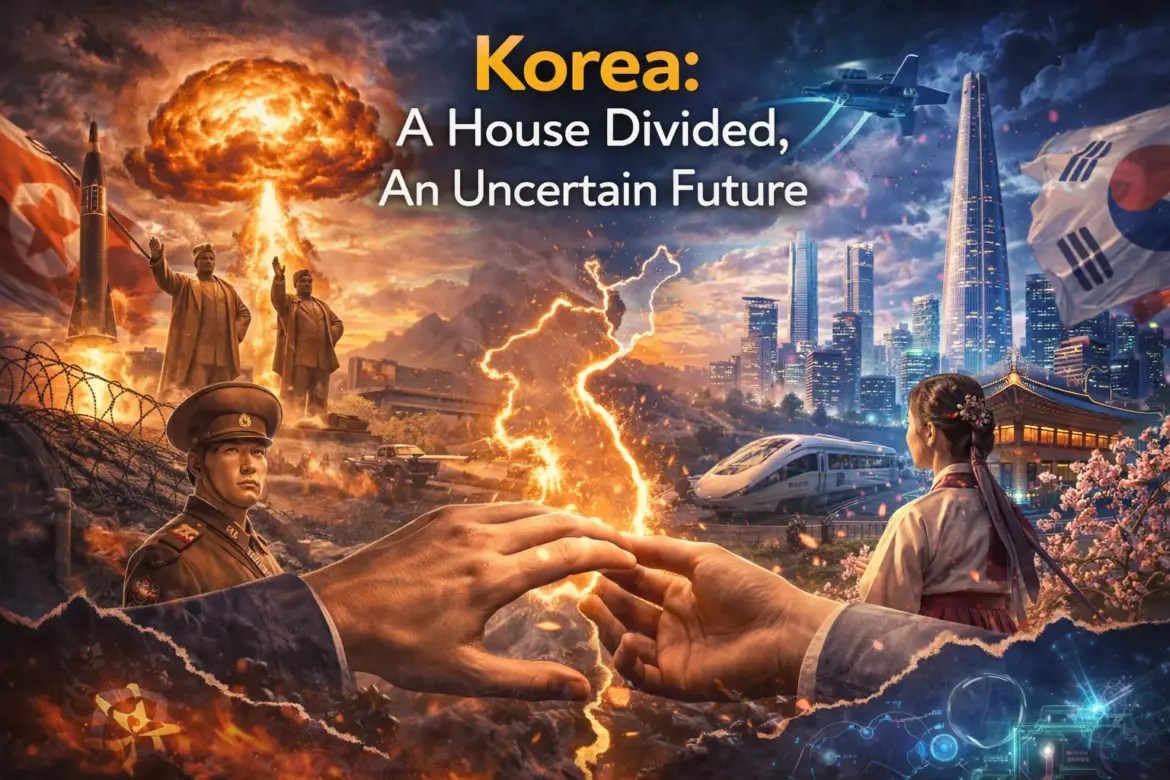
Korea: A Divided Past, an Uncertain Future
Historical Legacy and Current Tensions
Korea, a peninsula divided since the end of World War II, remains a flashpoint of conflict between North and South. The Korean War, which ended in a stalemate in 1953, left behind a legacy of mistrust and a heavily fortified border, the Demilitarized Zone (DMZ).
North Korea, under the rule of the Kim family dynasty, has pursued a path of self-reliance and nuclear armament, leading to ongoing tensions with the United States and its allies. In contrast, South Korea has embraced democracy and economic liberalization, becoming a vibrant and prosperous nation.
The Divide Between the Koreas
The two Koreas stand in stark contrast today. Seoul, the capital of South Korea, is a bustling metropolis where skyscrapers, shopping malls, and high-tech innovation thrive. North Korea, on the other hand, struggles with economic isolation, food shortages, and a repressive regime.
Despite their differences, the two Koreas share a common cultural heritage and a deep-seated desire for reunification. However, the path to reconciliation remains fraught with challenges.
The Economic Divide
South Korea’s economic miracle has been fueled by a strong emphasis on education, export-oriented industries, and the concentration of economic power in a few large conglomerates. In recent years, the country has also opened its markets to foreign investment and encouraged consumer spending.
North Korea, on the other hand, has suffered from economic mismanagement, sanctions, and a lack of foreign investment. The country faces severe food shortages and relies heavily on humanitarian aid.
The Nuclear Threat
North Korea’s pursuit of nuclear weapons has raised fears of a regional arms race and a potential nuclear conflict. The United States and its allies have urged North Korea to abandon its nuclear program, but Pyongyang has refused, citing threats from its enemies.
The Sunshine Policy and Beyond
South Korea’s former president, Kim Dae Jung, launched the Sunshine Policy in 1998, aiming to engage with North Korea and promote peaceful reunification. The policy led to a summit meeting between Kim and North Korean leader Kim Jong Il in 2000, but it was hampered by North Korea’s continued nuclear ambitions.
Current South Korean President Roh Moo Hyun has taken a more cautious approach towards North Korea, while emphasizing the importance of maintaining close ties with the United States.
Cultural Divide and Reconciliation
Despite their shared heritage, North and South Koreans have developed distinct cultural identities over the past decades. South Koreans have embraced global influences and modern lifestyles, while North Koreans live under a strict regime that restricts personal freedoms and access to outside information.
Efforts to bridge the cultural divide include family reunions, artistic collaborations, and the growing popularity of South Korean pop culture in North Korea. However, the path to true reconciliation remains long and complex.
Seoul: A Tale of Two Cities
Seoul, a city of contrasts, offers a glimpse into both the vibrant and divided nature of Korea. The city’s modern skyline and bustling markets stand in stark contrast to the reminders of the war that are still visible today.
The Seoul Studio Complex, once a fortress, now houses a film studio that recreates the Panmunjom border village. Visitors can witness mock negotiations and contemplate the fragile peace that exists between North and South.
The Search for Identity
South Koreans grapple with their own identity, torn between their traditional heritage and the allure of modern society. They seek to preserve their cultural traditions while embracing the opportunities offered by globalization.
North Koreans, isolated from the outside world, face a different set of challenges. They are taught to view their leaders as gods and to fear the outside world. Yet, there are signs of change, as information and ideas slowly penetrate the country’s borders.
The Future of Korea
The future of Korea remains uncertain. The reunification of the two Koreas remains a distant dream, but the desire for reconciliation and a peaceful coexistence lingers on.
North Korea faces a daunting task in reforming its economy and abandoning its nuclear ambitions. South Korea, meanwhile, must continue to navigate the complex geopolitical landscape and maintain its economic and technological advancements.
The legacy of the Korean War casts a long shadow over the present and future of Korea. The unresolved tensions, the divided families, and the threat of nuclear conflict remind us of the fragility of peace and the enduring challenges of reconciliation.