
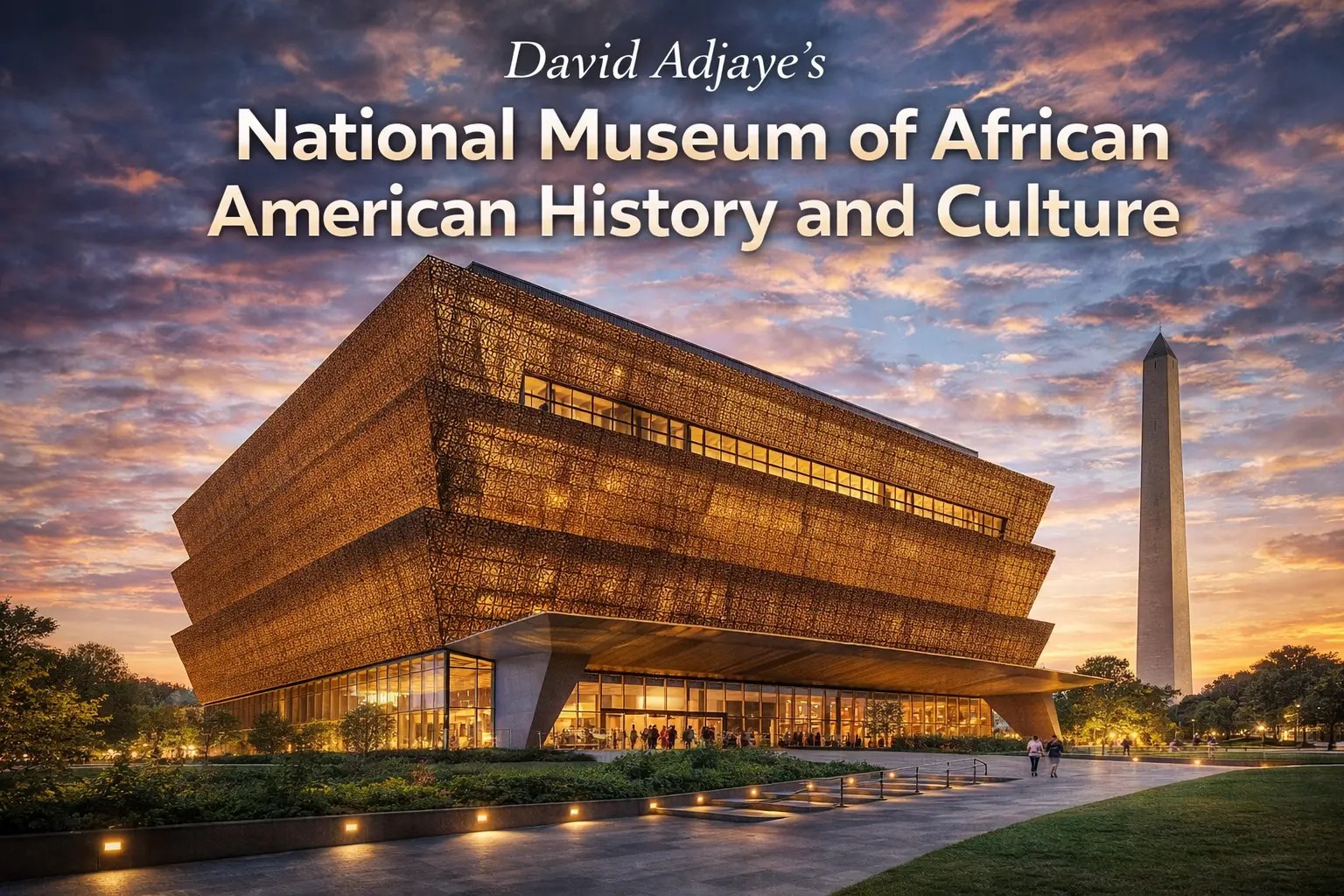
David Adjaye: Architect of the National Museum of African American History and Culture
Cultural Sensitivity in Architectural Design
David Adjaye’s global upbringing has instilled in him a deep understanding of cultural diversity, which he incorporates into his architectural designs. Growing up in countries like Tanzania, Egypt, and England, Adjaye developed a keen eye for the unique cultural nuances of different societies. This sensitivity informs his approach to building design, ensuring that his structures resonate with the communities they serve.
Designing on Iconic Sites
The National Museum of African American History and Culture, scheduled to open on the National Mall, is a testament to Adjaye’s ability to design buildings on iconic sites. The museum’s location, adjacent to the Washington Monument, posed unique challenges. Adjaye approached the project by considering the site’s monumental significance and the need to create a structure that both complements and contrasts the existing landscape. The result is a building that serves as a bridge between the formal order of the mall and the pastoral openness of the monument grounds.
Architectural Representation of Complex Histories
The National Museum of African American History and Culture aims to convey the depth and complexity of African American history over four centuries. Adjaye’s design incorporates various sections that organize the museum’s content. The “History and Culture” section traces the journey from the Middle Passage to the Civil Rights movement, while the “Life of the Citizen” section highlights the contributions of African Americans in the military, public life, and the middle class. The “Entertainment and the Arts” section explores the global impact of African American music and culture.
Praise and Upward Mobility in Architecture
Adjaye describes the primary spirit behind his design for the museum as “praise.” He envisions the building as an embodiment of upward mobility, symbolized by its ziggurat form that rises towards the sky. The use of light and circulation within the museum reinforces this sense of elevation. Adjaye believes that architecture should uplift and inspire, celebrating the achievements and resilience of communities.
Bronze Mesh Cladding and Its Significance
The exterior of the museum is clad in a bronze mesh, a nod to the skilled African American casters who played a significant role in the early architecture of the South. This material choice acknowledges the transition of African Americans from agrarian workers to professional artisans and reflects the museum’s mission to honor the contributions of African Americans to American society.
Architecture as a Force for Social Change
Adjaye strongly believes in the power of architecture to drive social change. He views architecture as a physical manifestation of social values, capable of fostering community and empowering individuals. His practice focuses primarily on cultural, educational, and civic projects, aiming to use architecture as a tool for social uplift and liberation.
The Future of Architecture
Adjaye emphasizes the growing importance of architecture in mediating interactions and fostering tolerance in rapidly urbanizing societies. He believes that the future of architecture lies in addressing the challenges of urban living, promoting social harmony, and creating spaces that enhance human well-being.
David Adjaye’s Legacy
Adjaye hopes that his work will contribute to a meaningful discourse on architecture, space, and human experience. He believes that architecture should strive for relevance and impact, inspiring future generations to engage with the role of architecture in shaping our world.
