
Safe and Non-Toxic Succulents for Cat Owners
As a cat owner, you want to ensure your furry friend’s safety and well-being. Certain plants, including some succulents, can pose a danger to cats if ingested. To help you create a cat-friendly home environment, here’s a comprehensive guide to 15 non-toxic succulents that are safe for your feline companion.
Echeveria Varieties
Echeveria succulents are known for their attractive, flower-shaped rosettes. They are generally low-maintenance and thrive in sunny spots with occasional watering. The Mexican peacock echeveria is an ideal choice for beginners, as it can tolerate neglect and still flourish. Ghost echeveria, with its silvery-gray foliage, is another standout cat-safe succulent.
Haworthia Species
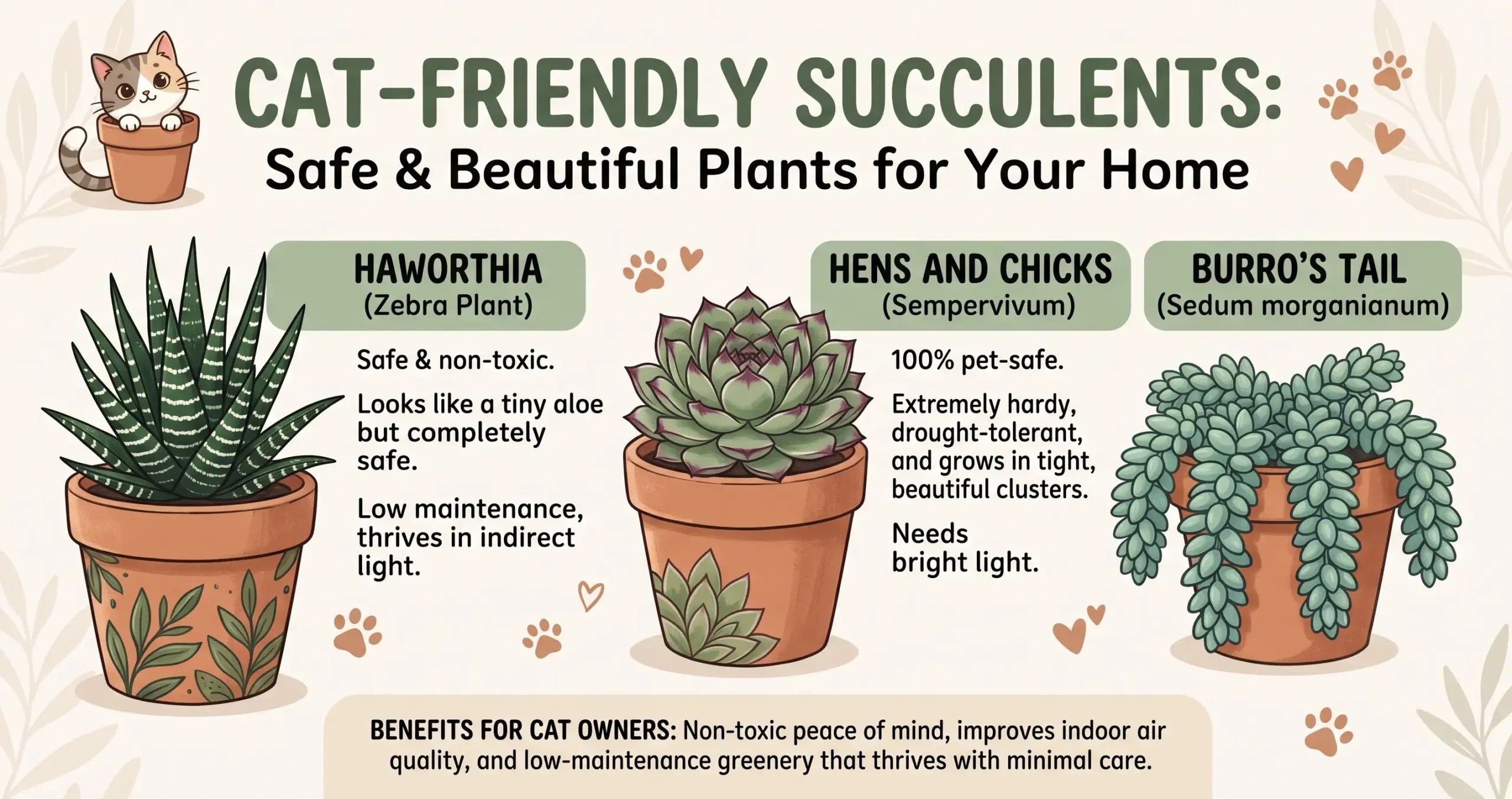
Haworthia succulents are compact and feature spiky, striped, or dotted foliage. They prefer bright, indirect light but can survive in lower-light conditions. Unlike many succulents, they require less frequent watering, making them suitable for those who may forget to water their plants regularly.
Donkey’s Tail
The trailing tendrils of Donkey’s Tail (Sedum morganianum) add a unique touch to any room. While the stems are fragile and can be easily knocked off by playful paws, this succulent is non-toxic to cats. Place it in a sunny spot and water when the soil is dry to the touch to maximize its growth.
Hens and Chicks
Hens and Chicks (Sempervivum tectorum) form attractive mats of rosettes. They are hardy succulents that can withstand outdoor conditions, making them suitable for rock gardens. Avoid overly shady spots and ensure well-draining soil to prevent rot.
Dragon Fruit Cactus
If you’re looking for a striking, cat-safe cactus, consider the dragon fruit cactus (Hylocereus undatus). This unique plant produces edible fruit and thrives in bright sunlight and moderate watering.
Ghost Plant
The compact Ghost Plant (Graptopetalum paraguayense) gets its name from the pale gray to whitish frosting on its foliage. This non-toxic succulent prefers bright light and a loose potting mix. Avoid overwatering to prevent root rot.
Christmas Cactus
Unlike many spiky cacti, the Christmas cactus (Schlumbergera bridgesii) is pet-friendly and features beautiful pink, orange, or white flowers during the winter months. It prefers diffused light and a more regular watering schedule to maintain its blooms.
Living Stones
Living Stones (Lithops spp.) are slow-growing, stemless succulents that resemble stones. Their native habitat adaptation to deter animals from eating them ensures their safety for cats. They require bright light and can withstand neglect.
Hindu Rope Plant
The trailing vines of the Hindu Rope Plant (Hoya carnosa ‘Compacta’) may tempt your cat to play, but rest assured that this non-toxic succulent poses no harm. It prefers bright, indirect light, a well-drained potting mix, and deep watering when the soil is completely dry.
Ponytail Palm
The Ponytail Palm (Beaucarnea recurvata) is often mistaken for a palm tree due to its strappy green leaves and bulbous stem. However, it is a succulent that makes an excellent desk plant. Provide plenty of bright light and water every one to two weeks during the growing season.
Mexican Snowballs
The Mexican Snowball (Echeveria elegans) is a popular pet-friendly succulent. Its small, drought-tolerant rosettes thrive in sunny locations with sandy soil. Neglect is tolerated by this low-maintenance plant.
Mexican Firecracker
Another easy-to-care-for succulent is the Mexican Firecracker (Echeveria setosa). This low-maintenance plant requires ample sunlight, a loose potting mix, and occasional deep watering to flourish.
Thanksgiving Cactus
Similar to the Christmas cactus, the Thanksgiving Cactus (Schlumbergera truncata) is thorn-free and pet-friendly. It produces bright blooms during the colder months and prefers medium, indirect light and consistent moisture.
Cat-Proofing Your Succulents
Even pet-safe succulents can cause stomach upsets if consumed in large quantities. To protect your plants and your cat, consider the following tips:
- Keep succulents on high shelves or in hanging baskets.
- Provide alternative enrichment for your cat, such as toys or cat grass.
- If your cat ingests a succulent, contact your veterinarian or the Pet Poison Helpline immediately, especially if they show signs of distress.
