
Scotland’s Tiny Artificial Islands: A Neolithic Enigma
Discovery of Stone Age Crannogs
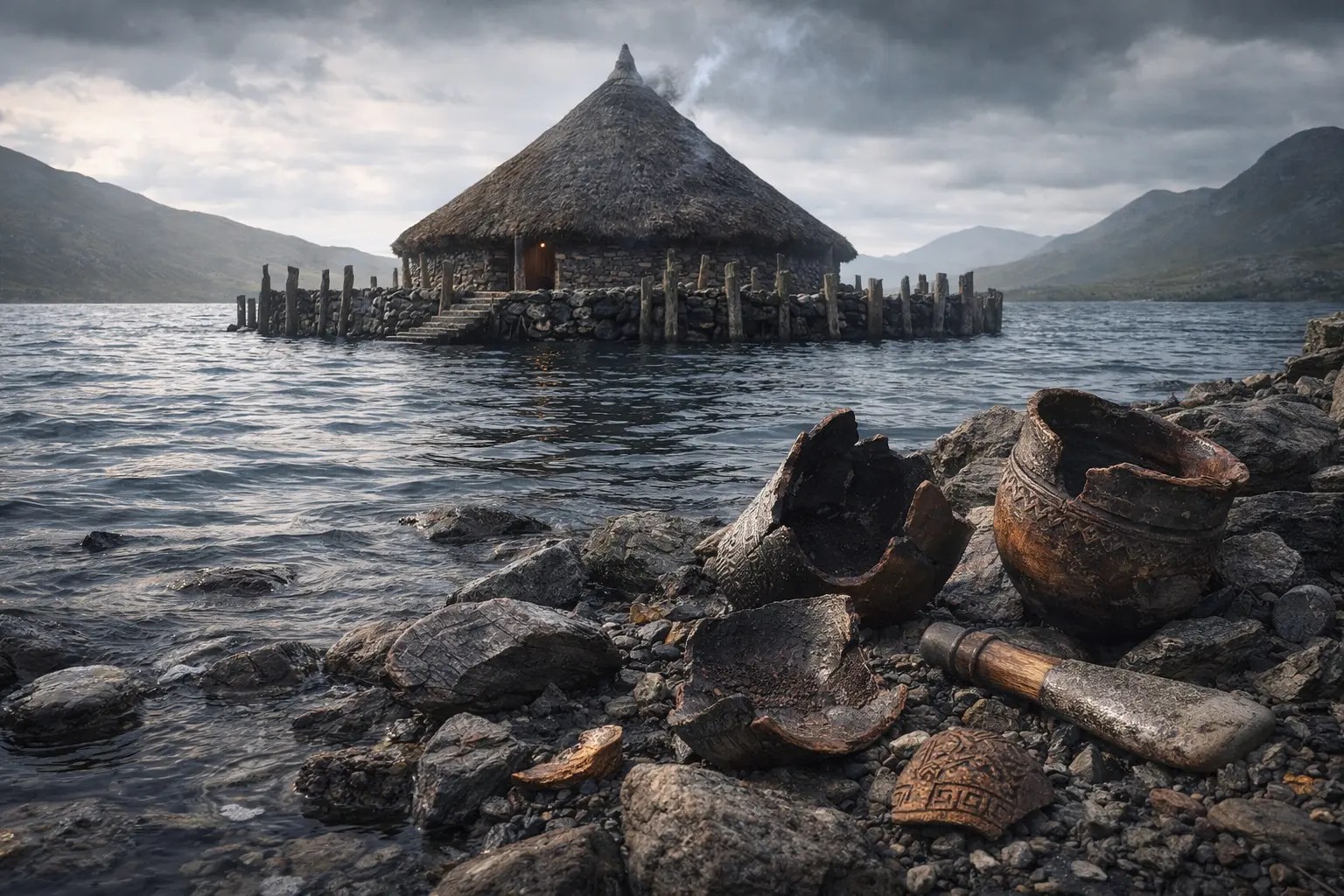
In the remote Outer Hebrides of Scotland, researchers have uncovered a fascinating discovery: artificial islands, known as crannogs, dating back to the Stone Age, around 3500 B.C. These remarkable structures, ranging from 30 to 100 feet in diameter, were originally built as round homes over the water.
Construction and Purpose
Crannogs were constructed by pounding piles into the water or by moving tons of rock and dirt to create an artificial island. Today, their remains appear as tiny, tree-covered islands or mounds just below the water’s surface.
The purpose of these Stone Age crannogs remains a mystery. However, artifacts found near the sites, such as remarkably intact ceramic vessels, suggest that they may have been used for rituals or feasts.
Ritual Significance
The crannogs’ isolation from known villages and settlements, as well as their distance from tombs or burials, hints at their potential use for religious or funeral rituals. The discovery of charred pottery fragments on the inside and outsides of the vessels further supports this theory.
Additionally, the watery surroundings of the crannogs may have created a sense of separation from everyday life, making them ideal places for coming of age ceremonies or other special rituals.
Further Research
To unravel the full story of these enigmatic structures, researchers are continuing their investigations. They are using sonar to identify more hidden crannogs in the Outer Hebrides and revisiting crannogs dated to the Iron Age or Medieval Period to determine if they are built on Neolithic foundations.
Dwelling Sites in Later Periods
While the purpose of the crannogs in the Neolithic period remains unknown, it is clear that by the Iron Age, they had become dwelling sites where generations of people lived. Archaeologists are still exploring the reasons why individuals chose to make these tiny islands their home.
William Butler Yeats’ Insight
The Irish poet William Butler Yeats may have offered a poetic explanation for the allure of crannog life. He wrote, “The world is too much with us; late and soon, / Getting and spending, we lay waste our powers;— / Little we see in Nature that is ours.”
Perhaps, in the isolation and tranquility of these artificial islands, Neolithic people found a respite from the demands of everyday life and a deeper connection to the natural world.
