
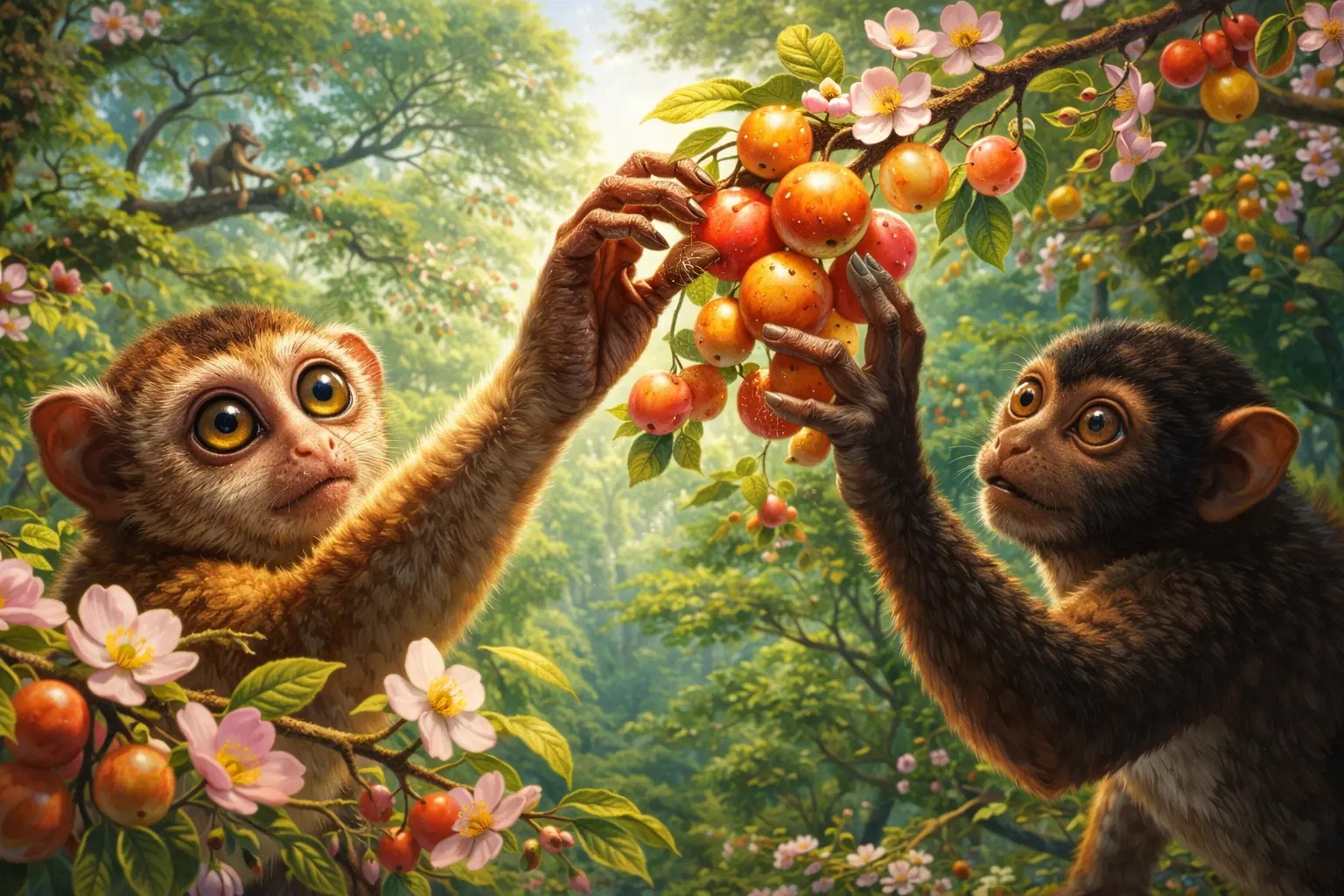
Primate Origins Tied to the Rise of Flowering Plants
Early Primate Adaptations
The evolution of primates, a group of mammals characterized by grasping hands and feet, good vision, and large brains, has long been a subject of scientific inquiry. In the early 20th century, scientists believed that these adaptations arose from a tree-dwelling lifestyle. However, in the 1970s, anthropologist Matt Cartmill proposed that insect predation was the driving force behind primate evolution.
The Insect Predation Hypothesis
Cartmill noted that many predators, such as cats and owls, possess forward-facing eyes to aid in capturing prey. He suggested that early primates similarly evolved these features to hunt tree-dwelling insects. However, subsequent research challenged this hypothesis, pointing out that the molars of early primates, called plesiadapiforms, were rounded and suited for grinding plant material rather than piercing insects.
The Plant Diet Hypothesis
An alternative hypothesis emerged, suggesting that primates evolved in tandem with the spread of flowering plants. Rather than relying on insect predation, early primates used their grasping abilities and good vision to navigate delicate tree branches and gather fruits, flowers, and nectar-pollinating insects.
Evidence from Plesiadapiforms
Anthropologists Robert Sussman, D. Tab Rasmussen, and botanist Peter Raven reviewed the latest evidence supporting this hypothesis. Plesiadapiforms, the closest extinct relatives of primates, possessed rounder molars adapted for a plant diet. Additionally, the discovery of the fossil Carpolestes simpsoni revealed that it had grasping hands, feet with nails, and teeth indicating a fruit-based diet.
The Significance of Forward-Facing Eyes
Sussman and colleagues argue that the lack of forward-facing eyes in C. simpsoni suggests that good vision evolved later in primates. They propose that it may have aided in navigating the dense forest canopy and locating food.
Evolution of Better Climbing Adaptations
As flowering plants proliferated and tropical forests expanded, primates diversified. While birds and bats took to the skies to access fruits and nectar, primates evolved adaptations to become better climbers. This included grasping hands and feet, as well as an opposable big toe.
Interplay of Adaptations
The evolution of primate adaptations was a complex process involving multiple factors. Grasping hands and feet allowed primates to navigate tree branches with precision. Good vision enabled them to locate food and avoid predators. Forward-facing eyes, although not present in early primates, later evolved to aid in navigating the forest canopy.
Conclusion
The latest evidence suggests that the rise of primates was closely tied to the spread of flowering plants. Primates evolved adaptations to exploit this new food source, including grasping hands and feet, good vision, and eventually, forward-facing eyes. These adaptations enabled them to occupy a unique niche in the forest ecosystem and ultimately gave rise to the diverse group of primates we see today.
