
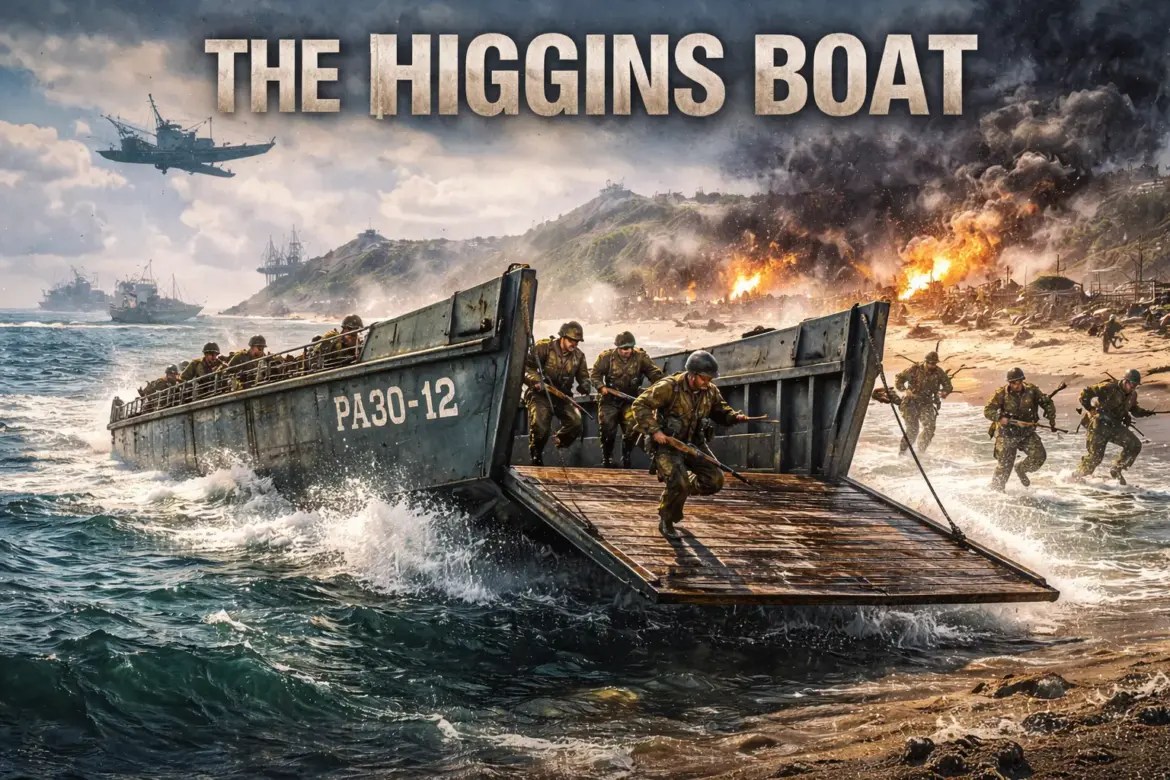
The Higgins Boat: The Invention that Revolutionized Amphibious Warfare in World War II
The Invention of the Higgins Boat
In the midst of World War II, the United States Navy faced a critical challenge: how to effectively land troops and equipment on enemy shores. The existing landing craft were slow, cumbersome, and vulnerable to enemy fire.
Enter Andrew Jackson Higgins, a Louisiana boat builder with a knack for innovation. In 1942, Higgins developed the Higgins boat, a revolutionary landing craft that would change the course of amphibious warfare.
Design and Modifications
The Higgins boat was a 36-foot, flat-bottomed vessel with a unique spoonbill bow that allowed it to push up onto the shore and then back away after offloading. It also featured a V-shaped keel for improved stability and a protected propeller system that enabled it to maneuver in shallow water.
Over time, Higgins made several modifications to his design based on feedback from the Marines. In 1942, he added a ramp to the front of the vessel for faster egress, creating the LCVP (Landing Craft, Vehicle and Personnel) model. This version became known as the “Higgins Boat” and was the standard landing craft for the rest of the war.
Higgins’ Innovative Spirit
Higgins was a driven and determined inventor who never let obstacles stand in his way. He was known for his ability to solve seemingly impossible problems and get things done efficiently.
One famous example occurred when the Navy asked him to come up with plans for a new boat design in three days. Higgins replied, “Hell, I can build the boat in three days.” And that is exactly what he did.
Manufacturing and Production
Higgins Industries, founded by Andrew Higgins, became the largest employer in the New Orleans area during World War II. The company produced over 20,000 Higgins-designed landing craft, as well as PT boats, supply vessels, and other specialized boats for the war effort.
Higgins’ factories employed a diverse workforce, including women, minorities, and people with disabilities, in one of the first modern integrated workplaces in America.
Role in Amphibious Landings
The Higgins boat played a pivotal role in numerous amphibious landings throughout World War II. It was used in the D-Day landings at Normandy, as well as in Sicily, Anzio, Tarawa, Iwo Jima, Saipan, Okinawa, Peleliu, and countless other beaches in the European and Pacific theaters of operation.
The Higgins boat’s ability to quickly transport troops and equipment onto enemy shores gave the Allies a significant advantage in amphibious assaults.
Legacy and Impact
The Higgins boat left an enduring legacy on military history. It revolutionized amphibious warfare and remains a symbol of American innovation and ingenuity. Andrew Jackson Higgins was inducted into the National Inventors Hall of Fame in recognition of his groundbreaking invention.
Today, fewer than 20 original Higgins boats remain. One of these is on display at the U.S. Patent and Trademark Office headquarters and National Inventors Hall of Fame Museum in Alexandria, Virginia, commemorating its role in D-Day and the Allied victory in World War II.