
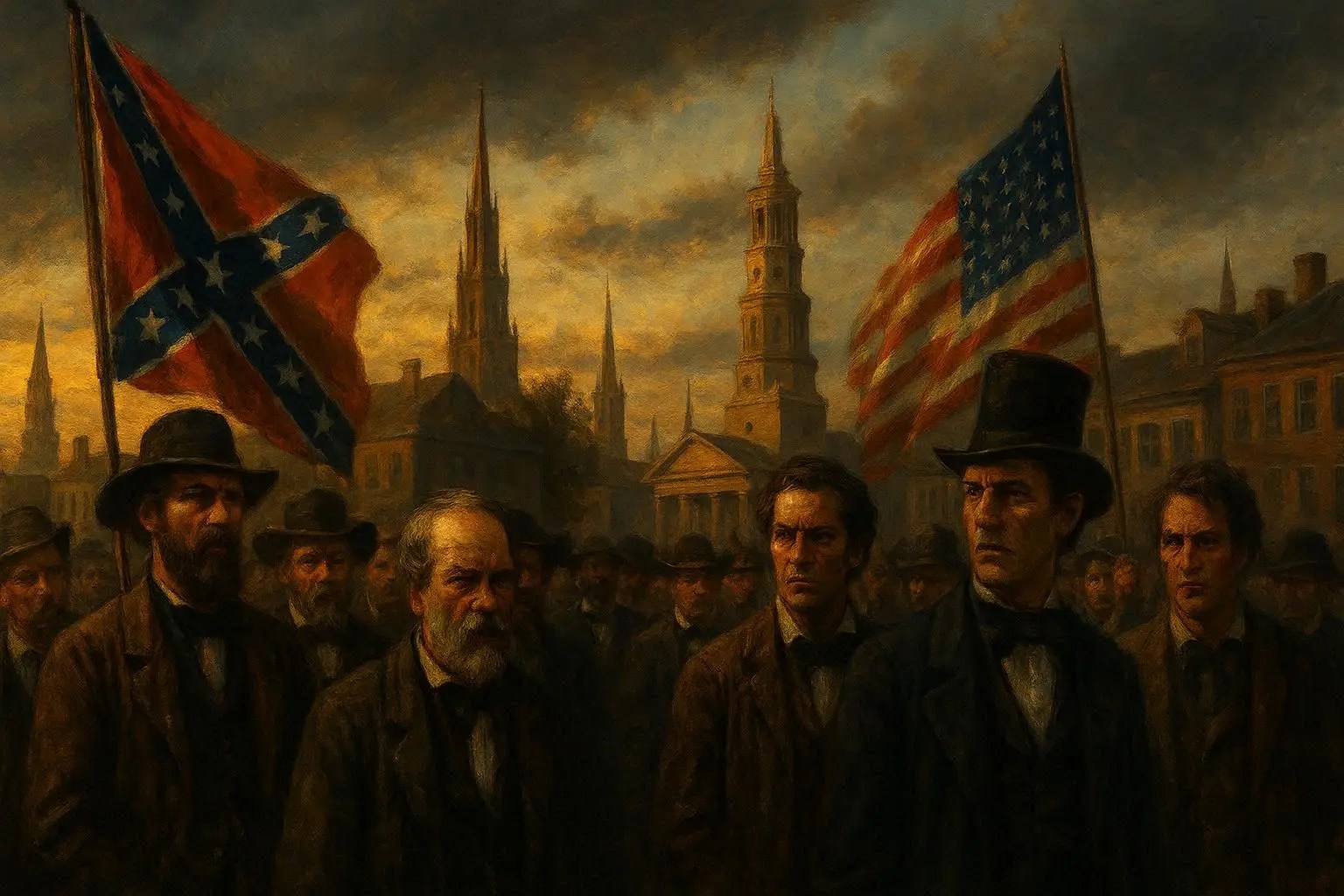
Independence Day in Charleston: A City Torn Between Union and Secession
The Significance of Independence Day for Southerners on the Brink of Secession
As the threat of secession loomed over the United States in the summer of 1860, Independence Day took on a new and profound significance for Southerners. In Charleston, South Carolina, the birthplace of secession, the Fourth of July festivities were a microcosm of the complex and conflicting emotions that gripped the city.
Charleston’s Celebration of Independence
On July 4, 1860, Charleston’s elite citizens gathered at Hibernian Hall for their traditional Independence Day banquet. The guest of honor was William Porcher Miles, a respected congressman and secessionist who believed that America should be divided into two separate nations.
As the evening progressed, a poem was read aloud that expressed despair over the impending collapse of the Union. The poem’s message struck a blow to the secessionists’ efforts to equate their cause with the broader American cause of freedom.
The Secessionist Perspective
Despite the poem’s anti-secessionist sentiment, many Charlestonians remained steadfast in their support for secession. They saw themselves as rebels against tyranny, just like their forefathers who had fought for American independence from Britain.
The secessionists believed that the North was encroaching on their constitutional rights, particularly the right to own slaves. They felt that secession was the only way to protect their way of life.
The Unionist Perspective
While the secessionists were vocal and influential, there were still many Charlestonians who remained loyal to the Union. They believed that the bonds of unity and the ideals enshrined in the Declaration of Independence were more important than any differences between the North and South.
The Impact of Independence Day on Secession
Independence Day in Charleston in 1860 was a time of great tension and uncertainty. The secessionists used the occasion to rally support for their cause, while the Unionists clung to the hope of preserving the nation.
In the end, the secessionists prevailed. Charleston became the birthplace of the Confederacy, and the Civil War erupted shortly thereafter. However, the legacy of Independence Day and the ideals it represented continued to resonate in Charleston and throughout the nation.
The Legacy of Charleston’s Independence Day
The events of Independence Day in Charleston in 1860 left a lasting impact on the city and the nation. They highlighted the deep divisions that existed within American society and the fragility of the Union.
The Civil War that followed was a bloody and divisive conflict, but it ultimately led to the abolition of slavery and the strengthening of the Union. The ideals of liberty and unity that had been celebrated on Independence Day in 1860 were finally realized for all Americans.
