
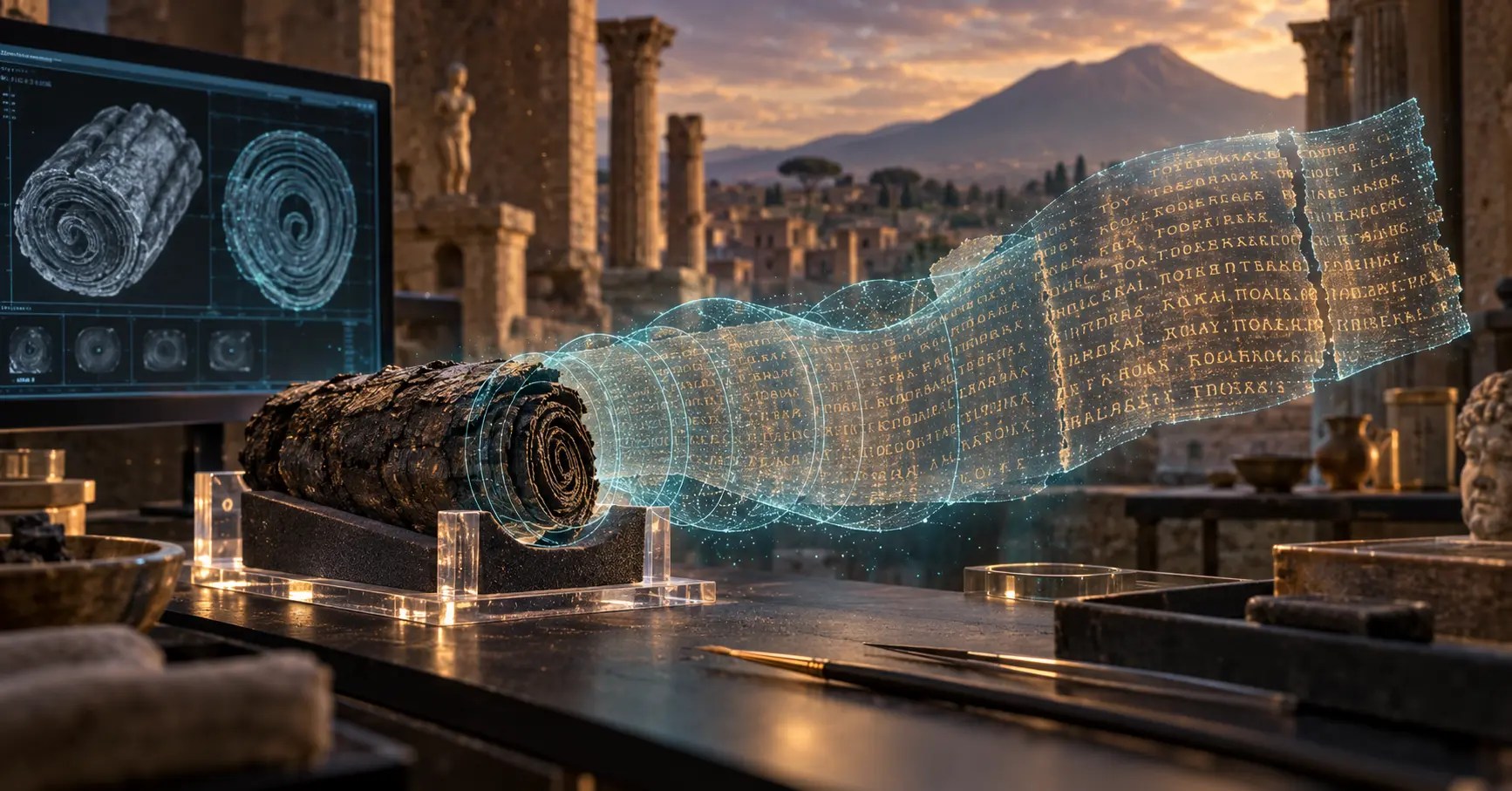
Unlocking Ancient Secrets: The Vesuvius Challenge and the Herculaneum Scrolls
The Mystery of the Herculaneum Scrolls
Buried beneath the volcanic ash of Mount Vesuvius for centuries, the Herculaneum scrolls hold a wealth of ancient knowledge, waiting to be deciphered. These scrolls are the only intact library known from the classical world, containing an unprecedented cache of wisdom from the minds of the past. However, their carbonized state and fragility have made them virtually inaccessible to researchers.
The Vesuvius Challenge: A Race Against Time
Enter the Vesuvius Challenge, an ambitious initiative led by computer scientist Brent Seales of the University of Kentucky. This challenge offers a tantalizing reward of over $1 million to individuals or teams who can successfully employ artificial intelligence (AI) to unlock the secrets of these ancient texts.
Pioneering Digital Unwrapping
Seales and his team have already made significant strides in digital unwrapping, a groundbreaking technique that uses X-ray technology and machine learning to virtually unroll the scrolls without causing physical damage. This has opened up new avenues for research and analysis, allowing scholars to explore the scrolls’ contents without the risk of further destruction.
Harnessing Machine Learning
To aid in the deciphering process, the Vesuvius Challenge team has developed sophisticated machine learning algorithms that can distinguish between differences in the papyrus structure. This helps researchers identify where ink has settled on the page, revealing hidden characters and words.
A Puzzle for the Sharpest Minds
The Vesuvius Challenge is not for the faint of heart. It requires a combination of technical expertise, historical knowledge, and a keen eye for detail. Participants must use the provided scans and AI algorithms to decipher the scrolls, unlocking their long-hidden secrets.
Historical Context: A City Frozen in Time
The Herculaneum scrolls were once part of a vast library owned by Lucius Calpurnius Piso Caesoninus, the father-in-law of Julius Caesar. The eruption of Mount Vesuvius in 79 C.E. decimated the Roman cities of Pompeii and Herculaneum, preserving their ruins and artifacts in a remarkable state of suspended animation.
Early Attempts and Devastating Losses
In the 18th century, researchers began attempts to open the Herculaneum scrolls, but their efforts proved disastrous. Many scrolls were destroyed or fragmented, dealing a devastating blow to the study of ancient history. By the 20th century, physical unrolling had been abandoned due to the high risk of damage.
Hope Rekindled: Digital Unwrapping and the Vesuvius Challenge
The advent of digital unwrapping has rekindled hope for accessing the contents of the Herculaneum scrolls. The Vesuvius Challenge aims to harness the power of AI and the ingenuity of the world’s brightest minds to unlock these ancient mysteries.
An Enticing Enigma for Technical Adventurers
The Vesuvius Challenge offers an irresistible allure to technical enthusiasts and archaeology buffs alike. It presents a rare opportunity to engage in an Indiana Jones-style adventure, solving a 300-year-old puzzle and contributing to the expansion of human knowledge.
