
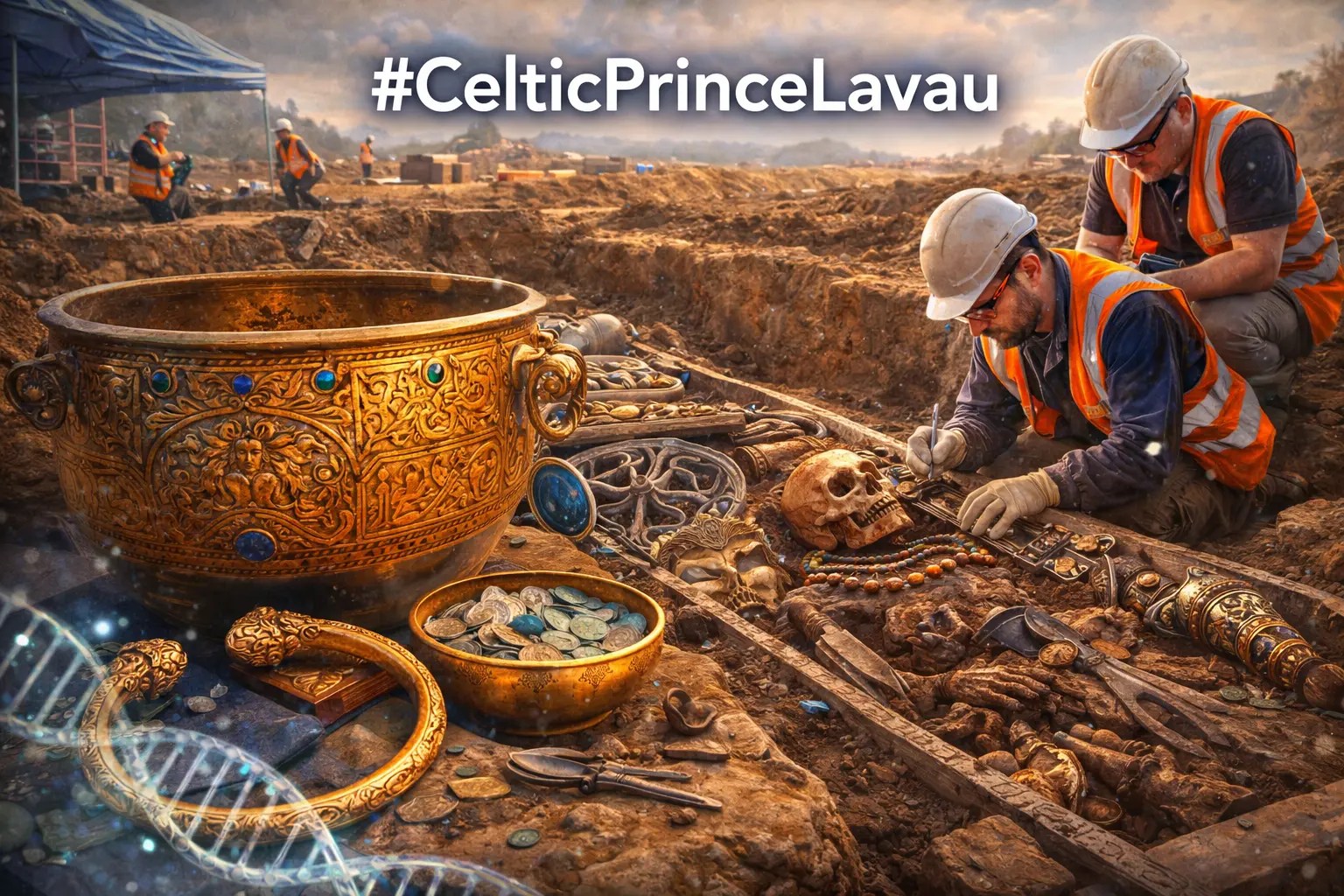
Discovery of a 2,500-Year-Old Celtic Prince’s Burial in Lavau, France
Background
In 2015, archaeologists made a remarkable discovery in Lavau, France: the burial mound of a Celtic prince from the late Bronze Age. The prince was buried in his chariot alongside an array of ornate artifacts, providing valuable insights into Celtic culture and its connections to the wider Mediterranean world.
The Burial Mound
The burial mound was located in an area being developed as an industrial park. Archaeologists discovered a skeleton covered in gold jewelry and bangles, along with an assortment of grave goods including pottery, gold-decorated drinkware, and a large cauldron.
Analysis of the Artifacts
Researchers at France’s National Institute for Preventive Archaeological Research (INRAP) have begun analyzing the artifacts found with the prince. Using advanced techniques such as x-rays, tomography, and 3D photography, they are determining the state of preservation and composition of the artifacts.
Cultural Connections
The analysis has revealed a fascinating blend of cultures represented in the artifacts. A large cauldron is decorated with images of the Greek river god Achelous and eight lion heads, while an elaborate jug is made of Greek ceramic but adorned with gold Etruscan figures and silver Celtic designs.
Advanced Craftsmanship
The bronze cauldron is a testament to the skill of ancient Celtic craftsmen. Analysis shows that it was produced by master artisans who perfected the techniques of smelting ore and engraving metal. The intricate designs and fine detailing demonstrate their exceptional artistry.
The Celtic Prince
The analysis of the pelvic bones confirmed that the skeleton is indeed that of a prince. Researchers were initially unsure of the gender due to the elaborate jewelry and bangles found on the body.
Ongoing Research
INRAP will continue to analyze the prince and his belongings throughout 2019. The research aims to uncover further insights into Celtic culture, trade networks, and the significance of ornate grave goods in Celtic society.
Significance of the Discovery
The discovery of the Celtic prince’s burial in Lavau is a major archaeological find that sheds light on the cultural connections between the Celts and other civilizations in the Mediterranean region. It provides valuable evidence of the artistry, wealth, and influence of the Celtic people during the late Bronze Age.
