
Types of Wood Flooring: A Comprehensive Guide for Choosing the Right One for Your Home
Wood flooring is a timeless choice that adds warmth and value to any home. However, with so many different types of wood flooring available, choosing the right one can be overwhelming. This guide will break down the pros and cons of each type of wood flooring and provide you with the information you need to make an informed decision.
Types of Wood Flooring
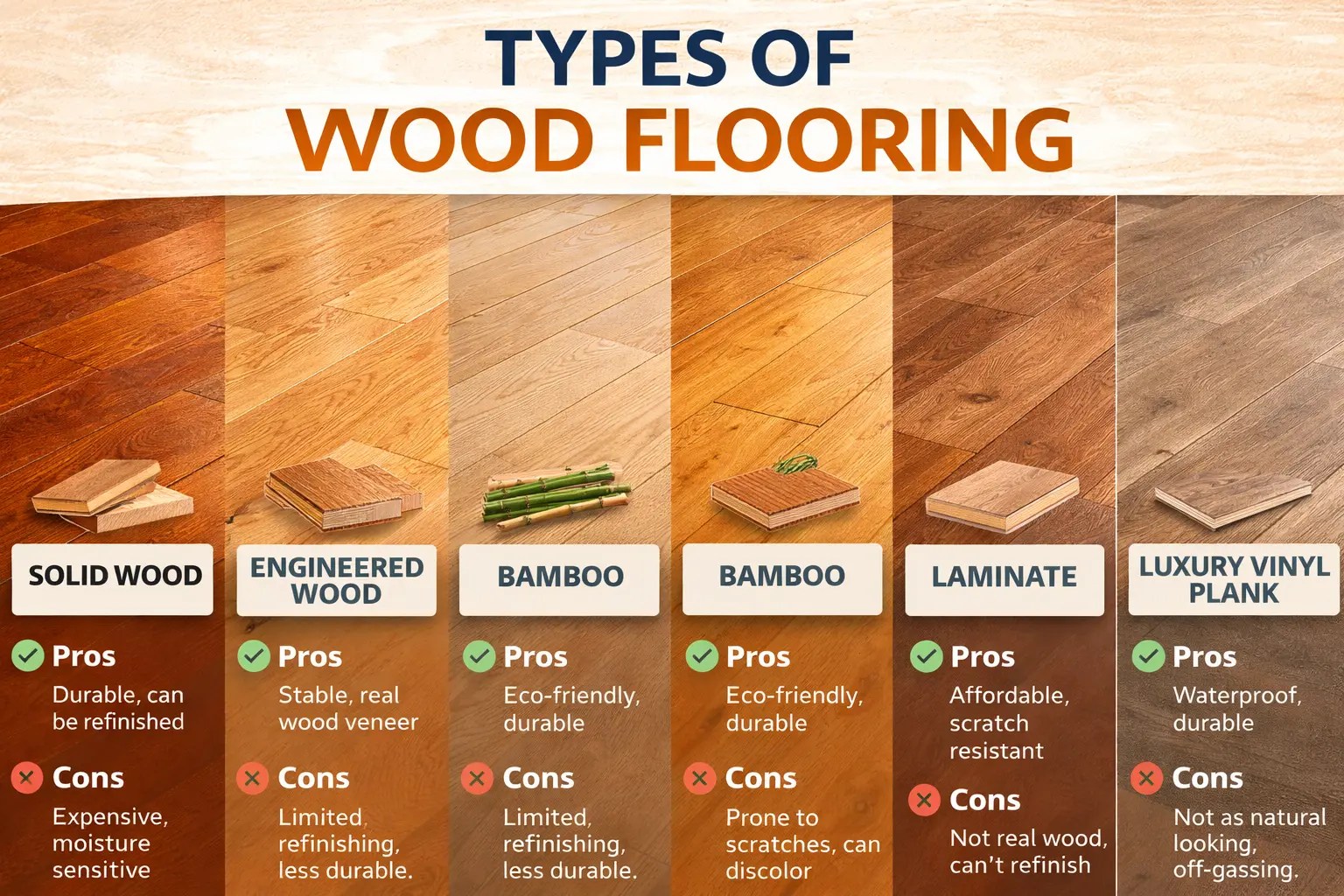
Solid Wood Flooring
Solid wood flooring is made from a single piece of wood, milled from the trunk of a tree. It is the most durable and long-lasting type of wood flooring, and it can be refinished multiple times to extend its lifespan. However, solid wood flooring is also the most expensive and requires professional installation.
Pros:
- Durable and long-lasting
- Can be refinished multiple times
- Increases home value
- Timeless and elegant look
Cons:
- Expensive
- Requires professional installation
- Vulnerable to moisture and scratches
Engineered Wood Flooring
Engineered wood flooring is made from a plywood core with a thin layer of real wood veneer on top. It is less expensive than solid wood flooring and easier to install, making it a good choice for DIYers. Engineered wood flooring is also more resistant to moisture and scratches than solid wood flooring.
Pros:
- Less expensive than solid wood
- Easier to install
- More resistant to moisture and scratches
- Increases home value
Cons:
- Not as durable as solid wood
- Can only be refinished once or twice
Wood Substitutes
Wood substitutes are flooring materials that mimic the look of wood but are made from other materials, such as bamboo, laminate, luxury vinyl plank (LVP), and wood-look ceramic tile. These materials are often more affordable and easier to install than real wood flooring, but they may not be as durable or long-lasting.
Bamboo Flooring
Bamboo flooring is made from the stalks of bamboo, a rapidly renewable resource. It is eco-friendly, durable, and resistant to moisture. However, bamboo flooring can be scratched easily and is not as hard as real wood.
Pros:
- Eco-friendly
- Durable and resistant to moisture
- Easy to install
- Increases home value
Cons:
- Can be scratched easily
- Not as hard as real wood
Laminate Flooring
Laminate flooring is made from a high-density fiberboard core with a photographic image of wood on top. It is the most affordable type of wood flooring and is easy to install. However, laminate flooring is not as durable as real wood or wood substitutes and cannot be refinished.
Pros:
- Affordable
- Easy to install
- Scratch-resistant
- Budget-friendly
Cons:
- Not as durable as real wood or wood substitutes
- Cannot be refinished
- Vulnerable to moisture
Luxury Vinyl Plank Flooring (LVP)
LVP flooring is made from a waterproof vinyl core with a photographic image of wood on top. It is more durable and waterproof than laminate flooring, making it a good choice for high-traffic areas and moisture-prone areas, such as kitchens and bathrooms.
Pros:
- Waterproof
- Durable
- Easy to install
- Budget-friendly
Cons:
- Difficult to repair
- Wood-look may not be convincing
Wood-Look Ceramic Tile
Wood-look ceramic tile is made from ceramic or porcelain tiles that are designed to look like wood. It is waterproof, scratch-resistant, and easier to install than wood flooring. However, wood-look ceramic tile is not as warm or comfortable underfoot as real wood flooring.
Pros:
- Waterproof
- Scratch-resistant
- Easier to install than wood flooring
- Less expensive than wood flooring
Cons:
- Not as warm or comfortable underfoot as real wood flooring
- Wood-look may not be convincing
How to Choose the Right Wood Flooring
When choosing wood flooring for your home, there are several factors to consider:
- Price: Wood flooring can range in price from affordable to expensive. Set a budget before you start shopping so you can narrow down your options.
- Aesthetics: Wood flooring comes in a variety of colors, textures, and finishes. Choose a flooring that complements the style of your home and your personal taste.
- Durability: Consider the amount of foot traffic and wear and tear your flooring will be subjected to. If you have pets or children, you will need a more durable flooring option.
- Moisture resistance: If you are installing wood flooring in a moisture-prone area, such as a kitchen or bathroom, you will need to choose a flooring that is resistant to moisture.
- Ease of installation: If you are planning to install the flooring yourself, choose an option that is easy to install.
Best Wood Flooring for Different Needs
- Best for long-term investment and greatest resale value: Solid wood flooring
- Best for good investment at a lower price than solid wood: Engineered wood flooring
- Best for eco-conscious: Bamboo flooring
- Best for cost-conscious: Laminate flooring
- Best for budget-minded: Luxury vinyl plank flooring
- Best for bathroom, kitchen, or areas prone to moisture: Wood-look ceramic tile
Installation and Maintenance of Wood Flooring
Wood flooring can be installed by a professional or by a DIYer. If you are installing the flooring yourself, be sure to follow the manufacturer’s instructions carefully.
Once your wood flooring is installed, it is important to maintain it properly to extend its lifespan. Sweep or vacuum regularly to remove dirt and debris. Avoid using abrasive cleaners or harsh chemicals on your flooring. Refinish your flooring every 5-10 years to protect it from wear and tear.
