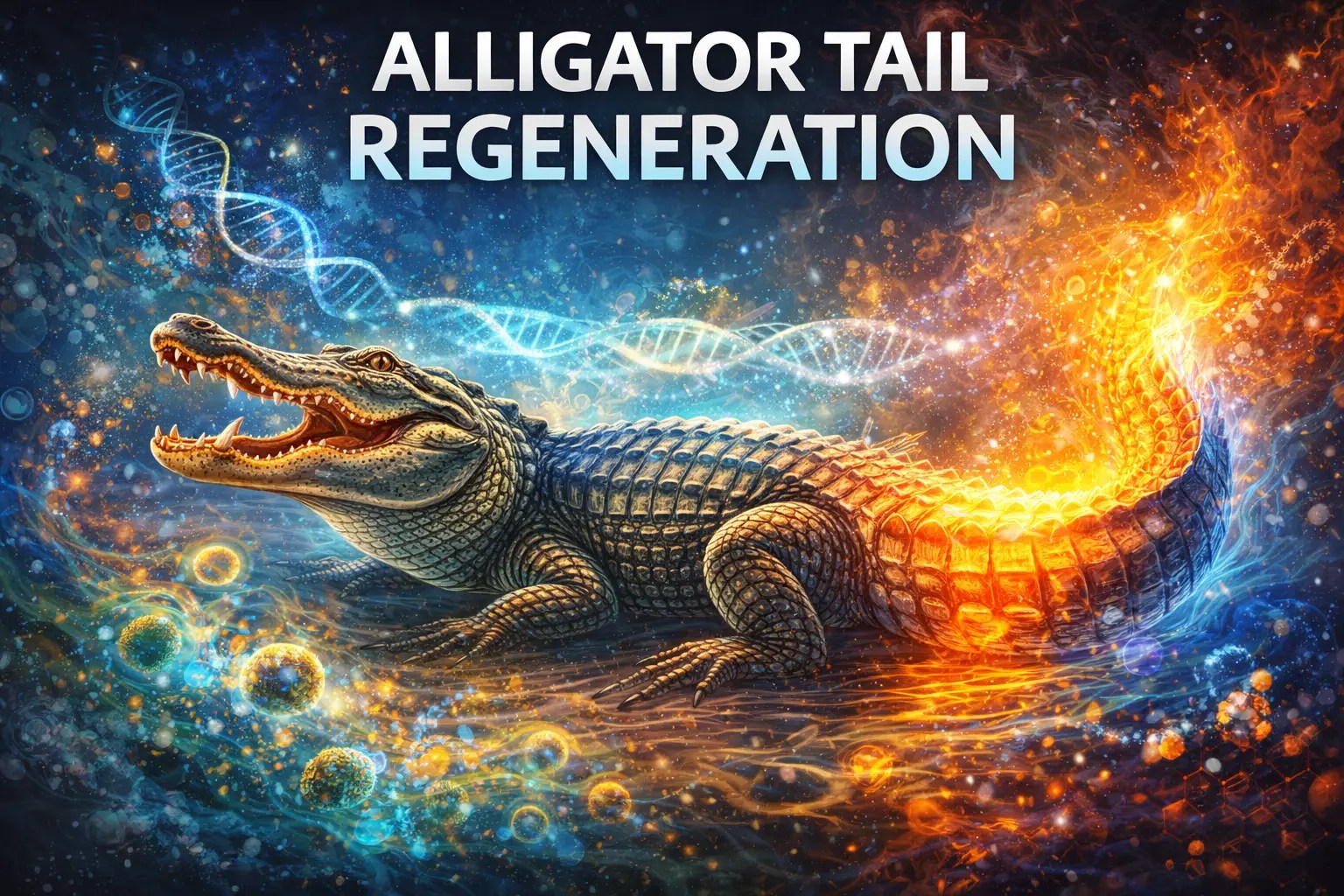
Alligator Tail Regeneration: A Remarkable Discovery
Introduction
Alligators, known for their massive size and fearsome appearance, have recently surprised scientists with their ability to regrow severed tails. This remarkable discovery sheds new light on the regenerative capabilities of reptiles and has implications for human regenerative medicine.
Tail Regeneration in Juvenile Alligators
Young alligators, unlike their adult counterparts, possess the ability to regenerate their tails. This process involves the regrowth of cartilage, connective tissue, and skin, rather than bone and skeletal muscle. Researchers have found that juvenile alligators can regrow their tails up to 18% of their body length, providing them with a significant advantage in survival.
The Role of Tails in Alligator Survival
Tails play a crucial role in the survival of young alligators. They serve as a defense mechanism against predators, allowing the alligators to escape danger by rapidly swimming away. Additionally, tails aid in balance and locomotion, helping the alligators navigate their environment.
Comparative Regenerative Abilities
Alligators exhibit regenerative abilities that differ from both mammals and lizards. Mammals primarily regenerate nerves, skin, and blood vessels, while lizards possess the remarkable ability to regrow entire, nearly perfect tails with skeletal muscle. Alligators fall somewhere in between, with their ability to regenerate tails without skeletal muscle.
Implications for Human Regenerative Therapies
The study of alligator tail regeneration has significant implications for the development of regenerative therapies for humans. Scientists believe that by understanding the cellular mechanisms involved in alligator tail regeneration, they may be able to develop new treatments for conditions such as arthritis and limb loss.
The Evolution of Limb Regeneration
The ability to regenerate limbs is an ancient trait that evolved in reptiles. However, the mechanisms and capabilities of limb regeneration vary among different reptile species. Alligators, along with some dinosaurs, have retained the ability to regenerate limbs, while birds have lost this ability. Scientists are now investigating the evolutionary factors that have influenced these differences.
The Potential of Alligator Tail Regeneration
Alligator tail regeneration holds great promise for advancing regenerative medicine. By studying the molecular and cellular pathways involved in this process, researchers may be able to develop new therapies that promote tissue regeneration in humans. This could lead to improved treatments for a wide range of injuries and diseases.
Conclusion
The discovery of alligator tail regeneration has opened up new avenues for research in regenerative medicine. By understanding the mechanisms behind this remarkable ability, scientists may be able to develop innovative treatments that restore lost tissues and improve the lives of countless individuals.
