
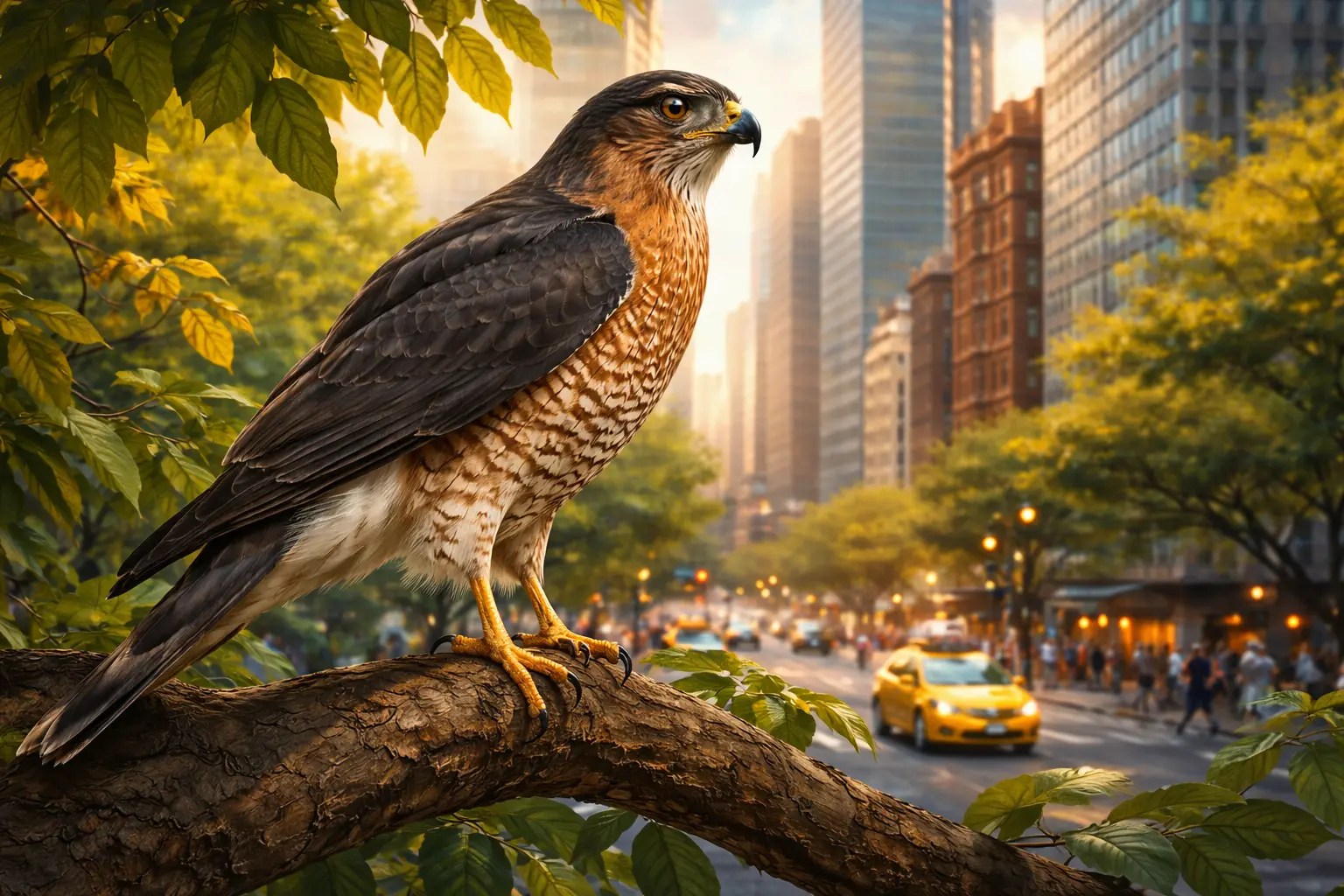
Cooper’s Hawks: Thriving in the Concrete Jungle
Urban Raptors
Cooper’s hawks, once thought to be solely forest dwellers, have surprisingly adapted to urban environments. Biologists like Bob Rosenfield have been studying these birds in cities for decades, revealing their remarkable ability to thrive amidst skyscrapers and traffic.
Physical Adaptations for Urban Life
Cooper’s hawks possess physical traits that make them well-suited to urban habitats. Their short, rounded wings and long tails allow them to maneuver effortlessly through dense vegetation and buildings. They primarily prey on small birds, including pigeons, sparrows, and starlings, which are abundant in urban areas.
Nesting in the City
Despite their size, Cooper’s hawks have found ample nesting sites in cities. They often nest in trees in parks, backyards, and even on building ledges. In Victoria, British Columbia, they have been detected nesting since 1995.
Population Dynamics
Rosenfield’s research has shown that Cooper’s hawk populations in cities are stable or even increasing. In some areas, such as Milwaukee, their numbers are rapidly growing. This success is attributed to the abundance of food and nesting sites in urban environments.
Benefits to Urban Ecosystems
Cooper’s hawks play an important role in urban ecosystems by controlling bird populations. By preying on smaller birds, they help to maintain a balance in the ecosystem. Additionally, they can help to reduce the spread of bird-borne diseases.
Conservation Concerns
Despite their adaptability to urban environments, Cooper’s hawks still face challenges. In the past, they were heavily persecuted due to their perceived threat to poultry. Today, habitat loss and pesticide use continue to pose threats to their populations.
Citizen Science and Education
Rosenfield and other biologists rely on citizen scientists to assist in their research. Local residents often invite biologists onto their property to study Cooper’s hawks and protect their nests. Educational programs also play a vital role in fostering understanding and appreciation for these urban raptors.
Witnessing the Wild in Your Backyard
For many city dwellers, Cooper’s hawks offer a unique opportunity to witness wildlife up close. Their bold behavior and impressive hunting skills can be observed from the comfort of their own homes or local parks.
The Future of Urban Hawks
Rosenfield believes that Cooper’s hawks may not have been as rare as once thought; they were simply not being observed in the right places. Cities offer a viable and potentially long-term habitat for these adaptable raptors. By understanding their biology and behavior, we can ensure their continued presence in our urban environments.
