
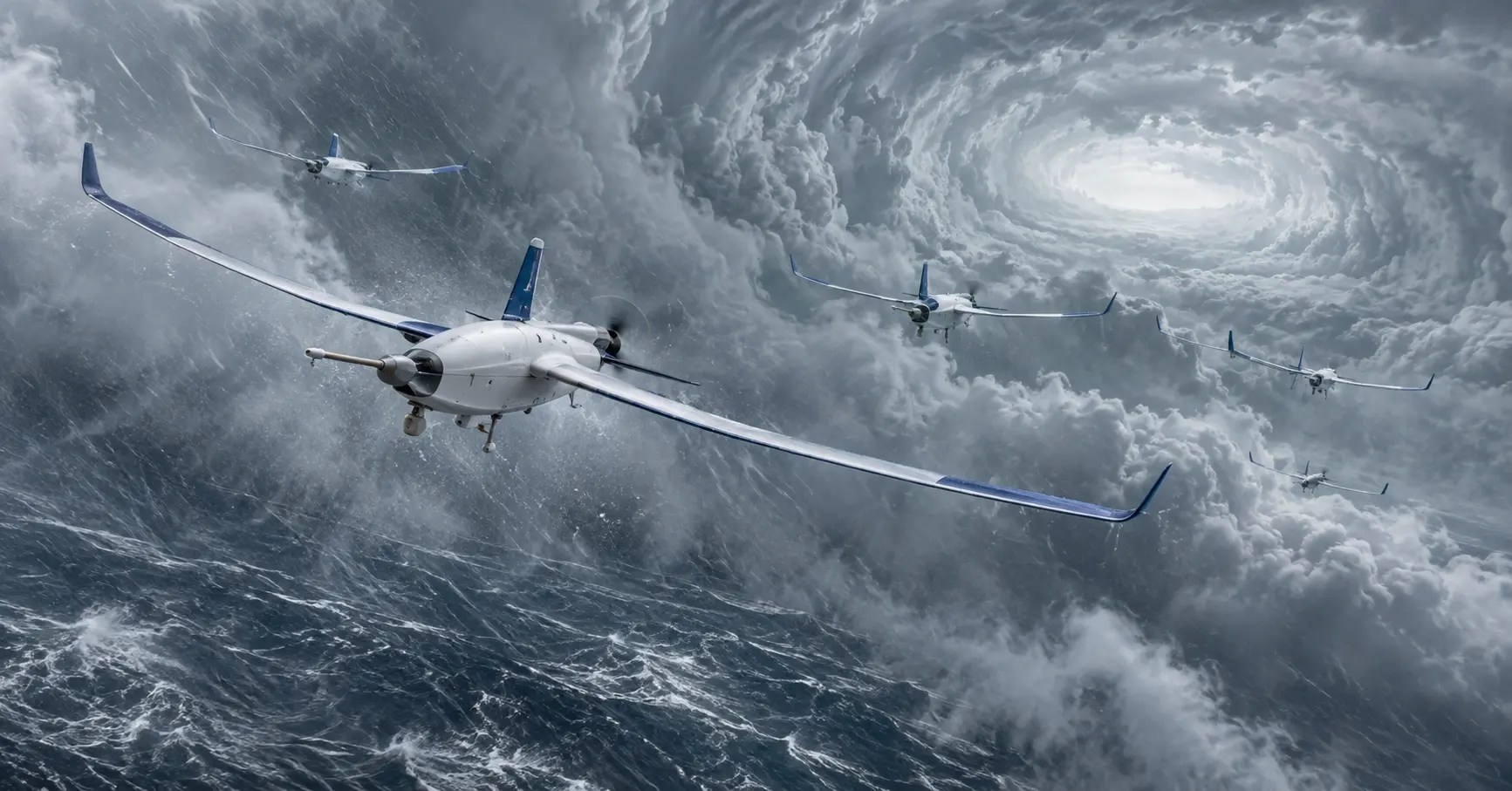
Drones: The Next Generation of Hurricane Hunters
How Drones Can Explore Hurricanes
A University of Florida engineer, Kamran Mohseni, is developing a squadron of hand-sized drones that he believes will revolutionize hurricane forecasting. These drones are designed to ride the wind currents of hurricanes, gathering valuable data that can help scientists better predict the path and intensity of these storms.
The Challenges of Hurricane Forecasting
Hurricane forecasting is a complex task that requires scientists to take into account a wide range of factors, including temperature, wind speed, humidity, barometric pressure, and topography. Traditionally, this data has been collected by dropsonde sensors dropped from large, expensive hurricane hunter planes.
Drones as a Solution
Mohseni’s drones offer a more cost-effective and efficient way to gather hurricane data. These drones are small and lightweight, allowing them to be launched in large numbers. They are also equipped with sensors that can collect a variety of data, including wind speed, temperature, and humidity.
How the Drones Work
Mohseni’s drones are launched into the storm using commands from a laptop. Mathematical models are then used to predict where the best wind currents can be found. Once the drones are in position, they can be powered up or down as needed, allowing them to take advantage of the wind’s power to explore the hurricane.
Underwater Vehicles
In addition to flying drones, Mohseni has also developed underwater vehicles designed to mimic jellyfish. These vehicles can work in tandem with the flying drones to gather data from under the sea, which can be particularly difficult to collect.
The Benefits of Using Drones
There are several benefits to using drones to forecast hurricanes. First, drones are much less expensive than hurricane hunter planes. Second, drones can be launched in large numbers, which allows scientists to collect more data from a wider area. Third, drones are not affected by the wind, which means they can collect data even in the most extreme conditions.
The Challenges of Using Drones
There are also some challenges to using drones to forecast hurricanes. One challenge is that drones can be easily lost in the storm. Another challenge is that drones can only collect data from a limited area.
The Future of Hurricane Forecasting
Despite the challenges, Mohseni believes that drones have the potential to revolutionize hurricane forecasting. He envisions a future where hundreds of drones are used to collect data from hurricanes, providing scientists with a more complete picture of these storms and helping them to better predict their path and intensity.
Other Recent Developments in Weather Tech
In addition to drones, there are a number of other recent developments in weather technology that are helping scientists to better understand and predict hurricanes. These developments include:
- Unmanned Aerial Vehicles (UAVs): UAVs are designed to fly in bad weather conditions and can be used to collect data from hurricanes.
- Large unmanned aircraft: NASA is using large unmanned aircraft to study how hurricanes form and build in intensity.
- Lasers: Researchers are using lasers to study how clouds form.
- Rainshader: The Rainshader is an umbrella that is designed to protect people from rain at sporting events.
These are just a few of the many recent developments in weather technology that are helping scientists to better understand and predict hurricanes. As these technologies continue to develop, we can expect to see even more accurate and timely hurricane forecasts in the future.
