
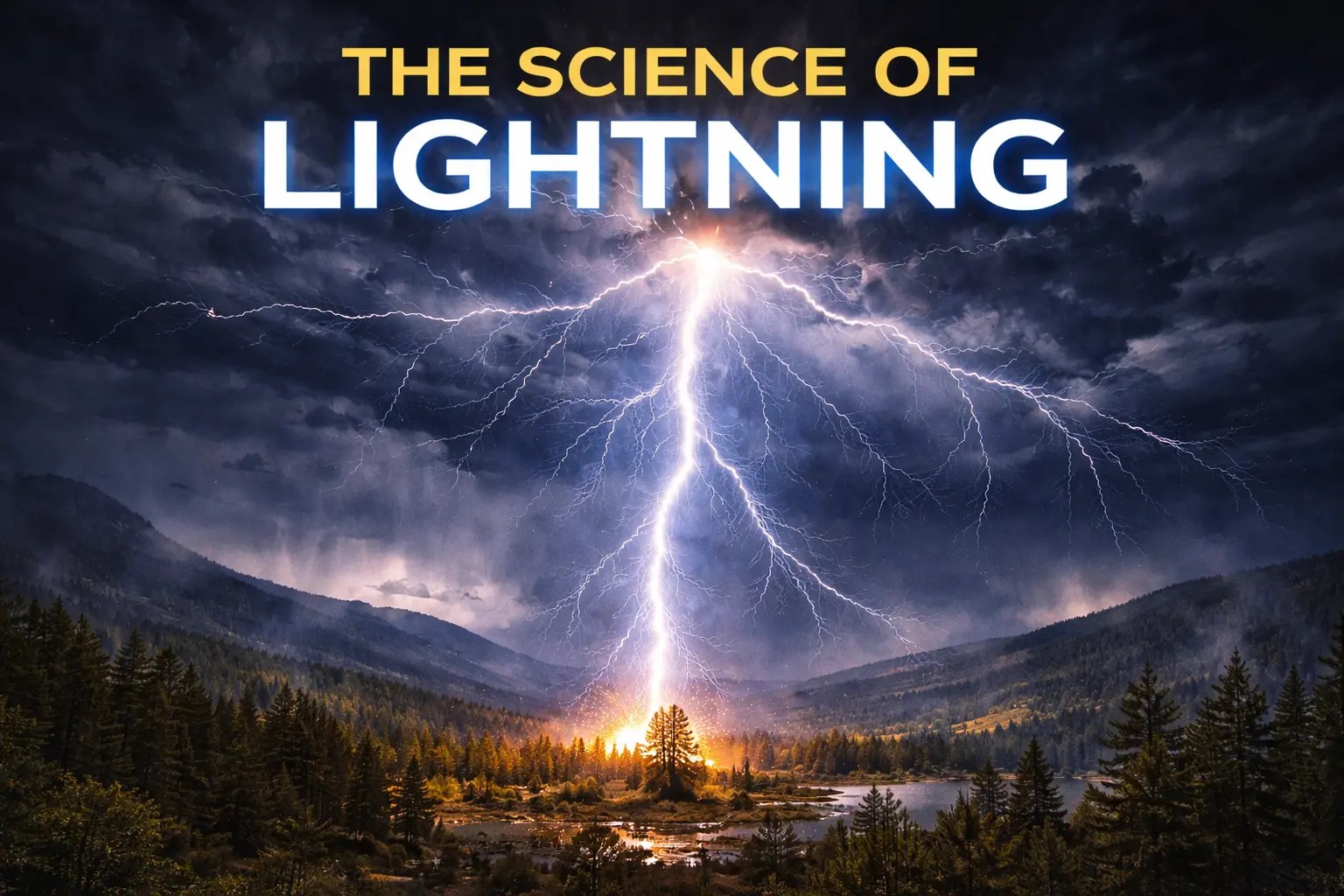
Lightning: Breaking Records and Redefining the Thunderbolt
Lightning, a fascinating and awe-inspiring natural phenomenon, has recently shattered previous records and forced scientists to rethink its definition.
World’s Longest and Brightest Lightning Strikes
On June 20, 2007, during a thunderous storm in Oklahoma, a lightning bolt stretched an astonishing 199.5 miles, setting the record for the world’s longest lightning strike. Originating at an altitude of six miles, it touched down in multiple locations and was visible as far as Colorado.
Just five years later, on August 30, 2012, a single lightning flash in France persisted for an unprecedented 7.74 seconds, setting the record for the world’s brightest lightning strike. Both records have been officially recognized by the World Meteorological Organization (WMO).
Understanding Lightning: Positive vs. Negative
Most lightning strikes are “negative lightning,” where a negative charge from a cloud discharges to the ground. These bolts typically reach lengths of around six miles. However, approximately 5% of lightning strikes are “positive lightning,” where a positive charge is released from the top of the cloud to the ground. These powerful bolts carry up to 10 times the energy of negative bolts and can travel up to 25 miles.
Redefining Lightning
The extraordinary lightning records prompted the WMO to amend the official definition of lightning. Previously defined as a “series of electrical processes taking place within one second,” lightning is now defined as a “series of electrical processes taking place continuously.”
Lightning Safety: Reevaluating the 30/30 Rule
The traditional lightning safety advice, known as the “30/30 rule,” recommends seeking shelter indoors for 30 minutes after hearing thunder within 30 seconds of seeing lightning. However, experts now believe that this rule may need to be revised in light of the new understanding of lightning’s reach and duration.
“The lower the flash rate, the lower the risk, but it’s not ‘no-risk,'” said Timothy Lang from NASA’s Marshall Space Flight Center. “It’s important to know where lightning is occurring and to be aware of the potential risks.”
Lightning and Climate Change
Scientists are also investigating the potential impact of climate change on lightning patterns. Some studies suggest that as the Earth’s atmosphere warms, thunderstorms are becoming more frequent and intense, which could lead to an increase in lightning strikes.
Continued Research and Monitoring
Meteorologists are now using advanced technology to monitor and detect lightning flashes in greater detail than ever before. This enhanced monitoring will allow scientists to better understand lightning’s behavior and improve safety recommendations.
Additional Notable Facts
- The average number of lightning deaths in the U.S. has decreased significantly since the 1940s, thanks to improved safety measures and a decline in outdoor activities during thunderstorms.
- Positive lightning strikes are much rarer than negative lightning strikes, but they carry significantly more energy and can be more dangerous.
- Lightning can travel tens or even hundreds of miles from its parent thunderstorm in certain atmospheric conditions.
