
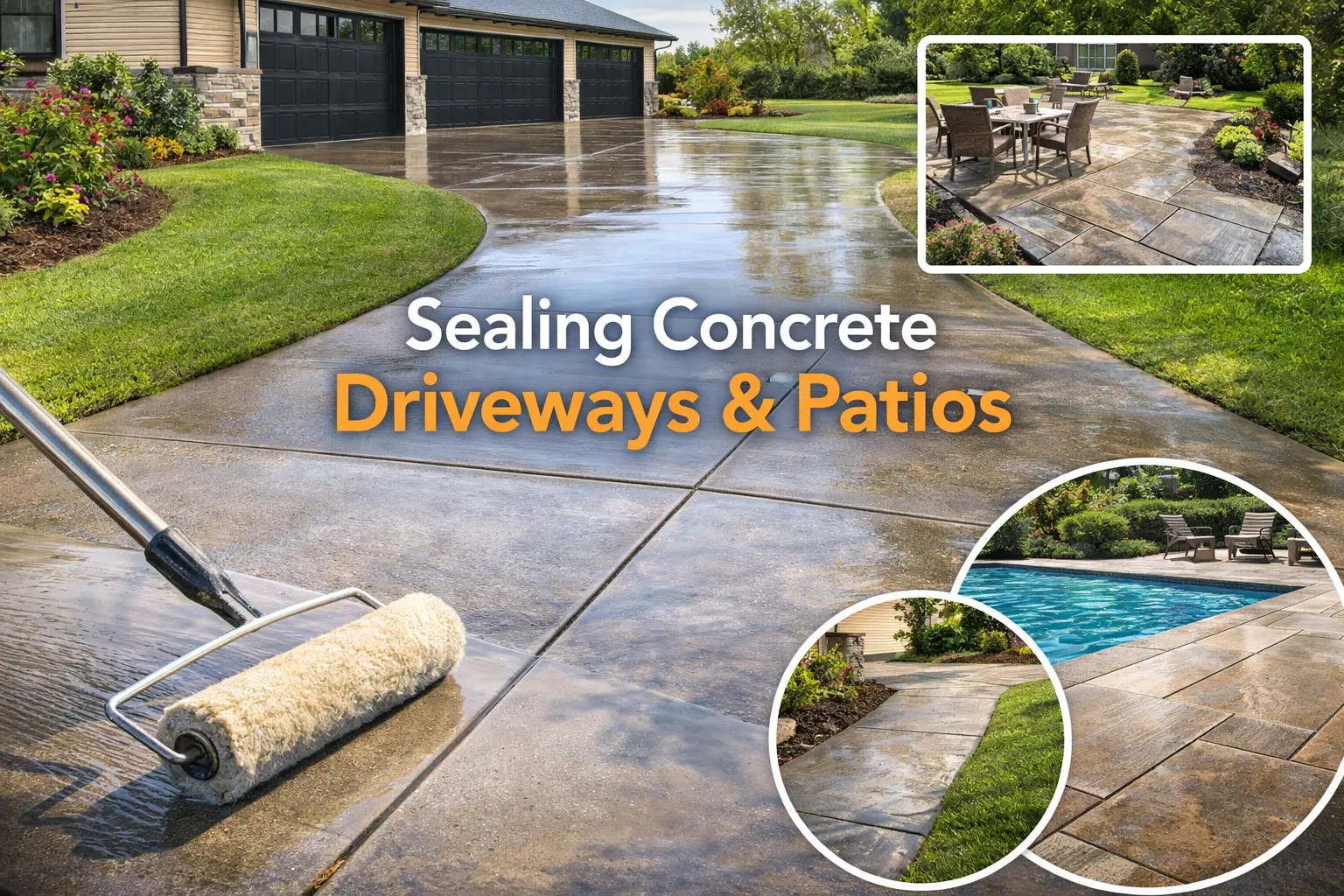
Sealing Concrete Driveways and Patios: A Comprehensive Guide
Types of Concrete Sealers
Concrete sealers protect and enhance the appearance of concrete surfaces. There are three main types:
- Acrylic resin-based sealers: Form a film on the concrete, providing excellent performance at a low cost. Look for products with pure acrylic resin, as it lasts longer and resists yellowing.
- Epoxy or polyurethane sealers: Create a thicker layer, offering enhanced durability but at a higher cost. However, they can be slippery and prevent moisture from evaporating, potentially causing a white haze.
- Penetrating sealers: Infuse the concrete with resins that form a chemical barrier, protecting against water, oil, and stains. They are ideal for areas exposed to heavy wear and tear, such as driveways and garages.
Gloss Levels
Concrete sealers come in different gloss levels, ranging from no-gloss to high-gloss. Higher gloss levels provide a more polished appearance but may require a non-slip additive for safety in wet conditions.
Preparation
Before applying a sealer, ensure the concrete surface is clean and dry. Remove any dirt, grease, or debris. Patch any cracks or holes. Wear protective gear, including gloves, long sleeves, and eye protection.
Application
The application method varies depending on the sealer used. Follow the manufacturer’s instructions carefully.
- Solvent-based sealers: Best applied by spraying, resulting in a glossy finish.
- Water-based sealers: Apply with a roller, producing a matte or semi-gloss finish.
- Penetrating sealers: Allow the sealer to penetrate the concrete, leaving no visible finish.
Aim for complete coverage and apply multiple thin coats, allowing each coat to dry thoroughly. Overlap the areas as you apply the sealer to ensure even coverage.
Drying
Allow the sealer to dry completely before walking or driving on the surface. Drying time varies depending on weather conditions and the thickness of the applied coats. Test the surface to ensure it is dry to the touch before applying additional coats.
Maintenance
Regular maintenance is crucial to extend the life of the sealer.
- Clean the surface with soap and water every few months.
- Reapply the sealer in areas that show signs of wear and tear.
- Avoid using excessive pressure when cleaning with a pressure washer. Use a fan or rotary nozzle about 12 inches from the surface.
- Consider hiring a professional to pressure wash large or heavily soiled surfaces.
Resealing
The frequency of resealing depends on the quality of the sealer, weather conditions, and wear and tear. Most concrete surfaces require resealing every one to three years.
How to Choose the Right Sealer for Your Needs
Consider the following factors when selecting a concrete sealer:
- Type of concrete surface: Different sealers are suitable for driveways, patios, pool decks, and other concrete surfaces.
- Environmental factors: Protect against salt damage, UV rays, and moisture based on your climate.
- Desired appearance: Choose a sealer with the appropriate gloss level to achieve your preferred finish.
DIY vs. Professional Sealing
DIY concrete sealing is possible, but hiring a professional ensures proper application and long-lasting results. Professionals have the experience and equipment to handle large or complex projects efficiently.
Additional Tips
- Test the sealer in an inconspicuous area before applying it to the entire surface.
- Avoid applying sealers in direct sunlight or extreme temperatures.
- Allow the concrete to cure for at least 28 days before applying a sealer.
- Store sealers in a cool, dry place according to the manufacturer’s instructions.
