
Roman Fort Unearthed Beneath British Bus Station
Archaeological Discovery
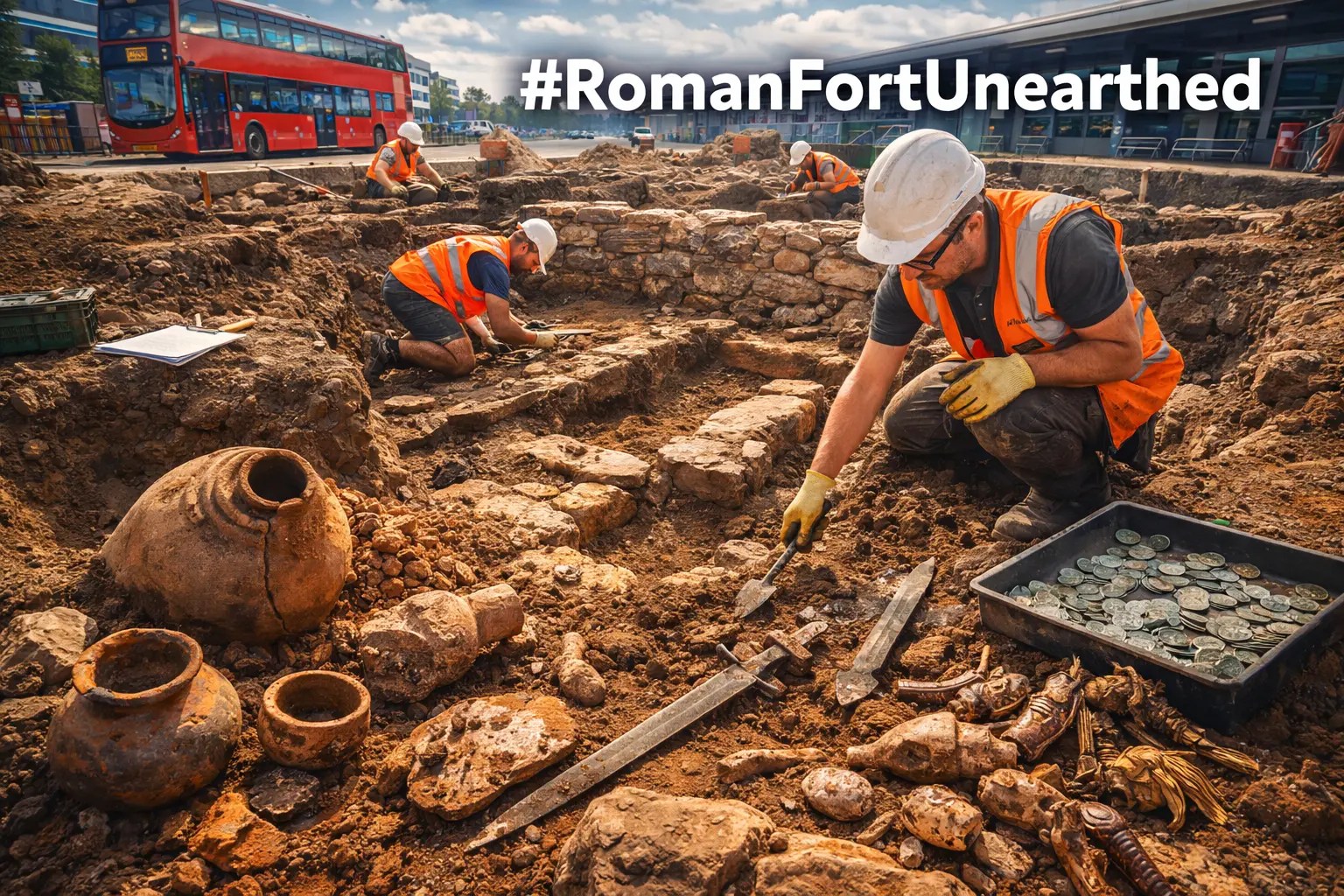
Archaeologists have made an exciting discovery beneath a bus station in Exeter, England: the remains of a Roman fort dating back to the Roman occupation of Britain. The fort was found during a survey of the area ahead of redevelopment.
Roman Fort’s Features
The fort, which likely served as a satellite of the larger military fortification Isca Dumnoniorum, features three defensive ditches, coins, pottery, and imported Samian tableware. The ditches are typical of those seen in Roman military compounds, with one featuring an “ankle breaker” pit designed to deter attackers.
Significance of the Discovery
The discovery of the fort is significant because it provides new insights into the Roman occupation of Exeter and the region. Stephen Rippon, a landscape archaeologist at the University of Exeter, described the find as a “complete surprise” and noted that there was no prior evidence of the fort’s existence.
Exeter’s Roman History
The discovery of the fort adds to the growing body of evidence that Exeter played a pivotal role in the Roman conquest and subjugation of Britain. Previous archaeological discoveries in the area include an ancient fortress and bathhouse, as well as multiple forts of varying size and significance.
Roman Legacy in Exeter
After the Romans left Isca Dumnoniorum and its network of smaller forts around 75 A.D., Exeter became the region’s capital and was transformed into a civilian town. Public baths and defensive stone walls were introduced over the coming decades. However, by 360, the village had started to shrink, and in 410, the Romans abandoned Britain completely. Exeter remained sparsely occupied until 928, when settlers once again returned to the area.
The Fort’s Location
The exact location of the fort in relation to the bus station is still being determined. However, Andrew Pye of the Exeter City Council notes that the discovery demonstrates “just how much of the city’s history can still survive in unlikely places,” including those damaged by wartime bombing and modern concrete foundations.
Ongoing Research
Archaeologists are continuing to excavate the site and study the artifacts that have been found. The discovery of the fort is expected to shed new light on the Roman occupation of Exeter and the region, and to provide valuable insights into the lives of the soldiers who were stationed there.
