The Discovery of Penicillin: A Medical Miracle from Mold
Fleming’s Accidental Discovery
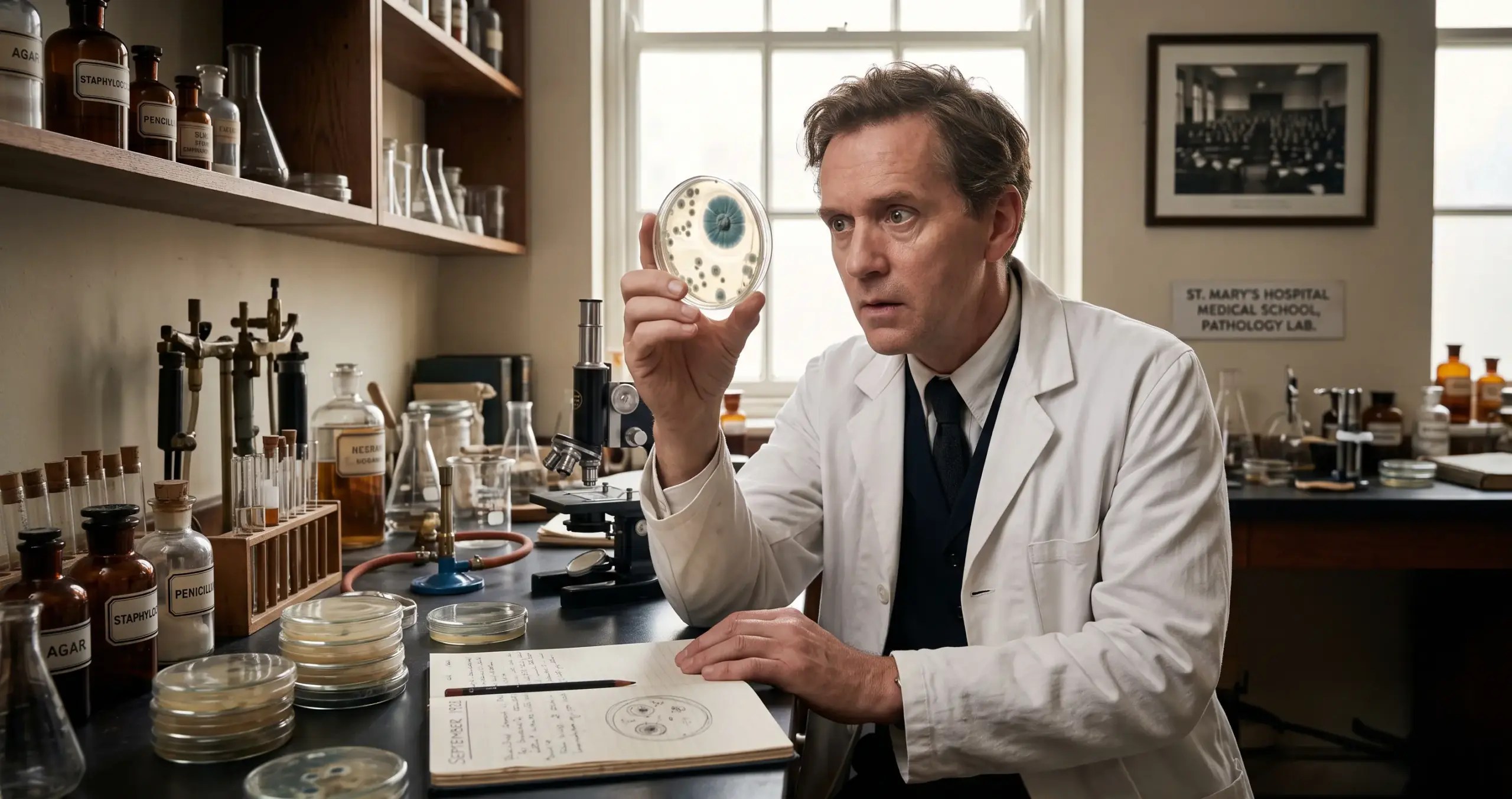
In 1928, British bacteriologist Alexander Fleming made a serendipitous discovery that would forever change the course of medicine. While examining bacteria cultures in his laboratory, he noticed that a mold had contaminated one of the Petri dishes. Initially, he was annoyed by the contamination, but upon closer inspection, he realized that the mold, later identified as Penicillium notatum, had an unusual effect on the bacteria.
The Birth of Antibiotics
Fleming observed that the mold was inhibiting the growth of Staphylococcus aureus, a common and dangerous bacteria that causes infections such as pneumonia and sepsis. Intrigued, he conducted further experiments and discovered that the mold produced an antibacterial substance that could kill a wide range of bacteria. This substance was later named penicillin, the world’s first antibiotic.
The Development of Penicillin
Fleming’s discovery paved the way for the development of penicillin as a mass-produced drug. Pathologist Howard Florey and his colleagues played a crucial role in purifying and testing the drug, which was eventually used to treat infections during World War II. Penicillin proved to be highly effective in combating sepsis, a major cause of death among soldiers.
The Impact of Antibiotics
The discovery of penicillin revolutionized the medical field. It became the first line of defense against once-deadly bacterial infections such as pneumonia, meningitis, and tuberculosis. Antibiotics have also played a vital role in reducing the incidence of sepsis and other complications during surgery and childbirth. Today, an estimated 70 billion doses of antibiotics are administered worldwide each year.
The Value of Scientific Discoveries
The auction of Fleming’s mold culture for $46,250 highlights the immense value of scientific discoveries. Fleming’s accidental observation and subsequent research led to the development of a life-saving drug that has saved countless lives. The auction also underscores the importance of preserving and celebrating the history of scientific breakthroughs.
The Legacy of Fleming’s Mold
Fleming’s mold has become an iconic symbol of the power of scientific curiosity and the unexpected origins of medical advancements. The discovery of penicillin not only transformed medicine but also inspired generations of scientists to explore the potential of microorganisms and their applications in healthcare.
The Role of Mold in Medical History
Mold has played a significant role in medical history, both as a source of disease and as a source of therapeutic agents. Penicillium notatum, the mold that led to the discovery of penicillin, is just one example of the many microorganisms that have been harnessed for medical purposes. Other molds have been used to produce antibiotics such as streptomycin and erythromycin, as well as antifungal drugs and immunosuppressants.
The Importance of Preserving Scientific Heritage
The preservation of scientific artifacts, such as Fleming’s mold culture, is essential for understanding the history of medicine and inspiring future generations. These artifacts provide tangible evidence of the groundbreaking discoveries that have shaped our world and remind us of the importance of scientific research and innovation.
