
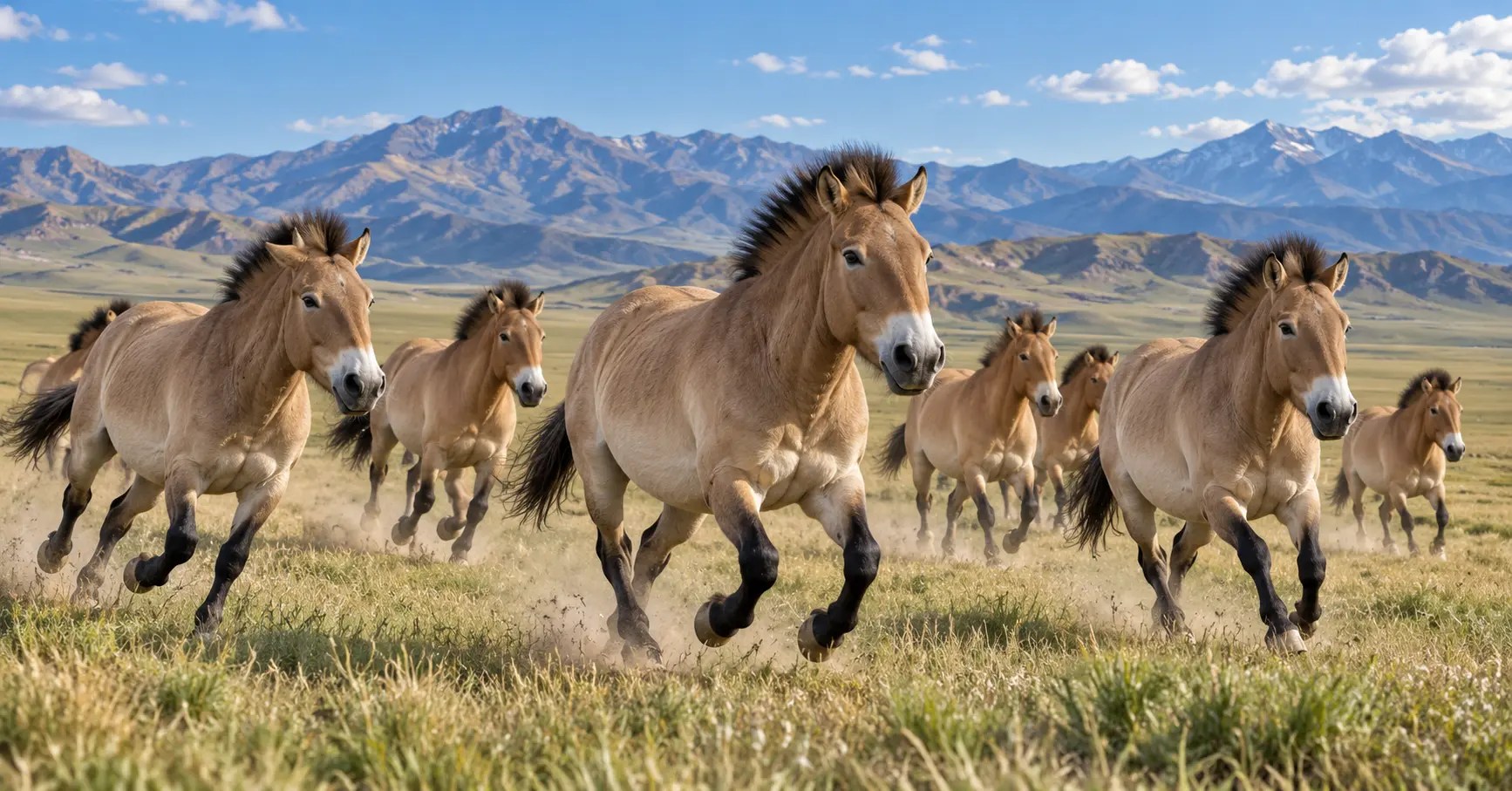
Przewalski’s Horse: The Comeback of a Wild Icon
Mongolia’s National Treasure
Przewalski’s horse, known as the takhi in Mongolia, is a symbol of the country’s national identity. This wild horse, once nearly extinct, has made a remarkable comeback thanks to conservation efforts.
Historical Significance
The takhi has been a part of Mongolian culture for centuries. The first written references to the horse date back to the year 900, and it is believed that Genghis Khan himself spotted the animals during his conquests. In the 15th century, the German writer Johann Schiltberger described the takhi in his journal after seeing it in Mongolia.
Endangered Status and Conservation
In the 19th century, Przewalski, a Russian explorer, discovered the takhi and described it as a new species. However, hunting and habitat loss led to a decline in the population, and by the mid-20th century, the takhi was considered extinct in the wild.
Conservationists began breeding programs to save the species, and in the 1990s, reintroduction efforts began. Today, there are over 2,000 takhi in the world, with the largest population living in Hustai National Park, just 60 miles from Mongolia’s capital, Ulaanbaatar.
Habitat and Adaptations
Takhi are adapted to life on the Mongolian steppe, a vast grassland ecosystem. They are herbivores that feed on grasses, and they can survive long periods without water. Takhi live in herds led by a dominant stallion, and they have a strong social structure.
Challenges
Despite the conservation success, challenges remain for the takhi. Habitat destruction, hybridization with domestic horses, and climate change all pose threats to the species. Wolves are also a predator of takhi, especially foals.
Conservation Efforts
Conservationists are working to protect takhi and their habitat. They are conducting research to better understand the species and its needs, and they are working with local communities to promote sustainable land management practices. Ecotourism is also playing a role in supporting conservation by providing funding and raising awareness.
The Takhi as a Symbol
The takhi represents the resilience of Mongolia’s wildlife and the importance of conservation. It is a symbol of national pride and a testament to the dedication of those who have worked to save this iconic species.
Additional Long-Tail Keywords Included:
- Mongolian national symbol
- “Semi-reserve”
- “All hard releases are died in a first year”
- “Natural causes must happen”
- The potential for takhi to become a symbol of Mongolia’s conservation efforts
- The long-term challenges facing takhi conservation
