
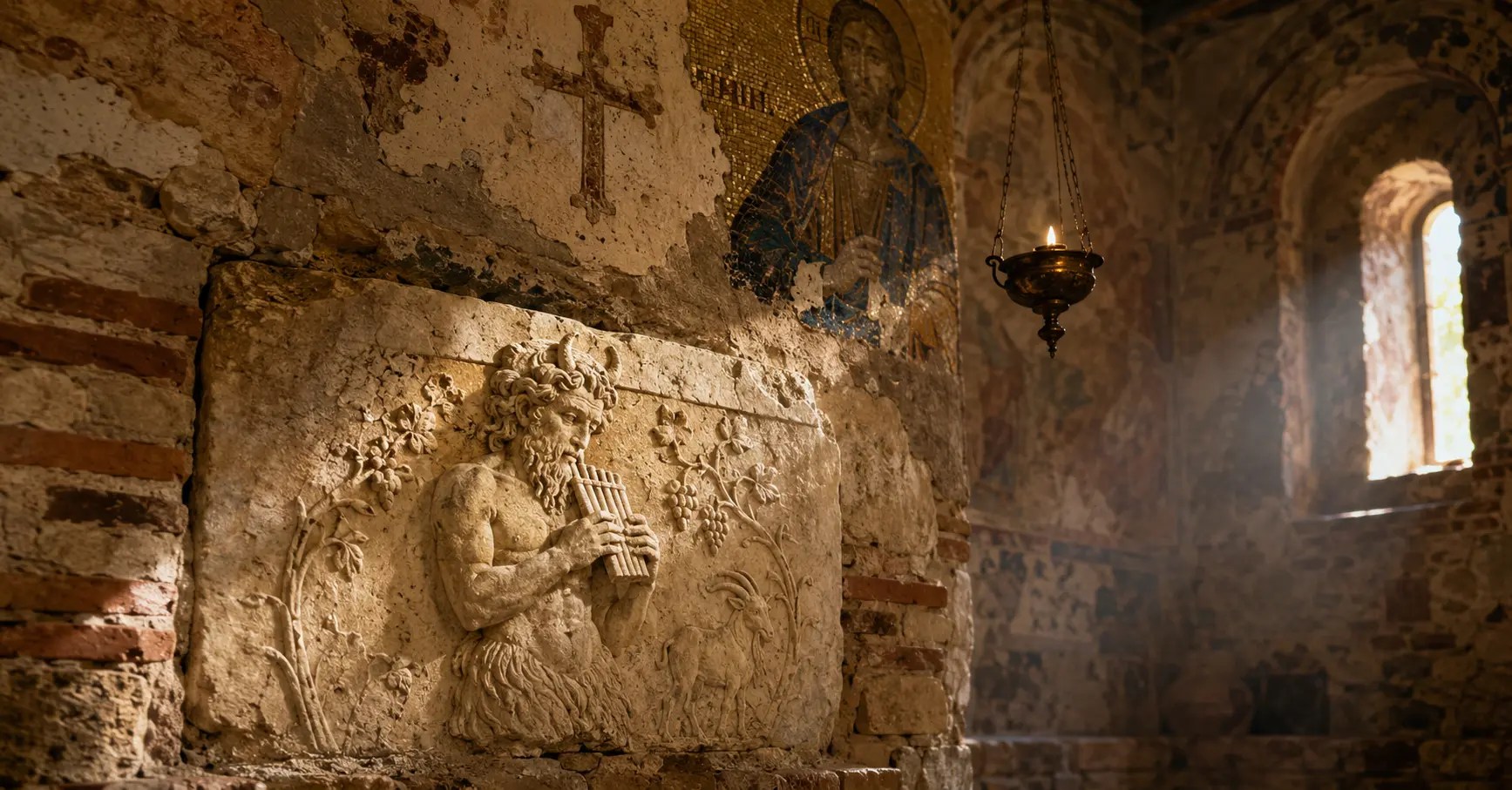
Altar to Ancient Greek God Pan Found Embedded in Byzantine Church
Discovery and Significance
During excavations of a Byzantine church in northern Israel, researchers have uncovered a second- or third-century altar dedicated to the Greek pastoral god Pan. This discovery sheds light on the complex relationship between early Christianity and pagan beliefs.
The Altar
The basalt altar was incorporated into the church’s wall. Its Greek inscription reads, “Atheneon, son of Sosipatros of Antioch, dedicates this altar to the god Pan Heliopolitanus, fulfilling a vow made with his own personal funds.”
Pan Heliopolitanus
Heliopolitanus is typically associated with the Greek god Zeus, not Pan. This suggests that Pan Heliopolitanus may have been a deity with aspects of both Pan and Zeus, or simply another name for the god of the wild.
Pilgrimage and the Church
The altar’s reference to Antioch, located far north of the Israeli church, indicates that the site was associated with pilgrims traveling from distant lands. The excavation leader, Adi Erlich, believes the church may have been built to commemorate interactions between Jesus and Saint Peter.
Temple to Pan
Before the construction of the Byzantine church, the site was home to an open-air temple dedicated to Pan. The temple, located in Banias National Park, was associated with the Banias waterfalls for centuries before its construction around 20 B.C.
Roman Architecture and Christian Symbolism
Constructed in classic Roman style, the temple featured a central pool. Christians later added a floor mosaic with small crosses, a widespread symbol of the religion adopted after Emperor Constantine’s reign.
Christian Repurposing
Erlich suggests that the altar’s repurposing as part of the church wall may have been a deliberate insult to local worshippers of pagan gods. The church’s construction atop the earlier temple to Pan further supports this theory.
Archaeological Significance
The excavation is part of a wider effort to conserve archaeological sites in Banias National Park, home to important sites spanning from the Roman period to the Crusades. The new finds, including the Pan altar, will be preserved and displayed for visitors.
Historical Context
In the fourth century A.D., the region where the church was built became an important Christian center with its own bishop. This reflects the gradual spread of Christianity and its influence on local religious practices.
Cultural Legacy
The discovery of the Pan altar and the surrounding archaeological remains offers valuable insights into the coexistence and interaction of different religious traditions in ancient times. It highlights the complexity of religious beliefs and practices during the transition from paganism to Christianity.
